 Maltipoo
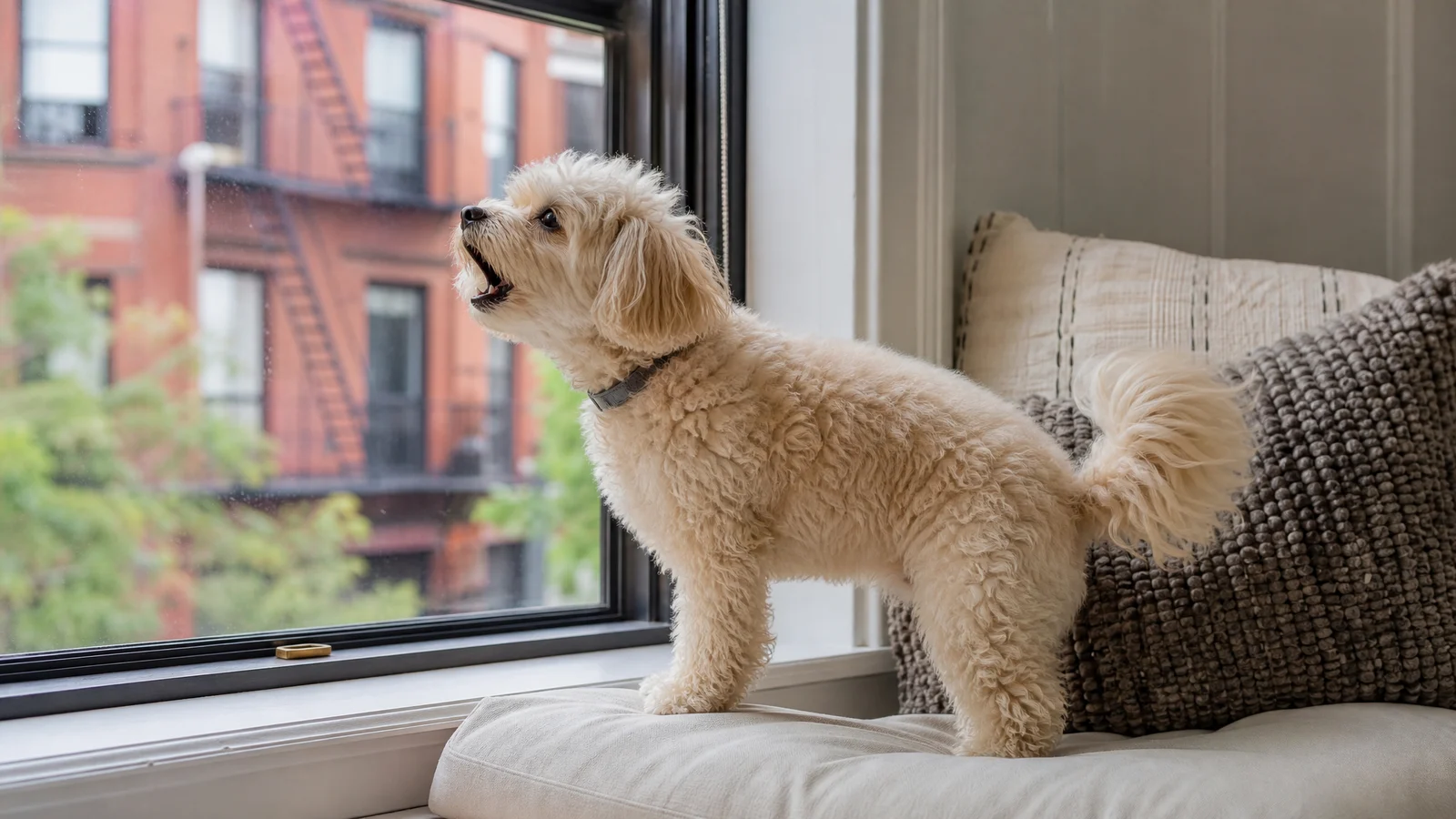
The usual advice for a barking dog is to ignore it, tell the dog no, or wait for them to grow out of it. Breed ratings show why that falls short here. The Maltese scores 3 of 5 for barking, the Poodle 4 of 5, and Maltese are described as alert watchdogs. Owners of the cross report something messier than either number.
Some Maltipoos never react to a doorbell. Others bark at visitors, traffic cones and the vacuum, and a few were silent puppies who started after hearing a neighbor's dog or other dogs at daycare. Left alone, barking turns into a daily habit that wears the whole household down.
Handled well, it becomes a short announcement from a small dog who then settles. Read on for rewards and timing, gear that helps, the best lookout spot, daily routines, a quiet cue, habits that backfire, and what the years bring.
Treats and Praise That Reward Quiet Instead of Barking
Barking pays. The dog barks, a person appears, and the dog learns the trick works. The fix is making quiet pay better. Reward-based training rests on a plain idea: a behavior that earns something the dog loves comes back more often.
Start by finding out what sets your own dog off, because there is no single barking level for this cross. A minority of owners have quiet dogs who ignore knocks completely. Others live with a dog who barks at nearly everything, sometimes for no visible reason. These are the triggers owners report most.
Visitors, knocks and doorbells top the list, with barking that sometimes carries on after the person has gone or until they have been introduced. Anything moving outside comes next, including people, runners, other dogs, birds, squirrels and traffic cones. Some dogs also react to household oddities such as the TV, brooms, frying pans, slow cookers and vacuums, often with a growl that is noisy but not aggressive.
Pick the one that happens most often. Build the plan around that single trigger before touching the rest.
Timing the Reward
Reward the pause itself. The instant the barking stops, even for a breath, say your marker word, then hand over a treat. If the treat arrives while the barking is still going, it pays for the barking.
For barking that demands attention, turning away from the dog is a fair first move. Look away or step out of the room, and the moment the noise stops, ask for a sit and then give them what they wanted. Maltese are described as clever dogs who have learned to get what they want from their people, so expect your Maltipoo to test whether the rule is real.
Choosing the Treat
Use tiny, soft, smelly morsels that can be swallowed in a second. Small dogs fill up quickly, so shrink the pieces instead of cutting the number of rewards. Keep the very best treat for the hardest trigger, which is usually the front door.
Praise and a quick game are good extras. At a loud doorway, though, food usually beats a cheerful voice.
Redirecting Alert Barking
Alert barking is not a fault to erase. It is a job the dog thinks they have, so give the job an ending. Let them bark a few times, thank them, then call them away to a mat or a spot you choose and pay for arriving there.
Many owners find this works better than demanding silence at the first woof. The dog gets to announce, and you get to finish the conversation.
Gear That Calms Barking and Gear to Skip
Gear teaches nothing. What it can do is reduce how often your dog gets to rehearse barking, and that matters because every repetition strengthens the habit. We treat most of it as a helper and never as a fix. Here is the verdict on each item.
- White noise or soft music is worth trying. A steady background sound can mask noises that set some dogs off, such as footsteps in a hallway or voices outside, so there is less to react to.
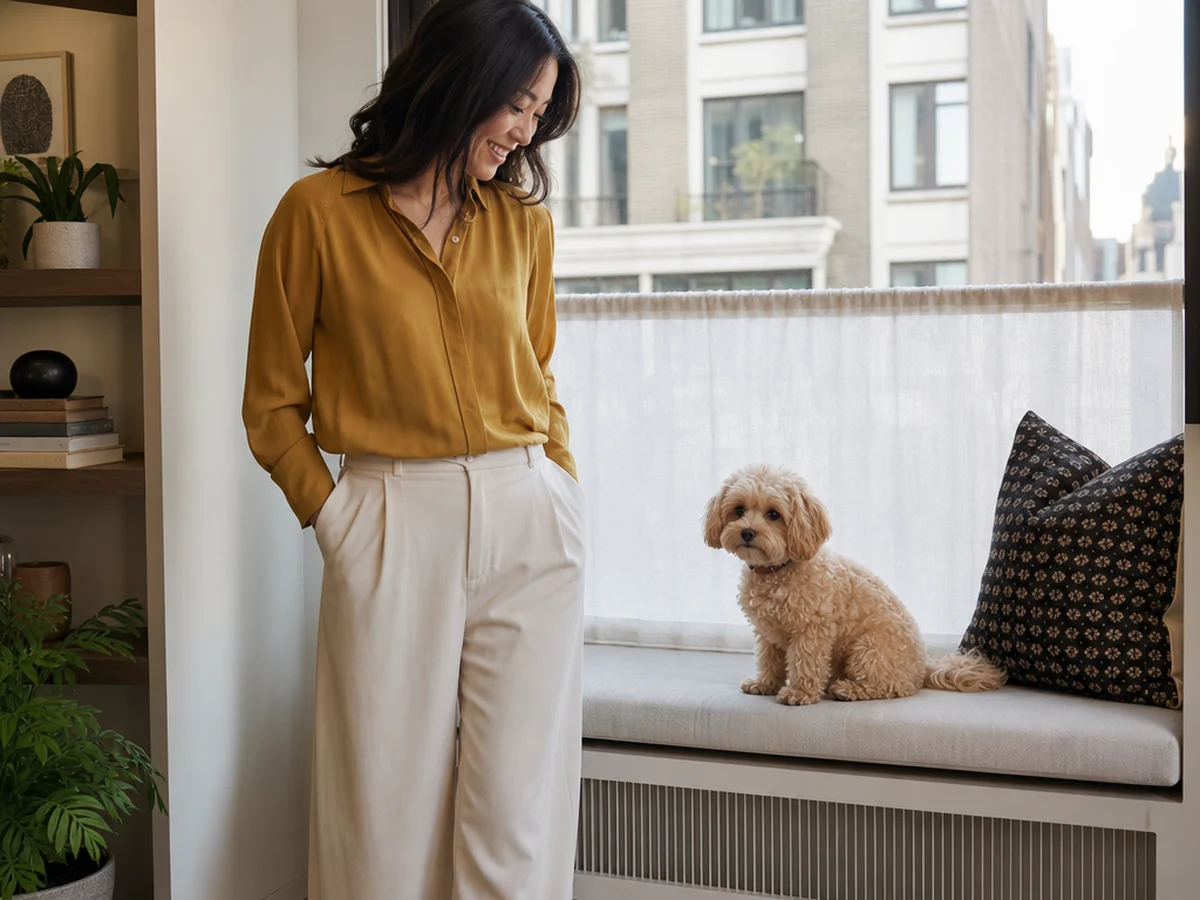
- Frosted film on the lower window panes is worth the money. It removes the passing parade of people, dogs and traffic cones while the room stays bright.
- A solid or partly covered barrier gate at the entry is worth it. Greetings happen behind the gate, which buys you time to reward calm before anyone steps inside.
- A comfortable, well-fitted harness is useful on walks. It makes it easier to turn away from a trigger and reward calm without tugging on the neck.
- A noisy TV left on all day is a poor trade. Some Maltipoos bark at the screen itself, so it can add triggers instead of covering them.
- Any gadget without a reward plan is a waste. A gate or film only helps when quiet on the other side gets paid.
One caution about gates. A see-through panel lets the dog keep barking at the visitor, so a dog who fixates does better with a solid section at their eye level.
Where Should a Maltipoo Watch the World?
The popular picture is a small dog on a windowsill, happily surveying the street. For an alert barker, that is often the worst seat in the house. Since owners report barking at nearly everything that passes outside, a window perch is a front-row ticket to every trigger.
Start with the main resting spot. Place the bed where the dog can see the family but not the front door or the street. A back corner of the living room or a quiet side room suits most households. Some Maltipoos are calm with their own people and bark at nearly everyone else, so a bed that faces the family fits how many of them like to relax.
That does not mean banning every view. A controlled, safe look at the world can be part of reward-based practice. Let your dog watch from a distance, mark and reward calm glances, and end the session before they start to bark.
Building a Safe Lookout
Offer a lookout that is controlled instead of constant. A raised bed set back from a window, with the lower panes frosted, lets your dog peek without patrolling. Drop a treat whenever they glance outside and then turn back to you.
Practice away from home too. Owners report that settling at a cafe or on a park bench, simply watching people and dogs go by, cut barking over time. The dog learns that most passers-by will never interact with them. Sit far enough away that treats are still welcome, and pay for calm.
Routines That Keep Barking From Building
A dog who is bored, wound up or surprised barks more. Daily patterns take the edge off before the doorbell rings, which is far cheaper than managing the bark afterward.
Exercise needs differ across this cross. Poodles are described as very active dogs who need good exercise every day, while Maltese are full of energy but need only occasional exercise. Watch your own dog. One who paces and barks at nothing in the evening probably wants more walking and sniffing, not more scolding.
Mental work counts as much as distance. The Poodle side rates at the top for needing a job or activity, so a few short training games and a food puzzle often settle a busy brain faster than another lap of the block.
- Walk before the noisiest part of your day, such as school pickup or delivery hours.
- Serve some meals from a puzzle toy or scattered over a mat, well away from the front door.
- Keep arrivals and departures low-key. Calm, almost boring hellos and goodbyes give your dog less to get excited about, so there is less to announce.
- Run a short daily settle session on a mat with a chew, even on days when nothing is wrong.
- Limit window and gate time during the hours when foot traffic peaks.
- Watch what daycare and dog-park visits teach, since some owners report their dog learned to bark from other dogs there.
Some dogs bark or scratch at the door to ask for a toilet break. Answer that promptly, and reward a calmer signal if you want one.
If the barking happens mostly when you are out, read our guide to Maltipoo separation anxiety first, because that plan is different. Keep up regular vet visits as well, especially if the barking changes suddenly.
Should You Teach a Maltipoo a Quiet Cue?
Yes, with realistic expectations. Owners report that a quiet cue, often paired with a sit and treats, reduced barking, though some dogs still yap a few times before stopping on cue. That fits the parent breeds. Maltese can be stubborn but respond well to positive methods, and Poodles are quick to please when sessions stay fun. Consistency matters more than clever technique.
Teaching the Cue
- Pair your marker word, or a clicker with food, in a calm room. Mark, then give a treat within 3 seconds, and repeat several times.
- Set up a mild trigger you control, such as a recorded knock played softly, and wait for a natural bark.
- When the barking pauses, mark and treat. Repeat many times before adding any word.
- After pauses come reliably, say "quiet" right as the pause begins, then use your marker and give a treat.
- Add a sit after the quiet and treat again.
- Make the trigger a little stronger step by step, and finish each session on a success.
Rewarding the Quiet
Treat every success at first, then slowly stretch the quiet before the reward arrives. Mix in praise, a quick game, or a life reward such as opening the door once the dog is calm.
Some Maltipoos have unusual voices, like a singing bark, a half bark or a bark-and-howl. Reward the pause rather than holding out for perfect silence, or you will wait a long time.
Habits and Tools That Make Maltipoo Barking Worse
Most barking problems do not come from a missing gadget. They come from habits that quietly feed the behavior, or from good tools used loosely. This list covers the ones that backfire most often with this cross.
- Shouting back. To a dog, a raised human voice often sounds like joining in.
- Scooping the dog up or offering food mid-bark. That pays for exactly the behavior you want less of.
- Leaving a clear view of the street all day, which lets the dog rehearse the bark over and over.
- Changing the rules. If barking sometimes gets a reaction and sometimes does not, the dog learns to bark harder.
- Pushing a hesitant dog to greet. Some Maltipoos bark boldly at the door and then hide when it opens, which suggests nerves behind the noise, so give space and reward calm from a distance.
- Using a gate or marker loosely. A gate with no rewards is just a wall, and a marker that stops being paired with food stops meaning anything.
Anything that leaves your dog feeling worse about visitors makes the problem harder. Keep every session about teaching what to do instead.
What Maltipoo Barking Looks Like Over the Years
Some owners report that barking peaks in adolescence and eases with age. Expect the teenage months to be the loudest, and keep your routines steady through them.
Easing is not the same as disappearing. Some owners find strangers still set their dog off in adulthood. A noticeable group also report barking that persists or even increases despite training, which leaves them tired. If that is you, you are not failing. Small dogs with watchdog instincts often keep a bit of the announcing habit for life.
Both parents explain why. The Maltese rates 4 of 5 for watchdog and protective nature and the Poodle 3 of 5, so some alertness is simply part of this cross.
So set the goal honestly. A Maltipoo will likely always announce things. What you can change is how long the announcement lasts. Keep rewarding the pause, keep the lookout spot sensible, keep greetings dull, and keep exercise and brain work regular. Over months, those small and steady choices usually turn a dog who barks at everything into one who gives a short announcement, checks in with you, and moves on.
 Exercise and jobsMatching Exercise and Mental Games to Your Maltipoo's Energy
 Exercise and jobsHow Fast Can a Maltipoo Run? Safe Recall Games
 BehaviorMaltipoo Separation Anxiety: How to Help Your Dog Feel Safe Home Alone