 Maltipoo
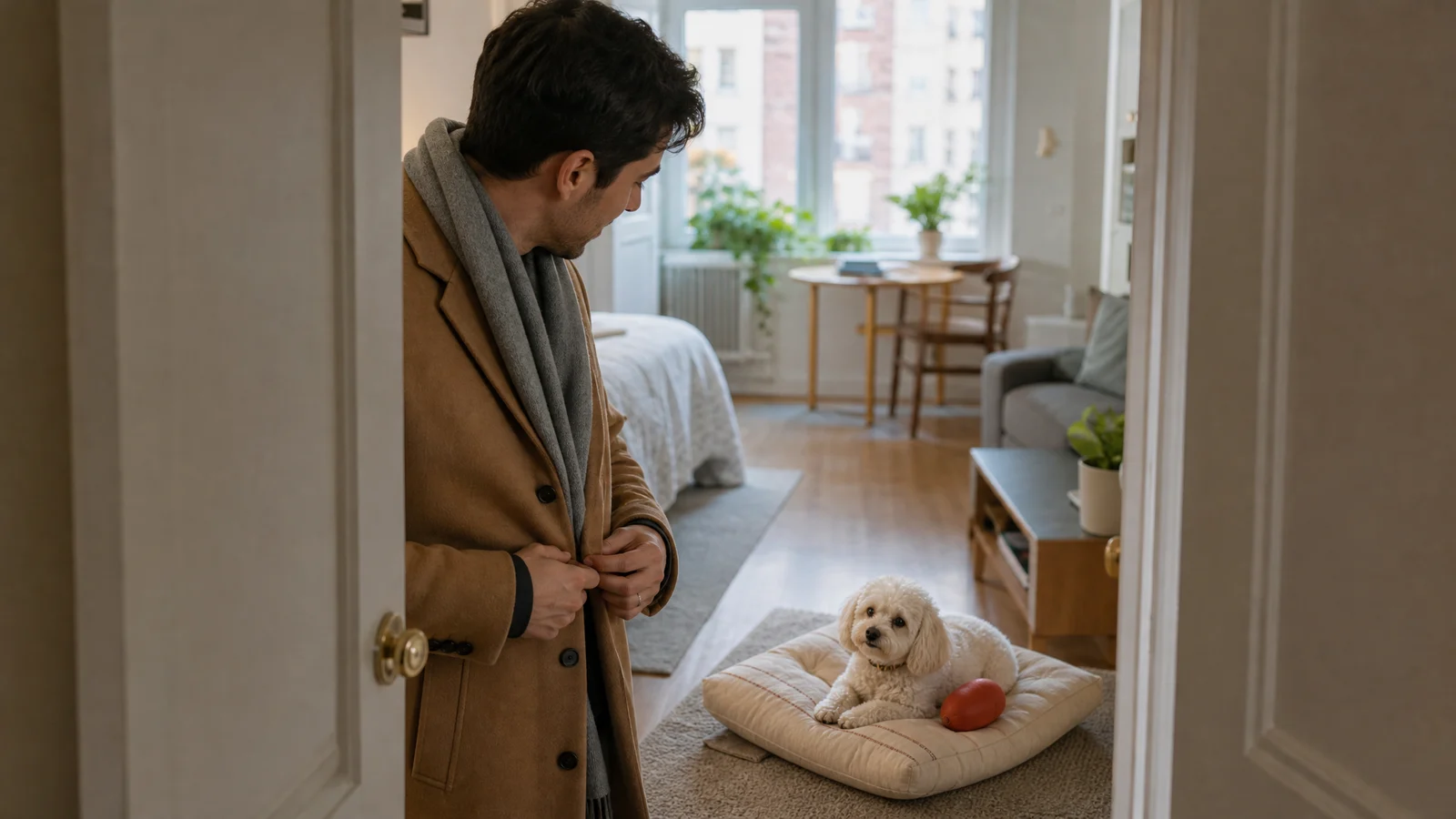
Some Maltipoos nap through an entire workday and wake only when the front door opens. Others start crying at the door the moment the keys come out, and the day gets harder from there. Owners report both versions, and early behavior alone doesn't tell you which dog you have.
This article looks at crate training as a way to teach calm time alone, so you can build a den your Maltipoo trusts, lengthen absences in small steps, and tell ordinary protest from real panic. Done well, the crate becomes a place your dog chooses. Done in a rush, it can attach fear to the one space meant to feel safe.
Centuries as a Lap Companion Shape the Maltipoo
To understand why some Maltipoos find an empty house so hard, start with what the Maltese side was bred to do. The breed was traded in ancient Malta as a little white lapdog and has been a favored pet of nobles for three thousand years. Roman aristocrats made them a status symbol, and the job never changed: stay close to a person. Over those centuries the Maltese learned to get exactly what they want from their people, and a cross may inherit that skill.
The Poodle side adds to the picture instead of cancelling it. Both parent breeds are rated 5 of 5 for affection with family, the top of the scale. Poodles are very people-oriented, Toy Poodles are called extremely smart, and Poodles score 5 of 5 for mental stimulation needs. A Maltipoo may therefore be a dog who notices every sign you are about to leave and has plenty of brainpower to spend worrying about it.
Plan for this trait from the first week and don't wait to fix it in month six. A dog who has never practiced being alone has nothing to draw on when your routine changes, and the cost arrives later as a harder retraining job. Not every Maltipoo is affected, and owners report very different tolerances, from short stretches to a few hours. That spread is why we treat time alone as an individual matter and never as a fixed number.
Why Alone Time Feels Like Danger to a Maltipoo
For a dog whose ancestors spent their days in laps, being alone is not a neutral state. It breaks the one arrangement the breed was built around, and the dog may react with pacing, whining or howling. Many puppies cry when left, or even when you only leave the room, and many settle before you return. A minority stay quiet from day one. Early crying doesn't predict how a dog will turn out, so judge the pattern over weeks and not a single evening.
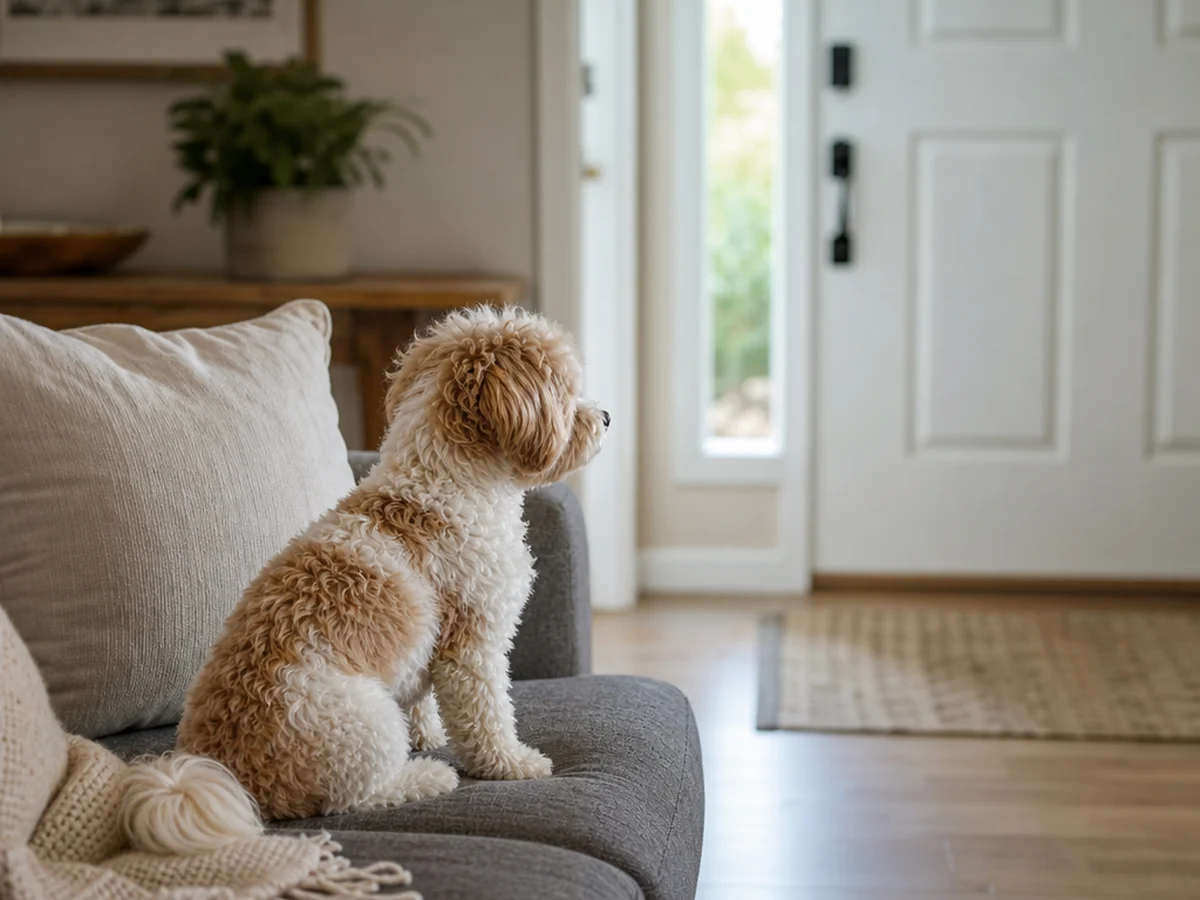
Distress builds when episodes end badly. A dog who reaches full panic learns that being alone is where panic happens, and the next absence starts from a higher point. That is why small, calm steps beat long tests. Some dogs cope while you are in another room but fall apart once you leave the house, and others simply dislike departures without having full separation anxiety. Both groups benefit from the same practice, at different speeds.
Life changes can also tip a settled dog. A sudden schedule switch, a house move or the absence of a family member can trigger separation anxiety. Some owners describe anxiety that emerged or returned when they went back to the office after a long stretch at home. If your routine is about to change, rehearse absences before the change, not after. A second dog makes alone time easier for some Maltipoos but not all, so don't count on company as the cure.
Maltipoo Crate Training and the Closed Door
A crate is only a box until your dog decides what it means. Several owners credit early pen or playpen use with helping their dogs settle, while others found their dogs disliked the closed crate door and did better in a fenced-off area or with free range of a room. Both outcomes are normal. What differs is whether the closed door feels like a cozy den or like being shut away from the person they love most, and you learn that only by watching your own dog.
This matters most for dogs at the anxious end of the spectrum. Inside a crate, a dog with true separation anxiety stays anxious and can soil, howl or get hurt while trying to escape, so a safe, confined room is the better plan for that dog.
Offer the Crate, Don't Force It
Treat the crate as a tool you offer and test, not a contest you win by outlasting the protest. Common advice says to ignore crying until a puppy gives up. For a breed this attached, we think that can teach the crate is where panic lives.
Night-time is where this choice shows up first. Owners report several approaches. Some let the puppy cry and say it faded after about 3 days, which suits mild, tapering protest. Others keep the crate beside the bed, which lets your puppy see you and may help them settle. Some sleep next to the crate for a while and drift away gradually. The nearby crate costs you a little sleep now and a small move later, which is usually a better trade than a wary dog.
A Crate Training Setup That Feels Like a Den
A den feels safe because it is snug, familiar and linked to good things, so build all three before you close the door. Choose a crate your Maltipoo can stand, turn and lie down in comfortably, without spare room for a bathroom corner. Place it where the family spends time and not in a far room, because for this breed the crate should feel like part of the household. Then work through these steps over the first days and weeks:
- Leave the door open and toss treats inside so your dog walks in and out freely, with calm praise.
- Feed meals in the crate with the door open so the space predicts good things.
- Offer a food-stuffed toy, such as a stuffed Kong or a kibble-filled bouncy ball, that your dog only gets in there.
- Add soft, washable bedding and a worn shirt that carries your scent.
- Close the door briefly while your dog eats, and open it while they are still calm.
Comfort routines are where owners report the most variety. Some dogs settle better with the TV or classical music on, some with a treat given only at leaving, and many with the same leaving phrase every time so departure becomes predictable. Pick one or two and keep them consistent, because a cue only works if it means the same thing daily.
Use a dedicated release word at the crate door as well. Trainers advise protecting a meaningful recall cue for moments that count, and a casual "come" at the crate wears it down.
Crate Training Absences That Grow From Seconds to Hours
The approach owners most often credit for calmer dogs is also the simplest: start with minutes or less, return before panic, and lengthen slowly with treats or praise. Many report less crying and, in some cases, a dog who relaxes until they come home. Progress is uneven. Many owners notice real improvement by about a year, so plan in months and treat any hours-per-age formula as a guess about someone else's dog.
Short Exits Inside the Home
Begin with the door closed and you in the room. Hand over a treat, step away for a few seconds, return and reward calm before any fuss. Then step out of sight and come back. Some owners rehearse departures, going outside and listening nearby, and reward the dog once they are quiet.
Small comforts around your leaving routine can soften it. Letting your dog relax on the bed while you get ready can take some of the drama out of the departure, and a dog who learns that your getting-ready routine is followed by calm and a treat often waits quietly for you to go. Reward that quiet each time, and keep the routine the same from day to day.
Stretching to Longer Absences
Once your dog stays relaxed through short exits, mix the lengths so they don't climb in a straight line: short, a little longer, short again. Before a real departure, give Maltipoo exercise and mental games, hand over the food toy, use your leaving phrase and go quietly. Return calmly and greet at length only after your dog is relaxed.
If you hear crying, you went too fast. Go back one step and repeat there until it feels easy. A step back costs a little time now and saves a lot later. Be honest about your real schedule too. If your workday is longer than your dog can currently manage, arrange company or a midday visit while practice catches up, so training never collides with real life.
Telling Normal Crate Fussing From True Panic
Normal protest is whining, a short bout of barking, or a woof and howl as the door closes, followed by settling, often before you return. It tapers as practice builds, and a fussing dog will usually take a treat once the noise eases. If barking is your main concern, our guide on why Maltipoos bark so much covers it in detail. True panic looks different, and owners describe it in consistent ways:
- Howling that sounds like pain, or panic even while you are in sight.
- Vomiting from distress, whether as a puppy left alone or while thrashing in the crate during the day.
- Destructive escape attempts, such as digging out of a playpen or chewing a hole in the wall near where the dog last saw their person.
- Refusing food for a couple of days after being left with a sitter.
- Never being able to stay alone at all, sometimes still unresolved at nearly 4 years old.
A real group of owners lives with this, and some see anxiety return with the shift back to work. If you recognize these signs, stop adding time and stop relying on the crate. Move your dog to a safe room, arrange company while you are out, and ask a qualified behavior professional for support. Some owners changed their work arrangements, which is a legitimate solution. Regular vet visits are worth keeping, and a checkup helps rule out physical contributors.
Start One Minute of Maltipoo Crate Training Today
Tonight, drop a treat in the crate and let your Maltipoo walk in. Close the door for one minute while you stay in the room, then open it and reward calm. If that goes well, repeat it tomorrow, and once it feels easy, step out of sight for that same minute and come back to a treat waiting for them. If your dog fusses at the closed door, open it, go back to the open-door steps, and consider a pen or safe room instead.
A Maltipoo carries centuries of closeness in their makeup, so the kindest goal is not to remove that need but to teach, in small doses, that apart is temporary and you always come back. One calm minute with a reward at the end is the first lesson in that, and every longer absence grows from it.
This is general information, not medical advice. Check with your veterinarian before any medicine or diet change, and keep up regular vet visits.
 Training basicsHow to Potty Train a Maltipoo Puppy With Rewards
 Training basicsTraining an Adult Maltipoo With Rewards
 Exercise and jobsTrick Training for Maltipoo Dogs at Home