 Maltipoo
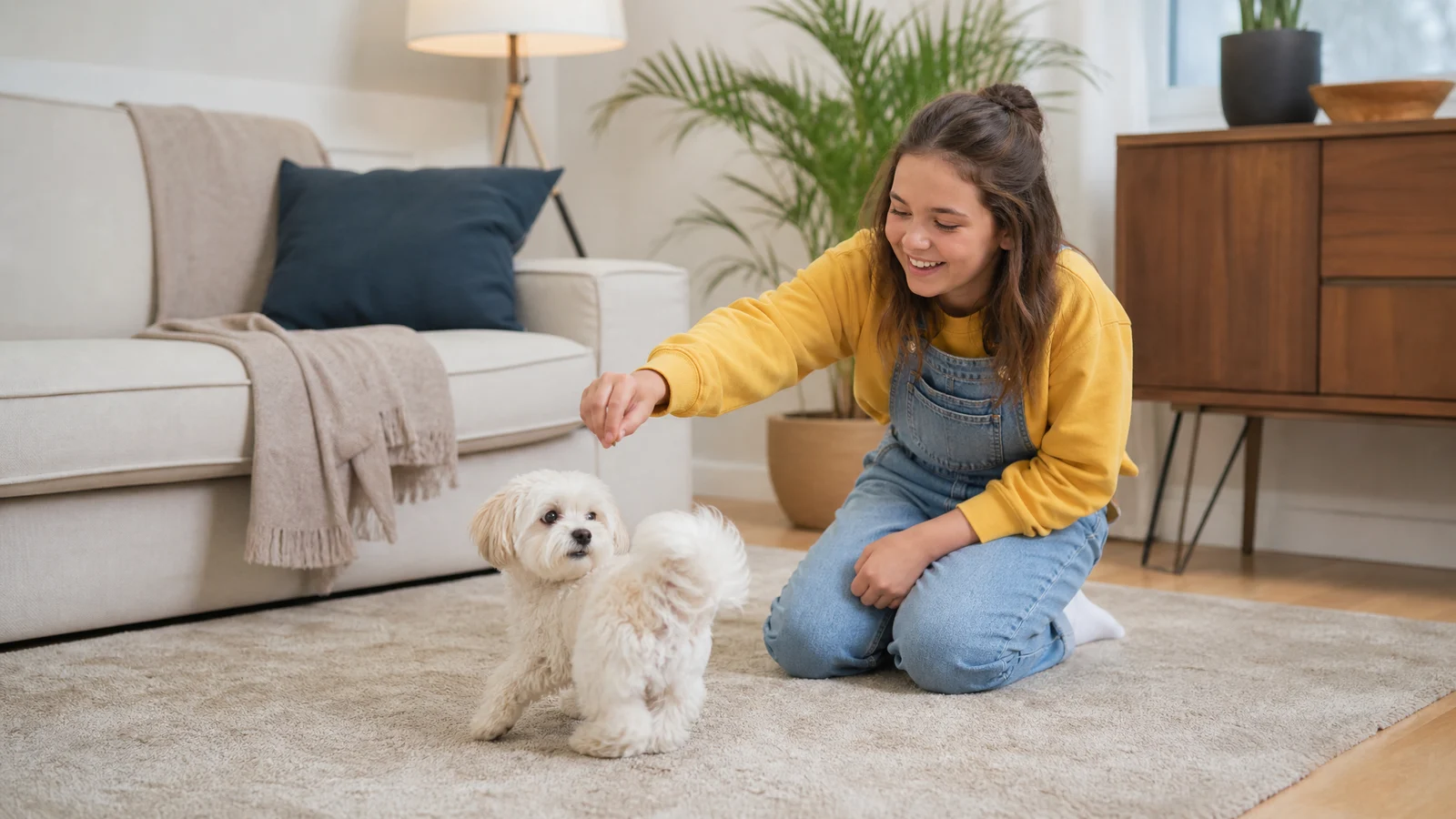
A useful Maltipoo trick session can begin without a trick list. Look first at the dog, the floor, and the energy in the room. A learner who is ready to investigate may enjoy a prop, while a dog who has just settled may prefer a quiet chin rest. The choice of game matters more than a flashy finish.
Possible quick learning or activity from either parent can influence interest, but it cannot promise talent or motivation. Toy Poodles have an association with canine sports, and Maltese can be lively companions. We treat the home as a set of optional mini studios. This guide covers setup, a game menu, three independent stations, optional object work, and a clean finish. You will reward voluntary steps and stop before the room becomes a performance circuit.
A Maltipoo Trick Training Studio
Pick a nonslip area with enough room for the behavior you intend to teach. Move hot items, cords, rolling objects, and foot traffic out of the setup. A kitchen corner can suit food delivery, but training should happen away from cooking. The safe boundary is part of the lesson.
Prepare tiny rewards and one object at most. Extra props encourage the handler to rush from idea to idea. Start with empty hands when the game needs no equipment, then bring out the relevant item only after the Maltipoo can look around and return attention comfortably.
Choose a short marker such as “yes.” Use it precisely as the wanted choice occurs, then deliver food promptly. The marker identifies one action. It should not stretch across a paw lift, a turn, and a sit as though all three were the same answer.
A release cue gives the repetition a clear edge. Mark, reward, release, and let the dog move. Wait for a voluntary return before inviting another turn. That space shows whether the game remains appealing, and it prevents food from holding a reluctant dog in the studio.
Trick practice supplies mental activity, not a replacement for exercise, sniffing, play, or sleep. The Maltipoo exercise guide can help place these small lessons inside a fuller day. A tired dog does not need to earn rest by completing one more behavior.
Trick Training Choices for Today
Instead of following a fixed order, sort games by the response they ask from the dog. Some days favor stillness and contact. Other days favor searching or a few broad steps. The table is a menu, and each row can stand alone for an entire session.
| What the Dog Offers | Game to Try | Keep It Comfortable |
|---|---|---|
| Approaches your hands | Palm touch or chin rest | Keep the hand low and allow retreat |
| Moves with loose balance | One wide curve around a landmark | Use traction and avoid tight turns |
| Investigates new surfaces | Front paws on a low platform | Keep it broad, steady, and near the floor |
| Enjoys using the nose | Open-box food search | Remove staples, tape loops, and plastic |
| Chooses to carry toys | Brief pickup and exchange | Never chase or force release |
The dog may choose a different row than the one you planned. Accept that information. If a Maltipoo sniffs the platform but will not step toward it, reward calm investigation or put it away. The next session can use a familiar hand game instead of turning hesitation into a test.
Use objects as stable landmarks, not surprises. Prevent baskets from tipping and boxes from sliding. A prop that moves or makes a harsh sound can change the emotional problem immediately. Stability creates room for curiosity, while novelty for its own sake adds little.
Movement should remain easy in both directions. Stop when the dog shifts weight oddly, shortens a step, or avoids a familiar route. Growing enthusiasm does not justify more height, speed, or repetition. The best version is the one the Maltipoo can enter and leave with ordinary movement.
Three Independent Maltipoo Training Studios
These studios do not unlock one another. A hand game can stay a favorite without leading to an object chain, and a scent search does not need a formal retrieve. Run one studio, note what the dog enjoyed, and put the materials away before considering another.
A Hand Conversation in the Kitchen
Present an open palm a few inches from the Maltipoo’s nose. Mark a glance, a small lean, or voluntary contact. Reward from the other hand so the target stays visually simple. After several easy touches, move the palm slightly left or right.
Add a cue only when the approach has become predictable. A low palm can guide position or begin a Maltipoo recall game without pushing the dog’s body. Keep it close enough that the dog does not jump or stretch to reach it.
For a quieter choice, offer a flat hand beneath the chin. Mark the first gentle contact, reward, and release. Build only a moment of duration at first. If the dog paws, mouths, or backs away, change the angle or reward an approach rather than holding the hand in pursuit.
The chin rest must remain voluntary. It can become a calm cooperative behavior, but it is not permission to restrain the head. End after an easy repetition and wash food residue from the work area before ordinary kitchen activity resumes.
A Curved Route in Open Floor Space
Place one stable chair or cone where the dog has wide clearance. Walk with the Maltipoo around part of the object, using the palm target as a guide. Mark after a few balanced steps and reward before speed rises. Complete the circle in later repetitions rather than all at once.
Once the route is familiar, make the hand motion smaller. The object and your position should explain the path before a verbal cue carries it. Change direction on another day, and widen the turn if one side looks less comfortable.
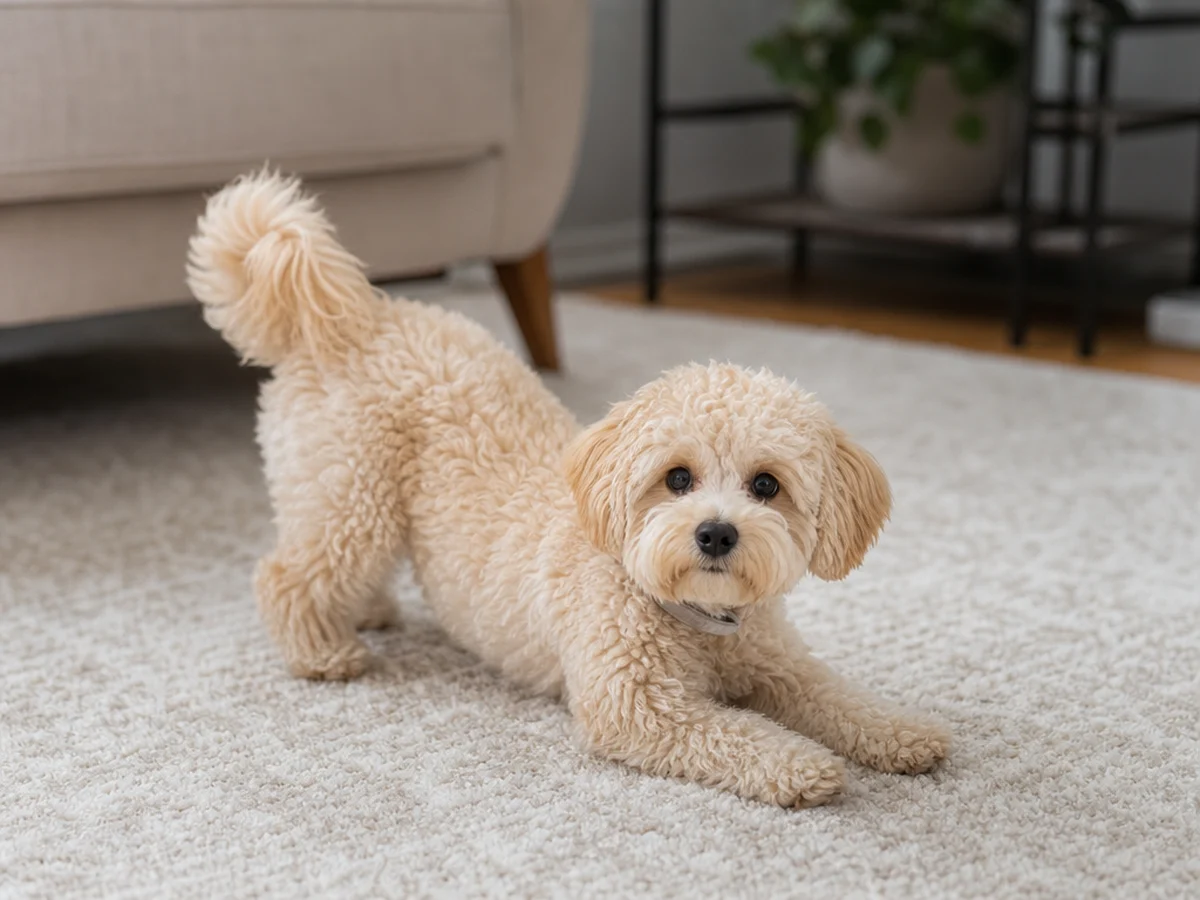
A low, nonslip platform offers a different movement question. Mark a look, an approach, and then one front paw. Reward beside the platform so stepping away stays available. Add a second paw only after one paw is easy, and keep the rear feet on stable ground.
The Toy Poodle parent is described by AKC as enjoying several canine sports. That parent-breed history suggests possible enthusiasm, not a promise about a Maltipoo’s structure or interests. Let this dog’s gait and willingness decide whether the movement studio remains open.
An Open-Box Search Area
Set several open cardboard boxes on the floor with generous space between them. Remove staples, dangling tape, plastic, and anything the dog could swallow. Let the Maltipoo watch you place food in easy locations, then step back instead of pointing at each answer.
Best Friends describes beginning nose work with open baited boxes so discovery rewards the search. That activity is a game, not proof of working ability. It also does not predict that every Maltipoo will prefer scent puzzles to another kind of play.
On later turns, bait fewer boxes while every lid stays open. Change the arrangement before making the hiding problem harder. If the dog paws or chews cardboard, use a sturdier safe setup and mark nose investigation earlier. The goal is searching, not dismantling containers.
A familiar toy can sit partly visible beside one box. Reward locating it whether the dog orients, touches, or picks it up. Decide which response you want before adding a cue. Finding, lifting, carrying, and releasing remain separate behaviors unless you deliberately teach them together.
Object Training Without a Cleanup Script
Begin object work only when the Maltipoo already chooses a safe, soft toy. Put it on the floor and mark calm investigation. A nose touch may be enough for the day. Mouth contact becomes a later option, and no finished basket routine is required.
ASPCA notes that dogs need opportunities to play, smell, chew, chase, and scavenge. Its enrichment ideas support varied outlets. A toy lesson can serve one small part of that menu when materials are safe and participation stays voluntary.
Shape a Toy Exchange
Mark the moment the dog briefly lifts the toy. Offer food near your body, and reward when the mouth opens. Return the toy when it is safe. The exchange teaches that approaching you can preserve access rather than making every valued object disappear.
If the Maltipoo carries the toy away, stay in place. Work in a smaller quiet area and reward one step toward you. Chasing changes the game and can make distance more valuable. Refresh the return separately before asking for a release nearby.
Deliver the reward where you want the exchange to happen. Food placed at arm’s length can pull the dog away from the intended spot. Clean placement helps without grabbing the collar, holding the toy, or turning the repetition into a contest.
Stop after a confident release and return of the toy. Repetition can make a voluntary exchange feel like repeated loss. A dog who walks away after the release has given useful information, and the session can finish there.
Add a Container Only When It Helps
A wide, stable container can catch a toy during an already familiar exchange. Slide it beneath the release point, mark the landing, and reward. The first success requires no aim because the handler positions the container. Keep it still and prevent tipping.
Move the container only a small amount after repeated easy landings. If pickup or return weakens, remove it and practice the comfortable component. The dog does not owe a cleanup behavior, and a toy exchange remains complete even when no basket appears.
Use a repair menu when an object game loses clarity. Change one part, then observe whether comfort returns.
- Replace a noisy or rolling prop with one soft familiar toy.
- Shorten the distance between pickup and exchange.
- Reward investigation before asking for mouth contact.
- Remove the container and practice release by itself.
- End the session if the dog avoids returning or shows tension.
This repair approach keeps the handler from repeating the hardest version. It also reveals which piece needs practice. A weaker link is not stubbornness, and food should never be used to pull a worried dog toward an object.
A Clear Finish for Trick Training
Choose a final behavior that was already easy today. It might be one palm touch, a calm look toward a box, or a brief chin rest. Mark, reward, give the release cue, and put the materials away. A defined finish helps the dog stop offering behaviors for attention.
Do not combine every successful station into a performance. Linking behaviors changes the difficulty because transitions become part of the task. Separate mini studios preserve choice and let you revisit the game that produced relaxed engagement without dragging other skills behind it.
Keep a short note with the room, surface, object, and response. Write “approached platform twice and stepped away easily,” not “good at props.” Observable notes make the next setup easier to repeat and keep a single energetic session from becoming a claim about the dog’s talent.
Maintain regular veterinary care, and discuss new movement reluctance, unusual fatigue, or sensitivity. A reward-focused trainer can help when fear, frustration, or persistent confusion prevents comfortable learning. Neither kind of help should be replaced by drilling a trick through a visible change.
Tomorrow, open only one studio. The Maltipoo may choose a search, a hand conversation, a broad curve, or no training at all. Success is a dog who understands the small question, receives a useful reward, and can leave while the rest of the house remains ordinary.
 BehaviorQuieting a Maltipoo Who Barks at Every Visitor
 Puppy trainingWhat to Expect When Potty Training a Maltipoo, Week by Week
 BehaviorSmall Dog, Big Bounce: Keeping a Maltipoo Off Your Knees