 Maltipoo
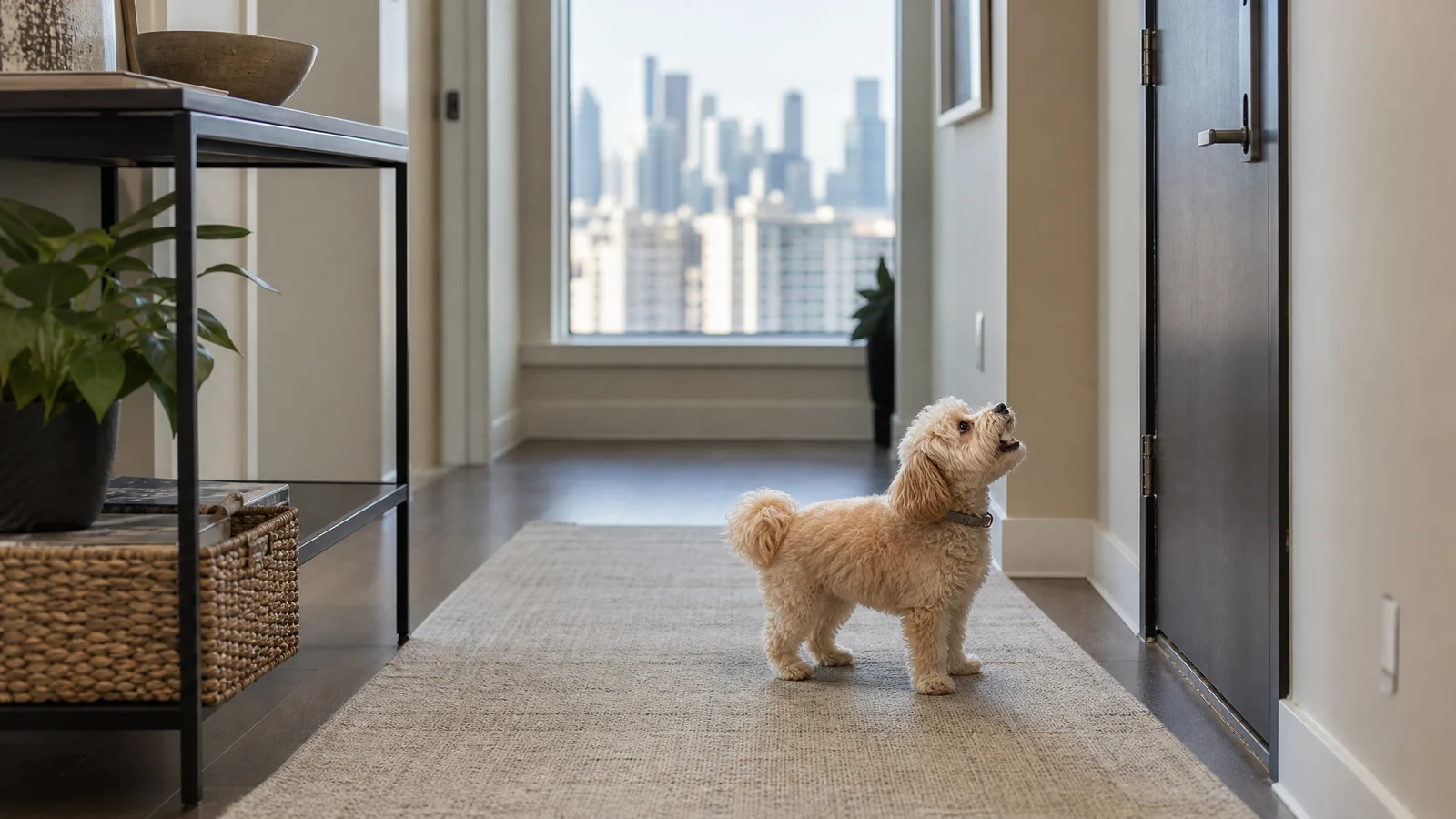
To reduce a Maltipoo's barking at visitors, teach the dog where to go before anyone arrives and reward the first turn away from the door. Silence is not the first goal.
We begin with one alert followed by movement to a station and a body that can soften again. The whole arrival is a chain, not a single bark.
A car door, footsteps, a knock, the opening door and a reaching guest can each raise the difficulty. This guide separates those pieces, then puts them back together in a routine that friends and family can follow without crowding the dog. It also shows which changes mean the rehearsal should become easier.
Maltipoo Barking at Visitors Follows an Arrival Chain
A small dog can produce a large alarm and still feel unsure about the person entering. Some Maltipoos rush forward, while others bark and retreat as the door opens. Neither response tells us that every dog of this cross behaves the same way, so watch the individual dog's distance, movement and recovery.
The parent breeds offer context without predicting an individual. The AKC Maltese profile describes an adaptable companion with watchdog qualities. A Maltipoo may inherit alertness, social interest, caution or a mixture, and the training plan should follow what happens in the room.
Success is not a dog who never reports a person at the door. A successful result is a dog who can notice, follow a familiar cue and return to ordinary behavior. Recovery might look like taking food gently, sniffing, resting on a mat or choosing to observe from behind a gate.
This distinction keeps the plan humane and measurable. The ASPCA barking guide recommends identifying why barking happens before choosing a response. A dog who wants access to a guest needs a different distance than one who wants the guest farther away.
Map Maltipoo Barking at Visitors
Observe two or three ordinary arrivals without trying to test the dog. Write down the first cue the dog notices, the point where food stops mattering and the first sign of recovery. The useful training point sits before the rush or sustained barking, while the dog can still turn or move with you.
| Link in the chain | What to notice | Easier practice |
|---|---|---|
| Sound outside | Ears lift, head turns or dog leaves a resting place | Very soft recorded or helper-made sound |
| Door activity | Dog runs, spins or begins a repeated bark | Small handle movement with no entry |
| Person appears | Dog moves forward, retreats or cannot disengage | Familiar helper at greater distance |
| Guest moves | Barking restarts when the person stands or leaves | One slow movement while dog remains at station |
The departure belongs on the map too. A dog may settle while everyone sits, then bark when a guest stands, puts on a coat or reaches for the door. Treat those movements as separate cues rather than assuming the dog has forgotten the whole lesson.
Use a phone note or paper card to keep the map practical. Record only the earliest reaction, the hardest moment and the recovery cue that worked. We want a pattern the household can act on, not a long account that hides the useful decision.
Compare this narrow pattern with the broader Maltipoo barking guide. That page helps sort alert, attention and other barking contexts. Here, every decision concerns the visitor chain, from the first sound through the person's exit.
Build a Station for Visitor Barking
Choose a bed or mat that is not in the doorway or trapped against a wall. The dog should be able to see enough to feel informed without standing in the guest's path. A gate can add safety, but the station still needs to be a rewarding place rather than a spot where the dog is sent only when something difficult happens.
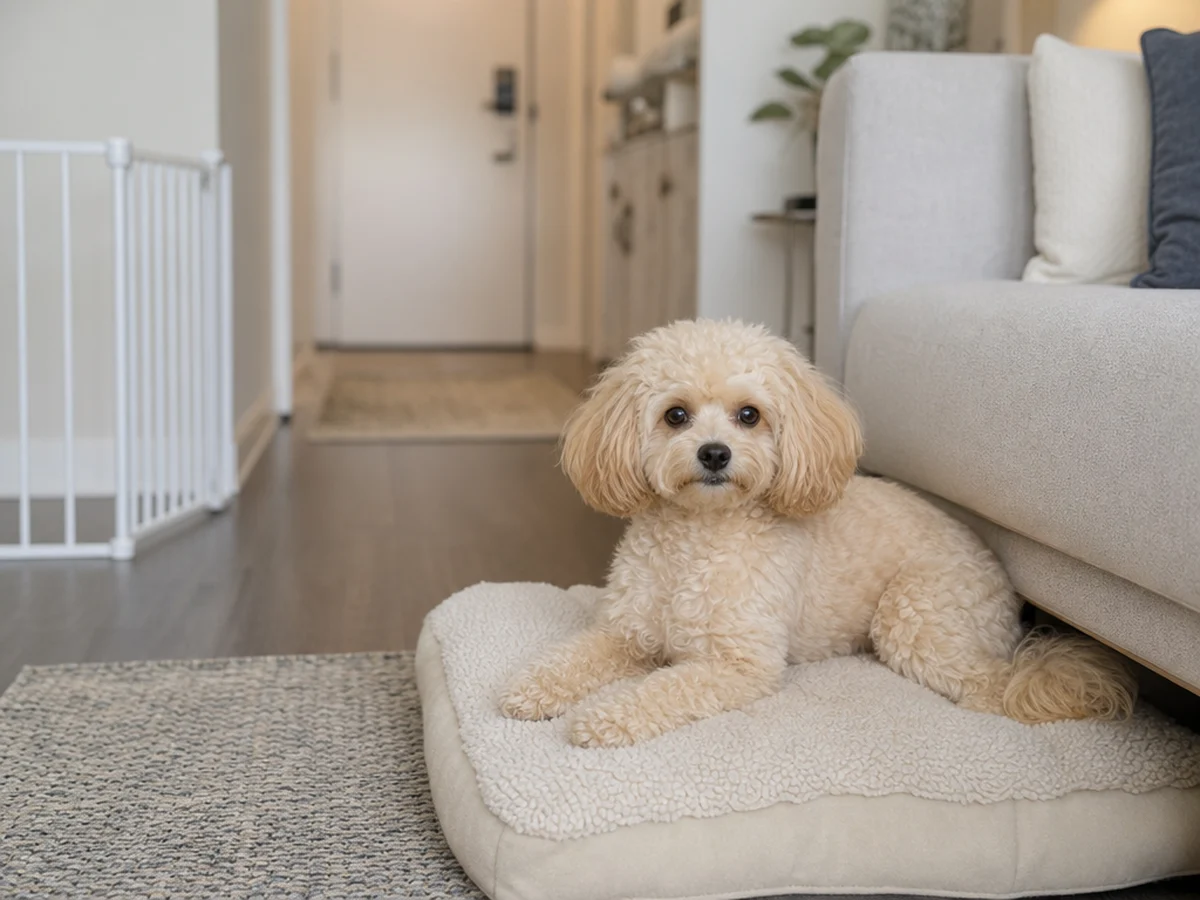
Teach the route when the house is quiet. Toss a treat onto the station, mark the dog's arrival and place another reward low between the paws. Release the dog before restlessness starts, then repeat from different parts of the room until the route feels familiar.
Add a settle job that fits the dog. A few scattered treats, a safe food toy or calm hand-delivered rewards can support sniffing and a lowered head. The job should keep attention near the station without making a guest responsible for feeding or approaching.
Reward-based work still has structure. The AVSAB training statement explains that humane training includes routine and clear guidelines without fear or pain. Here, the guideline is simple: arrivals happen at the station, and access to the room grows only while the dog can recover.
Put the Station Route on Cue
Practice household movement before adding a visitor. One person walks to the door, touches the handle and returns while another rewards the dog at the station. If the dog leaves, lower the difficulty and make the next movement smaller rather than repeating the full trigger.
Lower the Volume of Visitor Barking Practice
A real guest combines too many changes for the first lesson. Separate sound, door motion and human appearance. Work on one piece until the dog can notice and return to the station, then add the next piece at a lower intensity than everyday life.
Begin with a helper who can follow instructions and does not need to greet the dog. The helper might tap once on an interior surface, pause, then leave. Reward the dog's head turn or first quiet breath at the station, and end while the body remains loose.
Next, let the helper appear at a distance without entering. Open the door only a small amount if that keeps the dog able to eat and move. A Maltipoo who cannot disengage is not refusing a known skill. The setup has simply passed the point where learning is easy.
The RSPCA training advice explains why rewards help a dog repeat a useful choice. Pay the turn away, the route to the mat and calm observation. Waiting for complete silence can miss the small choices that actually build the routine.
Keep sessions short and leave recovery time between them. Repeated knocking can make the dog more vigilant rather than more skilled. One useful arrival followed by ordinary rest teaches more than a series of rehearsals that ends with the dog scanning every sound.
Run the Full Maltipoo Visitor Routine
Put the pieces together only after the station and low-level door cues are fluent. Prepare rewards before the helper arrives, close interior doors that create chase routes and tell the guest the plan in advance. The dog should not be the only participant expected to remember a script.
- The helper sends a message before approaching, so the household is ready.
- The dog moves to the station before the knock or door movement.
- The helper enters sideways, avoids reaching and goes to a seat.
- The handler rewards the dog for staying, returning or looking away.
- The guest ignores the dog until the handler chooses a lower-pressure option.
- The departure is rehearsed with the dog back at the station.
When the Maltipoo Wants to Greet
Enthusiastic barking can travel with jumping and frantic contact. Keep a light leash with the handler or use a gate so the dog cannot practice bouncing at knees. The separate polite Maltipoo greeting plan teaches how floor-level behavior earns attention.
Release for a greeting only if the body is loose and the dog can return when called. The guest remains still and lets the dog approach. A brief sniff followed by a return to the station is more useful than prolonged excitement that restarts the alarm.
When the Maltipoo Needs More Distance
A dog who retreats, freezes or barks harder as the guest looks over needs protection from social pressure. Keep the gate closed, increase distance and let the guest remain neutral. No greeting is required for the visit to count as successful.
Give the dog a quiet room if observation remains difficult. This is not a failure or punishment. It is management that prevents another overwhelming repetition while training continues with easier helpers and shorter appearances.
Troubleshoot Barking at Visitors After the Door Opens
If barking continues at the station, ask what changed. The guest may be too close, rewards may arrive after the dog is already overwhelmed or the station may face the busiest path. Change one variable at a time so the next rehearsal tells you something useful.
When barking restarts as the guest stands, practice standing separately. The helper shifts forward, then sits before the dog reacts. Over several easy repetitions, the helper rises a little farther while the dog receives rewards for staying or turning back to the handler.
When the dog races from the station, shorten the route or add a gate. Rebuild the station without a visitor before trying the trigger again. A physical boundary protects the lesson from becoming a contest between the mat and the doorway.
When excitement and worry alternate, keep the plan conservative. A dog may solicit contact and then bark when a hand moves overhead. Guests should avoid looming, lifting or reaching for the face, and the handler should end access while the dog still looks comfortable.
Move Rewards Away from the Threshold
Check reward placement when the dog keeps returning to the threshold. Food delivered beside the door can hold attention in the busiest area. Deliver it at the station or scatter it away from the visitor so the dog's movement rehearses the route you want.
Regular veterinary visits belong in the background because pain, sensory changes and other health problems can affect tolerance. A sudden change in visitor behavior deserves a veterinary conversation before the household assumes it is only a training issue.
Know When Barking at Visitors Needs More Help
Seek qualified reward-based help when the dog cannot recover after the visitor leaves, redirects toward a person, snaps, or becomes more intense despite careful distance. Use gates, closed doors and planned quiet space while help is arranged. Friends should not be used to test whether the dog is improving.
Also separate visitor work from distress about being alone. Barking that begins around departures, confinement or isolation needs a different assessment. The site's Maltipoo alone-time guide explains why that problem should not be folded into a doorbell routine.
Choose one action today: place the station, reward ten quiet trips to it and stop before adding the door. That modest rehearsal creates the route the dog will need later. Once the route feels ordinary, the next visitor can become a planned lesson instead of a surprise that everyone tries to solve at the threshold.
 Puppy trainingWhat to Expect When Potty Training a Maltipoo, Week by Week
 BehaviorSmall Dog, Big Bounce: Keeping a Maltipoo Off Your Knees
 Training basicsMaking the Crate a Cozy Den for a Crying Maltipoo