 Maltipoo
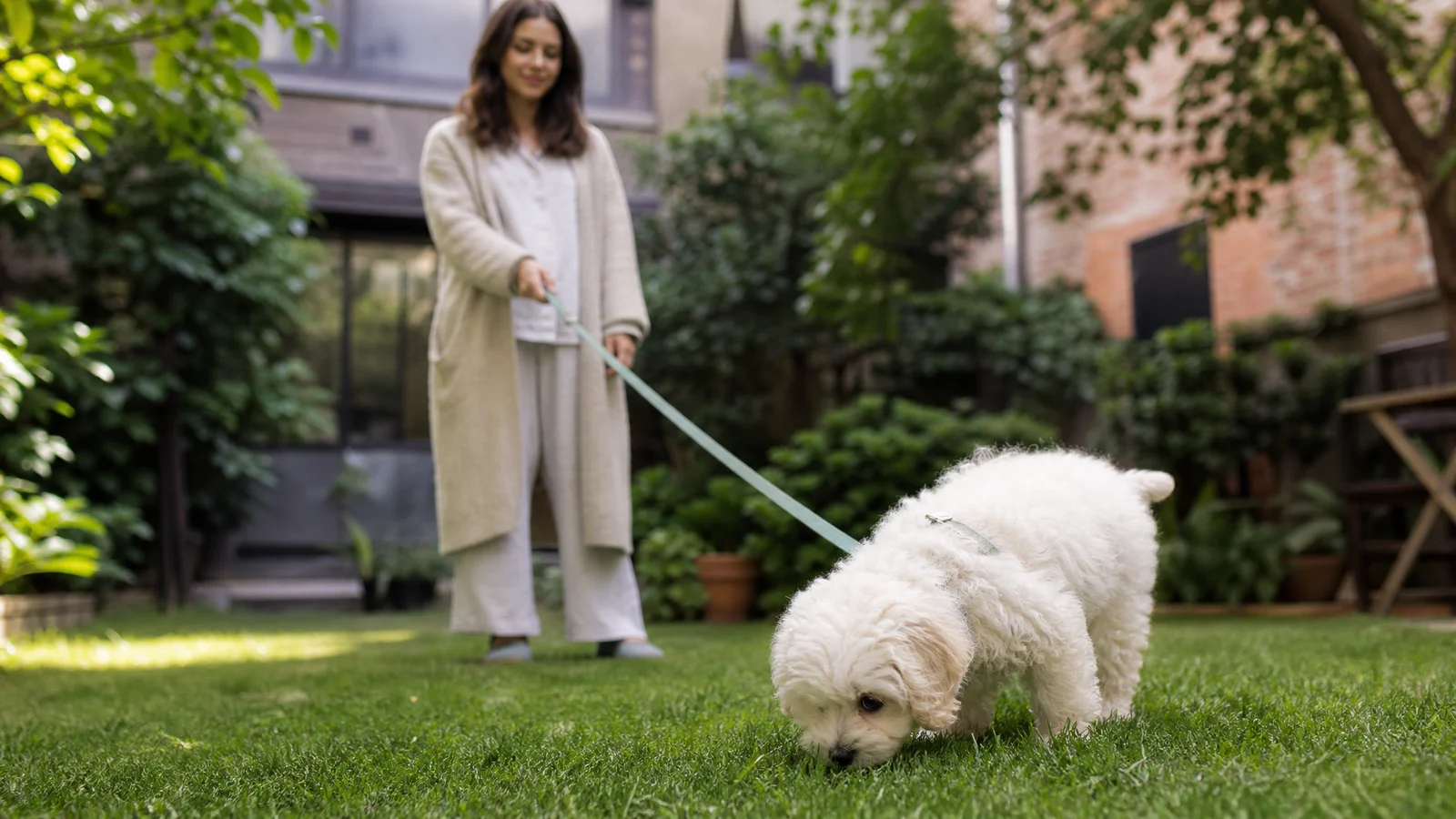
A Maltipoo puppy can stay clean for several days, then have an accident ten minutes after coming indoors. That does not erase the good days. It shows that one part of the schedule, supervision or outdoor routine was not yet reliable in that situation.
There is no honest calendar date when every Maltipoo is finished. Progress appears as a longer predictable pattern, clearer signals and fewer surprises under the same conditions. Below, this week-by-week house training guide shows when to add freedom, when to restore structure and when an accident deserves a veterinary call.
We measure the routine under comparable conditions instead of comparing one unusually easy day with one difficult day. The calendar is a decision tool, not a promise that a puppy should meet the same deadline as another dog.
Measure Maltipoo House Training Progress
Count useful behaviors, not only accident-free days. Notice whether the puppy empties promptly in the chosen place, accepts the outing routine and returns inside without immediately looking for another spot. A puppy who is becoming predictable is learning even before the intervals grow.
Keep the training mechanics consistent while you judge the timeline. The Humane World guide recommends one outdoor destination, a leash and a consistent word during elimination. Reward at the spot as soon as the puppy finishes, rather than waiting until everyone is back indoors.
Small bodies can require frequent opportunities, but size alone does not produce one universal schedule. Sleep, play, meals, excitement and individual development all matter. Build the day around transitions, then use the log to learn your puppy's actual pattern.
The approved Maltipoo potty training guide covers the full teaching method. This page has a narrower job: deciding whether that method is progressing across the weeks and changing freedom without moving too fast.
The First Week of Maltipoo House Training Is Observation
During the first week, make success easy to see. Take the puppy out after waking, eating, active play and other major transitions. Supervise closely indoors or use a comfortable small area when direct attention is not possible, then record what happened without judging the puppy.
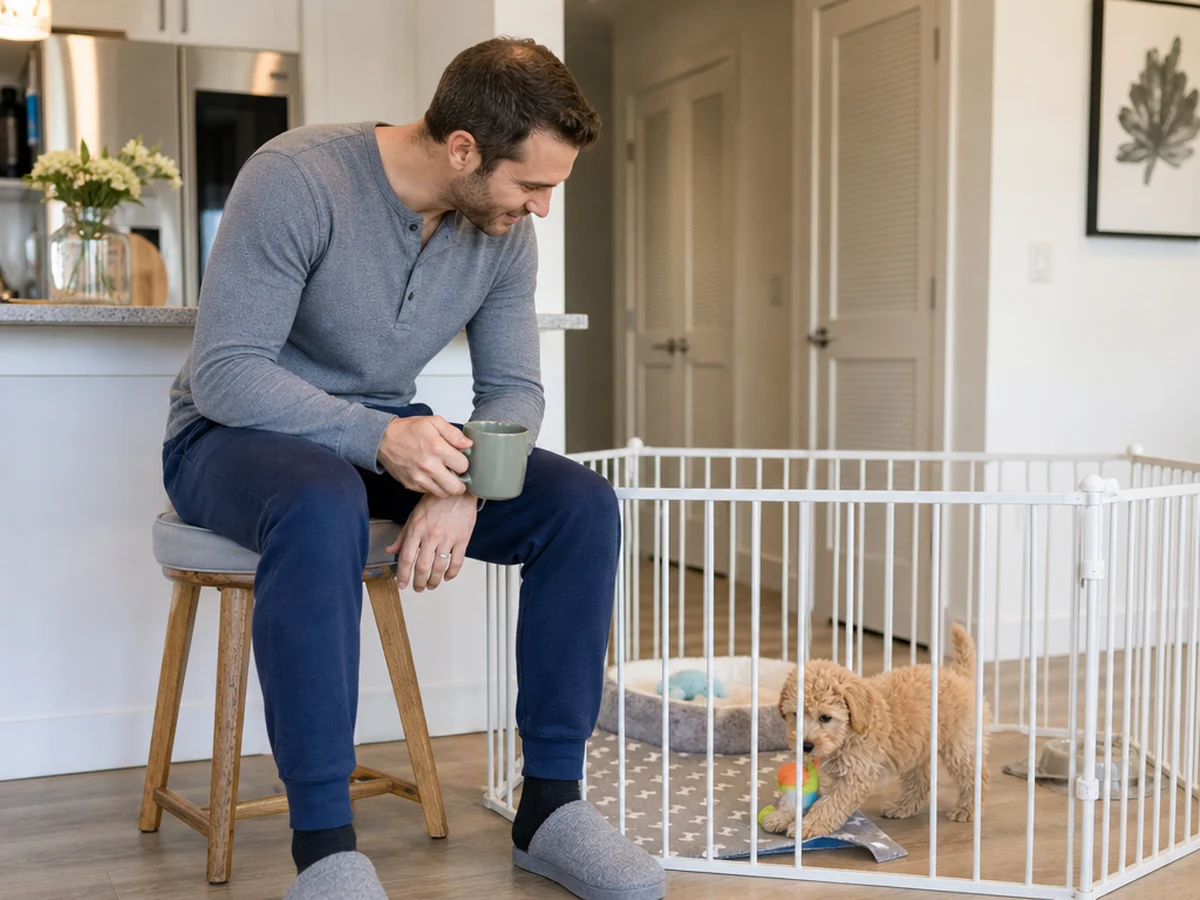
A useful first-week log has only three lines: what happened before the outing, whether the puppy eliminated and what happened during the next indoor period. This exposes patterns without turning the household into a bookkeeping project.
- Record the transition, such as waking, eating or play ending.
- Record the outdoor result and whether the reward was immediate.
- Record any accident, including location and time since the last success.
Clean accidents with an appropriate odor-removing product and protect that location while the habit changes. The RSPCA training guidance supports reward-based learning. Frightening or scolding a puppy does not explain where to go and can make elimination around people less comfortable.
At the end of the week, look for two or three repeatable success windows. Perhaps the puppy reliably goes after waking but struggles after indoor play, or stays clean in one room but not another. Those differences tell you where the next week's structure belongs.
Weeks Two Through Four of House Training Build a Pattern
The next phase is not a race to wait longer. It is a chance to make the successful sequence boringly familiar. Keep the location, cue and immediate reward stable while adjusting only the intervals that the log shows are consistently easy.
Reward every outdoor success while the habit is young. The reward can become less frequent later, but removing it during an uncertain stage makes the correct choice less clear. Keep praise calm enough that the puppy finishes before play begins.
Family consistency matters during these weeks. Use the same door, destination and cue when possible, and tell one another when the puppy last went. A missed handoff between people can look like a puppy problem even though the schedule was the part that failed.
A puppy who becomes distracted outdoors may need a quieter spot and a shorter leash route. Give the toilet opportunity first, then offer sniffing or play after success. This makes finishing the job open the door to another activity without turning the outing into pressure.
Later Maltipoo House Training Uses Small Freedom Tests
Freedom should grow in one dimension at a time. Add a few supervised minutes, open one additional room or test a slightly longer interval. If all three change at once, the next accident cannot show which demand exceeded the puppy's current skill.
Choose a test after a confirmed outdoor success and during a calm part of the day. Stay close enough to see a sudden search, a tight circle or movement toward a previous accident location. Quietly take the puppy out when those early signals appear.
Do not confuse signaling with full reliability. A puppy may head toward a door only in one room or when a person is nearby. Continue offering scheduled trips while the signal becomes clearer, instead of making the puppy responsible for notifying a busy household every time.
Development is uneven. Travel, weather, a new household routine or a burst of puppy activity can temporarily reduce predictability. Treat the change as information and restore the structure that previously worked.
| Stage | Main goal | Evidence before moving on |
|---|---|---|
| First days | Learn the puppy's transition pattern | Several predictable successes in the same contexts |
| Following weeks | Repeat the outdoor sequence | Prompt elimination and fewer supervised mistakes |
| Early freedom | Test one small change | The puppy stays predictable in the added area or interval |
| Setback | Restore the last easy schedule | Success returns before another test |
Reset Maltipoo House Training After an Accident
Respond to an accident by protecting the next opportunity, not by revisiting the mistake. Take the puppy outside if elimination may not be finished, clean the area and note the previous transition. Then return to the last schedule that produced a reliable pattern.
The Battersea toilet guide advises against punishment and recommends veterinary attention when frequent accidents continue despite consistent training or when other concerning signs appear. A reset is useful only when the dog is physically able to follow the routine.
Keep the reset long enough to rebuild confidence. Several easy repetitions across the problem context are stronger evidence than one clean afternoon. When you test again, change only the variable that failed, such as the post-play interval or access to one room.
Night accidents need their own review. Check bedtime timing, the last successful outing and whether the puppy woke or showed restlessness. Do not use a difficult night as proof that daytime progress has disappeared.
Adjust the House Training Timeline or Call the Veterinarian
Regular veterinary visits support any puppy training plan. Contact the veterinarian when accidents suddenly increase, urination looks painful or difficult, thirst changes, or a previously reliable dog becomes incontinent. The Merck Veterinary Manual lists frequent, painful or inappropriate urination among signs associated with urinary infection.
If health concerns are ruled out, return to the log and find the earliest point where the pattern changed. The answer may be a schedule adjustment, closer supervision or a smaller freedom test. It is not a reason to make the training harsher.
Owners often ask whether puppy training is generally on track, when leash skills should join the routine and what to do about chewing during close supervision. The site's Maltipoo puppy training overview puts the timeline in context. Move to the next question only after today's toilet schedule is clear enough that every person in the home can follow it.
 BehaviorSmall Dog, Big Bounce: Keeping a Maltipoo Off Your Knees
 Training basicsMaking the Crate a Cozy Den for a Crying Maltipoo
 CareNail Trims, Paw Touches and Ear Checks for Your Maltipoo