 Maltipoo
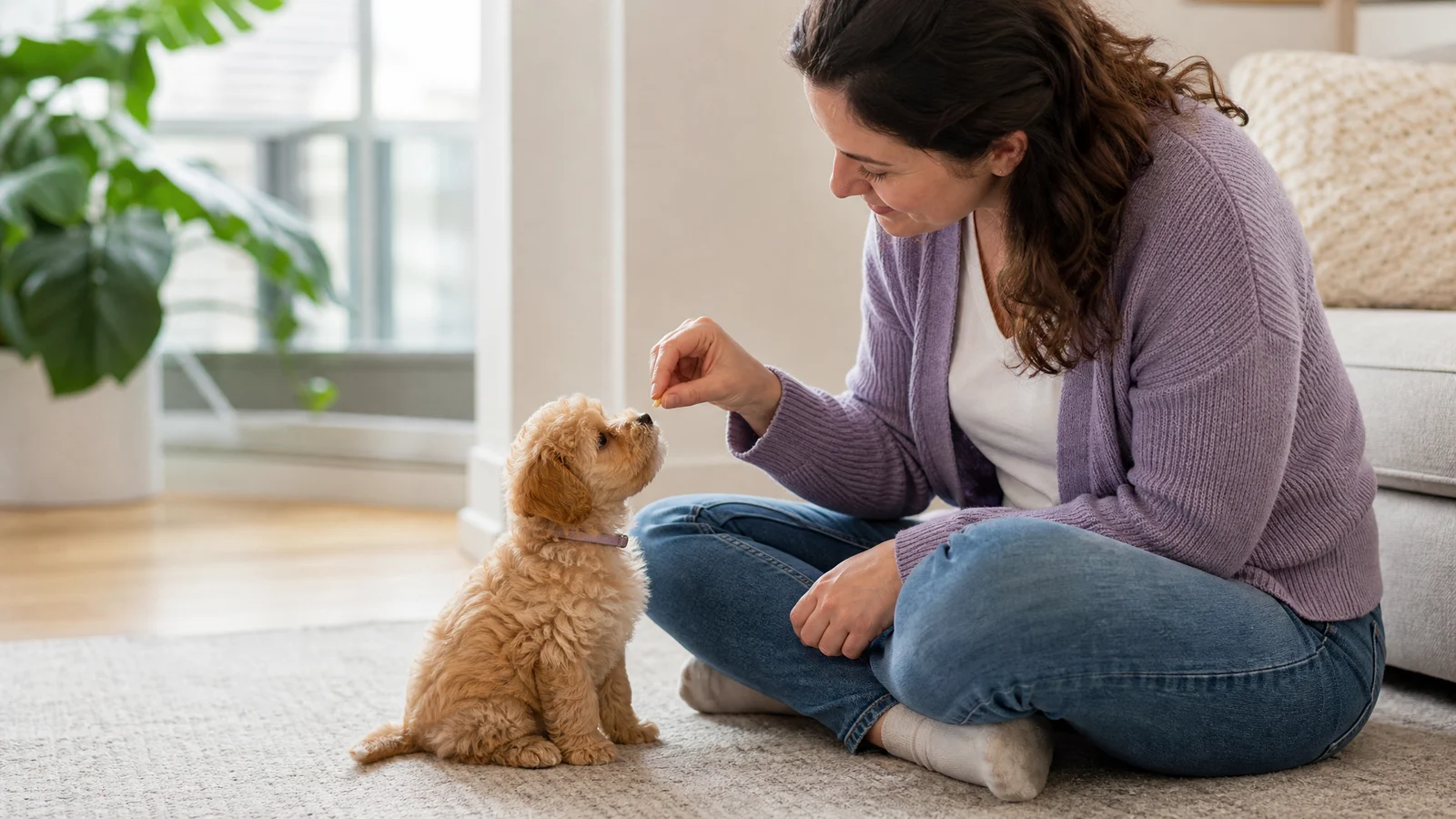
Many owners tell a familiar story. A Maltipoo puppy sits perfectly in the kitchen, tail wagging, then stares past you on the porch as if the word had never been taught.
Nothing is wrong with the puppy. The Poodle side tends to be quick and eager to please, while the Maltese side can be clever and a little independent, and a Maltipoo may inherit either blend. Progress is uneven rather than slow, and owners also report that reliable potty habits arrive later than the early weeks suggest.
In this article, we'll go through what to teach in the first month, how cues and leash manners grow in months three and four, why the six-month dip happens, and the signs that tell you to keep going or call for help. We have trained this breed for many years, and short, happy, consistent sessions beat long drills far more often than not.
Puppy Training Begins the Day Your Maltipoo Arrives
Training starts on the first day because your puppy is already learning, whether you plan lessons or not. Each time a sit earns a treat or jumping earns attention, they take note. The better question is not when to start but what you want them to learn in those first hours.
The two parent breeds explain the mix you may meet. Poodles score 5 of 5 for trainability and tend to be eager to please as long as sessions stay fun and upbeat. Maltese score 3 of 5 and are described as clever, sometimes stubborn and determined, yet responsive to positive methods.
Treat those descriptions as a range, not a forecast. Individual dogs differ, even within one litter. Many owners find the stubborn streak shows up as selective hearing, with the puppy responding when a treat is visible and drifting off when it is not. Maltese have spent centuries as human companions and learned how to get what they want from their people, and a cross may inherit that talent.
Both temperaments respond to the same approach: reward-based training, where something your puppy really likes, such as food, a toy, or praise, follows the behavior you want, which makes it more likely to happen again. Reliable potty habits, for instance, often arrive later than the early weeks suggest, so patience belongs in the plan from day one. Start now, keep it light, and let the calendar flex.
Your Maltipoo's First Month Home Is for Bonding and Basics
The first weeks have two jobs: building a relationship in which your puppy looks to you for good news, and teaching a short list of basics. Everything else can wait. Keep the list small enough that you can practice every item daily without turning the house into a classroom.
Name, Handling, and Short Sessions
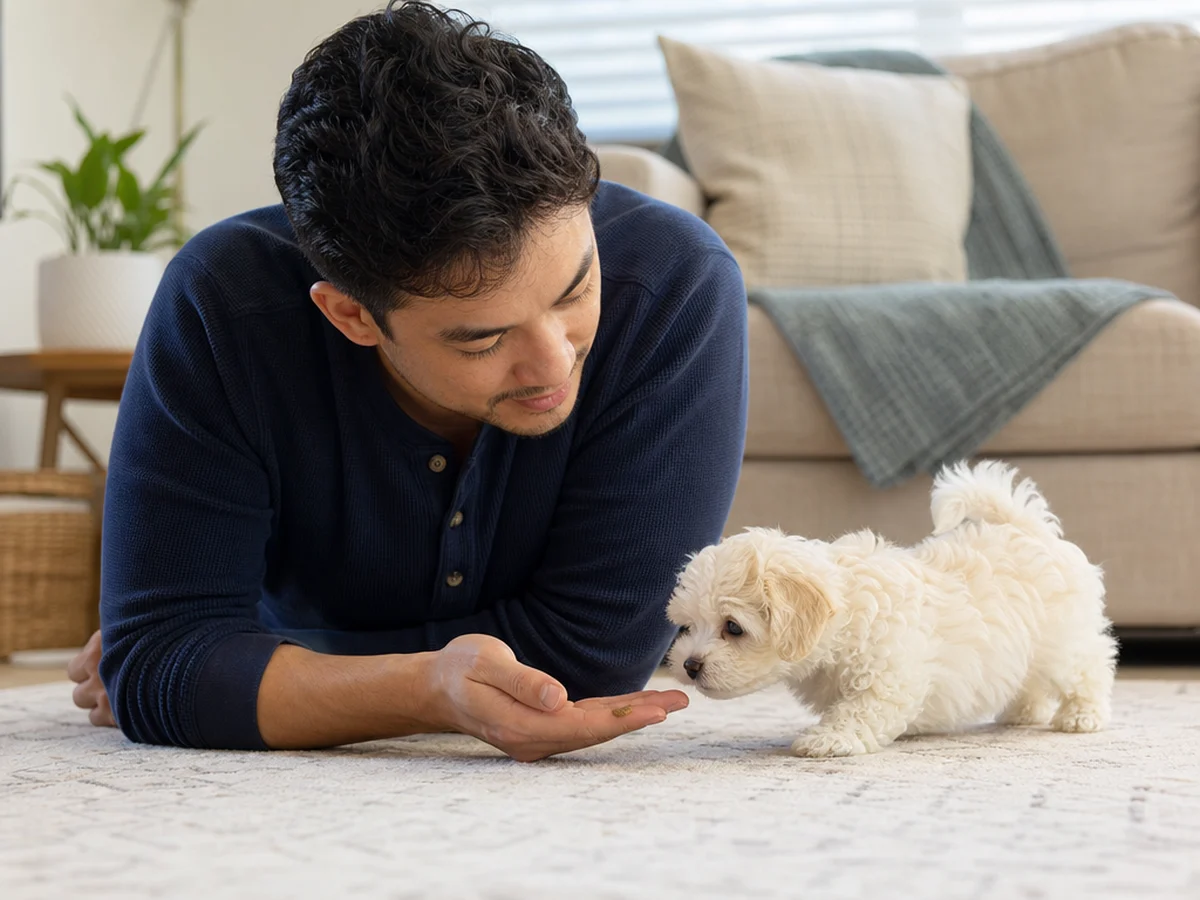
Start with name recognition. Say the name in a bright voice and reward the instant your puppy turns to look at you. A marker word, such as a crisp yes, tells the puppy the exact moment they earned a reward, which makes this precise.
Stop each lesson early, while your puppy is still eager for another round, and aim for just a few minutes at a time. The Poodle side loves a lively game, and the Maltese side loses interest when a lesson drags, so brief and cheerful suits both.
Add gentle handling in the same spirit. Touch paws, ears, and face for a moment, follow with a treat, and brush briefly each day. This coat needs frequent grooming for life, and a puppy who accepts handling makes every future groomer and vet visit easier.
Early confidence matters too. Introduce new surfaces, household sounds, and calm visitors at a pace that keeps your puppy relaxed, and pair each with a treat so the world predicts good things.
Potty Outings, Crates, and Alone Time
House training is mostly management plus timing. Owners who succeed describe frequent scheduled outings, as often as every 30 minutes for very young puppies, then hourly and tapering slowly. Take your puppy out right after meals and drinks, since some go immediately after eating or while drinking.
Deliver a high-value treat and praise the moment they finish in the right spot, and some owners keep that treat only for potty times. Our guide to Maltipoo potty training with rewards walks through the full routine.
Set expectations honestly. Owners who describe a timeline place reliable house training around 4 to 6 months, with weekly accidents until then and rare ones afterward. Some dogs learn to signal by going to the door or ringing a bell, though bell learning can take a couple of weeks.
A crate, plus a roaming space that you expand gradually, builds control and cuts accidents. Many puppies cry when left, and some settle before you return, while a minority stay quiet from day one. Early crying alone does not predict the adult dog. For nights, moving the crate beside your bed helps many puppies settle. Small wins, repeated often, are the whole curriculum this month.
Months Three to Four Bring Maltipoo Sit and Down Cues
By now your puppy can focus for slightly longer, which makes this the right window for the first formal cues. A cue is the word or hand signal that asks for a behavior, and a lure is a treat held near the nose to guide the body into position. Sit is the usual starting point, and the same steps work for down.
- Hold a treat at your puppy's nose and slowly lift it over their head until their bottom lowers.
- Say your marker word the instant they sit, then deliver the treat.
- Repeat until the movement is smooth, then say the cue word just before you lift the treat.
- Turn the lure into an empty-handed signal, and pull the treat from your pocket to reward instead.
In our experience with this breed, cues that lead to something the puppy already wants land fastest, such as sitting before the leash clips on or before a bowl goes down. Consistency matters as well, so everyone at home should use the same words and ask for the same things.
For leash manners, use a harness and reward your puppy for staying beside you, starting indoors and in the yard. Keep walks short at first, and know that a slow circle on a harness can prompt a hesitant puppy to go. Common advice treats toy dogs as ornaments who only need cuddling, but the Poodle side is extremely smart and active, and a bored Maltipoo invents their own games. Make yours fun with treats, tug, and tricks.
Puppy Training Hits a Wall Around Six Months
Adolescence is the stage between puppyhood and adulthood, when body and brain are changing and old lessons can seem to evaporate. Owners often report a puppy who suddenly ignores sit, wanders off mid-lesson, or has new accidents. The knowledge has not vanished. It has not yet been generalized, meaning practiced in enough places for the puppy to learn that a cue means the same thing everywhere.
Why Known Cues Seem to Vanish
The porch problem from the start of this article is generalization at work. It resembles a student who recites a poem perfectly at home and goes blank on stage: the knowledge is real, but the setting is new. The Maltese streak adds negotiation, so some puppies wait to see whether you will pay, repeat yourself, or give up.
Go back a step. Practice in easy places, then add a doorway, the yard, and a quiet street, raising the reward value as distractions rise. A popular tip is to keep repeating a cue until the puppy complies, but repeating teaches them that the first ask is optional. Ask once, wait a moment, and if nothing happens, lure the behavior and reward it.
Setbacks, Barking, and Staying Consistent
House training often wobbles at this age. Several owners describe a puppy who seemed trained and then regressed. Routine changes trigger setbacks, such as a holiday, a new house, or digestive upset, and rain, wet grass, or darkness make some dogs refuse to go outside. Return to frequent trips and rewards, and limit roaming space again.
Accidents also tie to being left alone, so take your puppy along when practical or set up a calm alone-time routine. Pads divide owners. Some found that removing pads reduced accidents, while others saw pad preference persist, and some are content with a dog who uses both. Decide what you want and stay consistent.
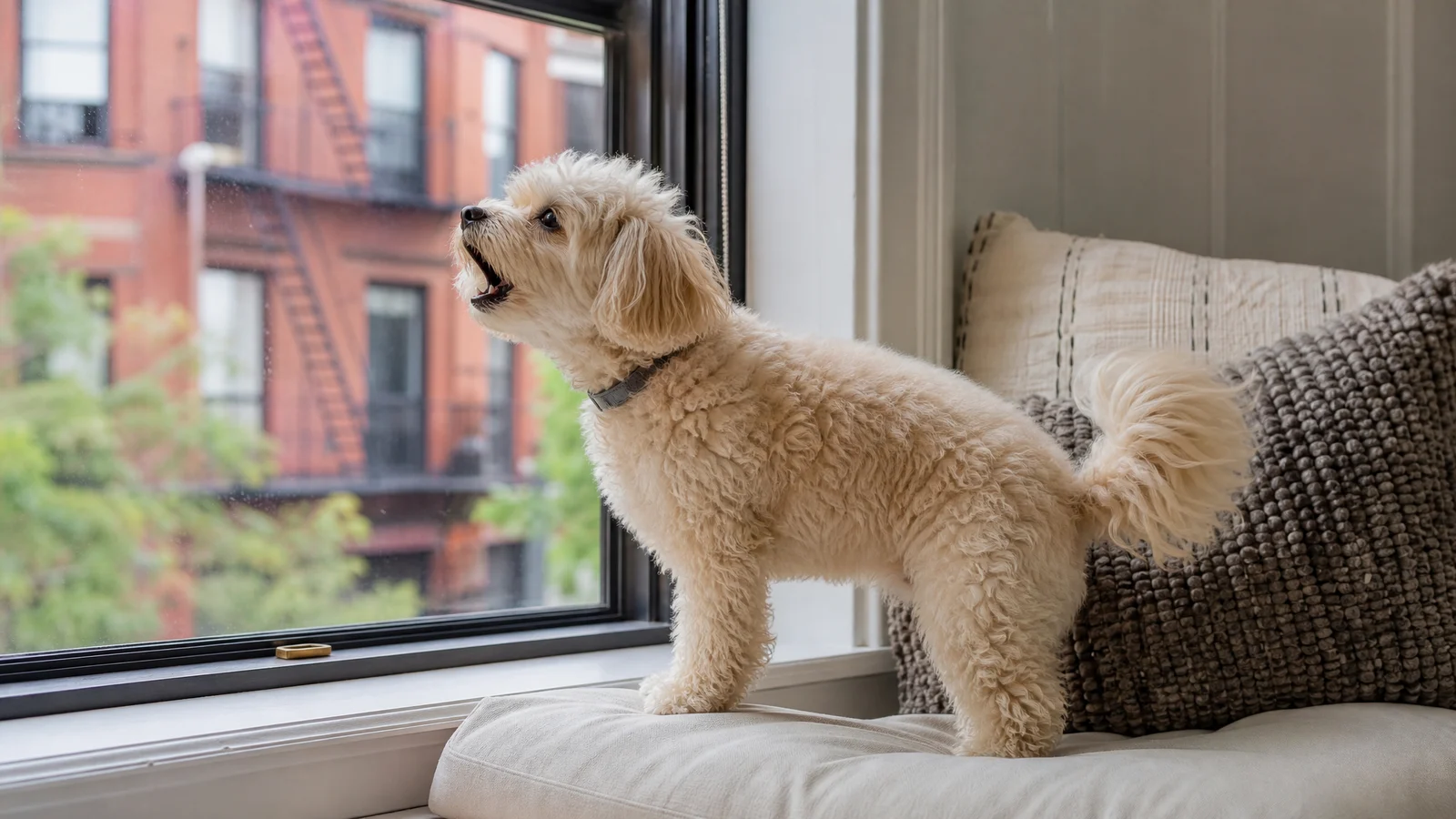
Barking can change now too. Levels vary widely, from quiet dogs who ignore doorbells to dogs who bark at nearly everything, and some quiet puppies start barking later, often after hearing other dogs at a neighbor's home or daycare. Reward quiet moments, and teach settling on a mat as the alternative. The wall is a stage, not a verdict on your puppy.
A One-Year-Old Maltipoo Still Learns New Things
By the first birthday, most Maltipoos are maturing physically and tend to be mentally steadier, though dogs vary and some stay puppyish longer. Training shifts from teaching cues to refining them and widening what your dog can do. Refining means stretching one dimension at a time:
- Duration is how long your dog holds a cue such as down, built in small steps before you add a release word.
- Distance is how far you can stand from your dog while the cue still works.
- Distraction is how much is going on around your dog, from a visitor at the door to another dog across the street.
New skills keep the Poodle side busy. Toy Poodles were known worldwide as trick dogs, and both parent breeds enjoy sports such as agility and obedience, so teaching spins, targeting, or a beginner agility course gives a smart dog a job. Poodles need good daily exercise while Maltese need less, so a Maltipoo's needs depend on which side shows up.
Old problems can still be solved. If an older dog is still having accidents, frequent trips outside and taking away the pee pads can help them learn where to go, with a treat and praise right after each success. Steady training at this point looks ordinary: a few minutes of practice woven into daily routines, with rewards that stay generous.
Signs Your Maltipoo Puppy Training Is Working
Progress with this cross rarely looks like a straight line, so watch for trends across weeks rather than single sessions. These signs show the plan is doing its job:
- Your puppy responds on the first ask in more places, including the porch and the sidewalk, not just the kitchen.
- They check in with you by looking up, especially on walks, before you ask for anything.
- They settle on a mat or in the crate after play, and any crying when left fades quickly.
- Accidents become rare, and some dogs begin to signal at the door or ring a bell.
- Setbacks, such as a missed cue or an accident after a routine change, resolve within days once you return to basics.
- They accept brushing, paw touching, and grooming calmly.
Quicker responses and calmer settling matter more than any single milestone. Regular vet visits belong in a healthy training plan too, since a vet can rule out physical causes when behavior changes suddenly.
Patience Plus Professional Help When Puppy Training Stalls
Most dips are ordinary, and a few weeks of consistent, rewarding practice usually moves things along. Ask a reward-based trainer for help if progress stays stuck despite that, or if your puppy seems increasingly frustrated or anxious during lessons.
Fear is the second signal: hiding, trembling, refusing to move on walks, or distress that does not ease when left alone. The third is reactivity. Leash reactivity is relatively common, and dogs may whine, bark, growl, pull, or lunge at other dogs, people, bikes, or cars.
Dogs may react out of worry, excitement, or frustration, so the right plan depends on the cause, which a professional can help sort out. New accidents in a dog who was reliable, or any sudden change in behavior, deserve a call to your veterinarian.
The Poodle's eagerness and the Maltese's independence take turns in this cross, which is why patience matters more than any single technique. Keep sessions short, fun, and consistent, reward what you want, and ask for help early rather than late. Do that, and the puppy who ignored you on the porch becomes the dog who listens everywhere.
 Exercise and jobsCan a Maltipoo Be a Service Dog?
 Training basicsHow Smart Is a Maltipoo for Training?
 BehaviorWhy Does My Maltipoo Bark So Much, and What Helps?