 Maltipoo
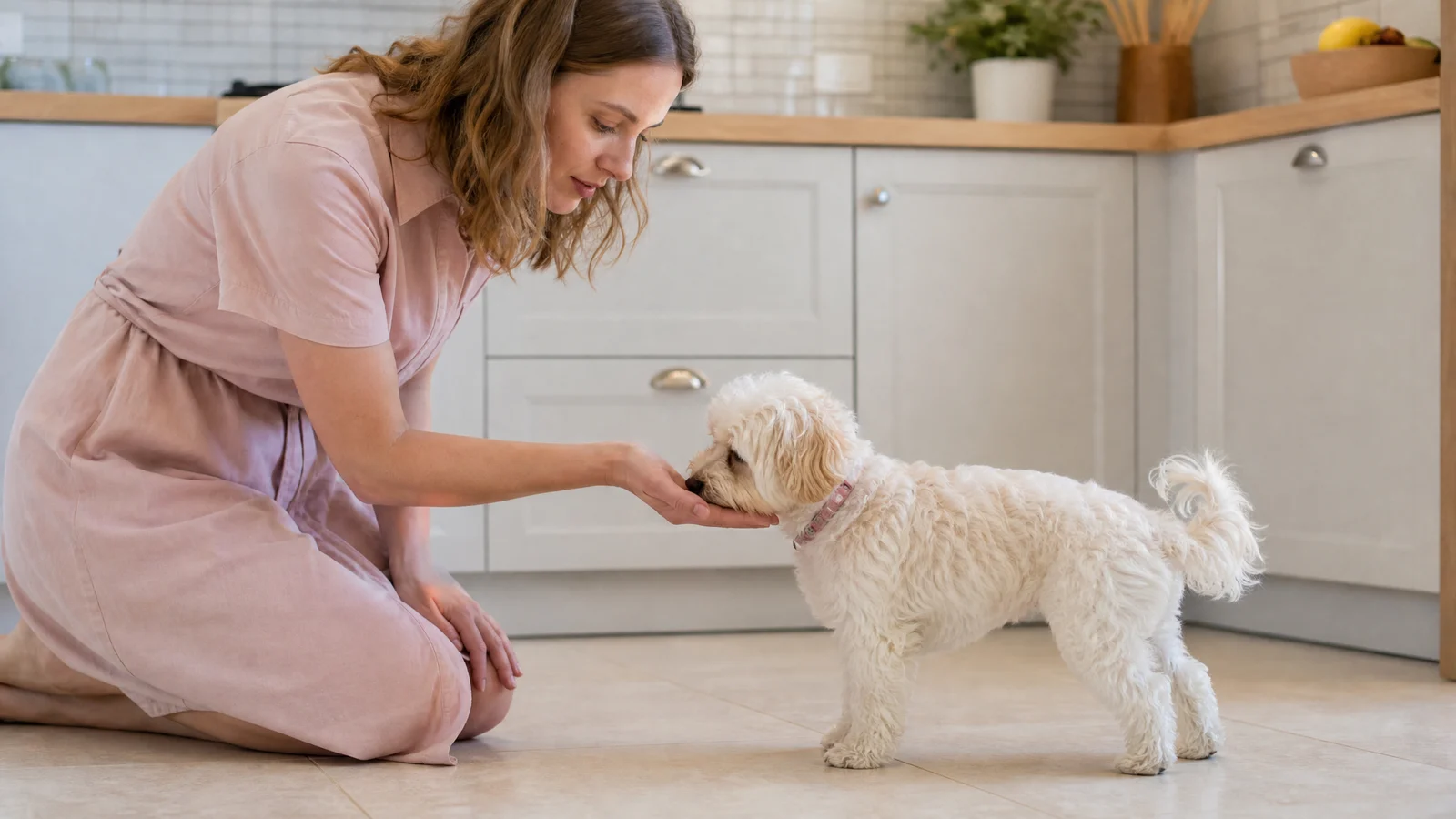
“How smart is a Maltipoo?” sounds like a request for a rank, yet a rank would hide the information training actually needs. One dog may notice a cue quickly and lose it when the room changes. Another may need more repetitions, retain the lesson well, and solve household problems in daily life that no person intended to teach.
Poodles and Maltese are both described as intelligent parent breeds, so inherited traits may support learning. That possibility does not create a guaranteed Maltipoo profile. Early experience, health, stress, reward history, motivation, and the trainer’s mechanics all shape the behavior people call intelligence.
A better answer comes from a notebook, not a score. Record one small learning question at a time and compare the same dog under controlled changes. This guide moves through feedback, transfer, practical problem solving, recovery, and an individual profile. We use those observations without turning mistakes into a verdict.
A Maltipoo Training Notebook, Not a Ranking
Begin with a skill the Maltipoo already finds easy, such as an easy orientation or a familiar palm target. An unfamiliar trick mixes too many unknowns. A familiar response lets you notice what changes when you move, alter the reward, or add mild distraction.
Write the setup before the result. Name the room, your position, the reward, and what happened immediately before the cue. “Palm touch from three feet away in the kitchen” is useful. “Very smart today” cannot be repeated or tested.
| Notebook Field | What to Record | What It May Change |
|---|---|---|
| Attention | What the dog noticed before the cue | Distance or distraction level |
| Feedback | Which action the marker followed | Trainer timing |
| Transfer | One detail that differed from practice | Size of the next change |
| Motivation | Whether the reward produced reengagement | Reward type or session length |
| Recovery | What happened after an error or pause | Difficulty and need for rest |
The notebook is not a report card. It should not count failures or compare one dog with another. Its purpose is to reveal conditions. A slower response in the hallway may reflect sound or footing, while quick work in the kitchen may reflect a long history of food arriving there.
Use plain descriptions of posture and action. Note that the dog looked away, declined food, or returned after a break. Avoid labels such as lazy, stubborn, or manipulative. Those words add judgment while removing the sequence that would help you adjust training.
One Clean Maltipoo Training Trial
Offer an open palm a few inches from the Maltipoo’s nose. Mark a glance or movement toward it, then reward. Repeat only while the dog readily returns. There is no deadline and no required number of repetitions. You are watching for the point when the target becomes predictable.
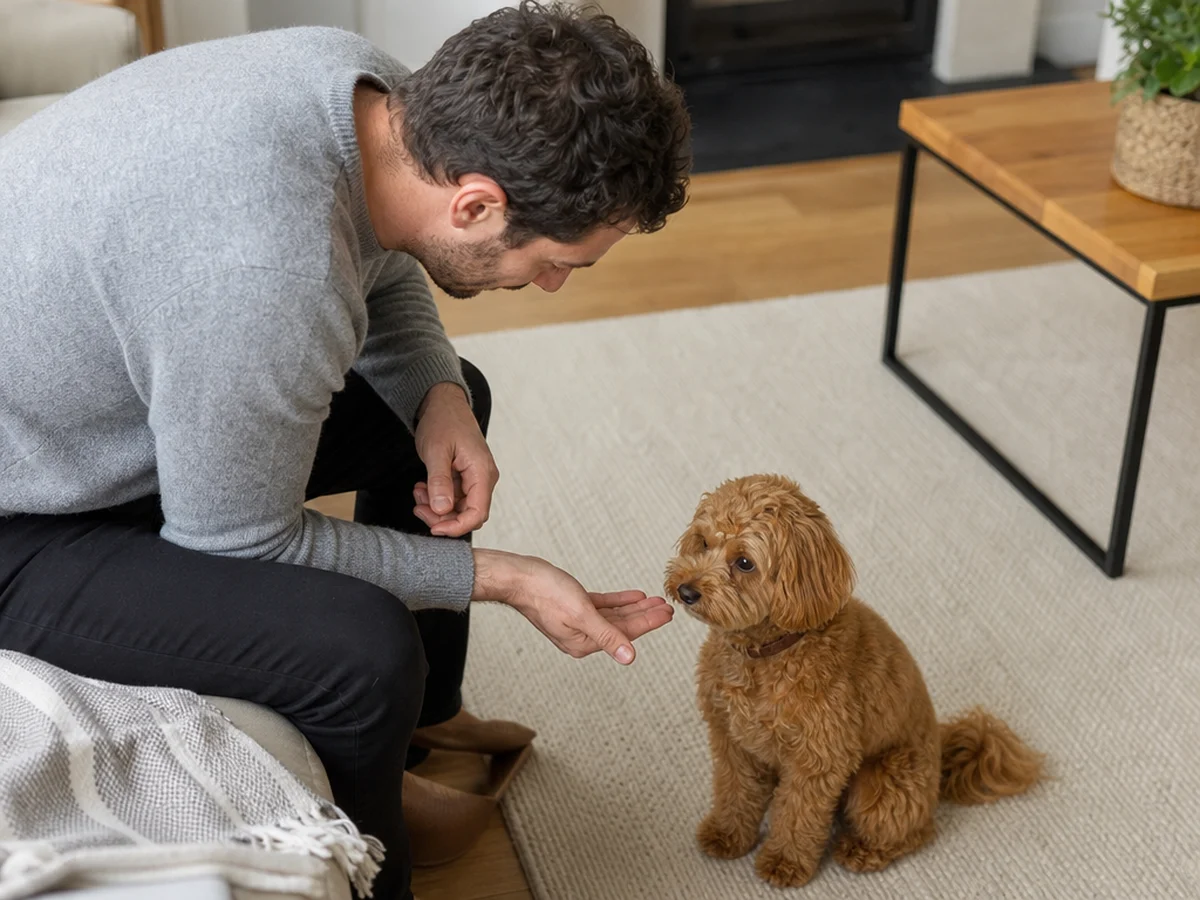
If progress pauses, change one variable. Bring the hand closer, improve the marker timing, or move to a quieter place. Do not alter the hand, reward, room, and cue at once. A single change gives you evidence about what made the question clearer.
Training often appears fast when feedback lands at the exact instant of the wanted choice. A click or marker word identifies that moment, and food follows. If the marker arrives after the dog stands up or looks away, the later action may enter the lesson.
Battersea explains that a click should identify the wanted behavior precisely and food should follow promptly. Its clicker guidance highlights mechanics the person can improve. Clean timing is not proof that one dog has a higher fixed intelligence.
Audit the Teacher Before the Learner
Record a brief session if the device does not distract the dog. Review whether the marker followed the intended action, the reward appeared in a useful position, and the cue was said once. The camera is for the handler’s mechanics, not for catching the Maltipoo making an error.
A dog who offers several familiar behaviors may be searching through a history of rewarded answers. Clarify the setup and pay an earlier correct piece. Waiting silently for a polished result can make the problem less clear, especially when several actions have worked in that room.
End the trial while reengagement is easy. Slower approach, wandering, repeated scratching, or refusal of a normally valued reward may mean the task is too hard or the dog needs a break. More data from a fatigued learner is not better data.
Training Transfer Through Small Changes
Dogs do not automatically treat a cue in two rooms as the same question. The floor, your posture, nearby objects, sounds, and reward history all form part of the picture. Generalization means learning which details matter and which can change.
Compare Locations Without Comparing Dogs
Ask for the same easy palm target in the kitchen and living room. Keep the distance and reward similar. Note orientation, willingness to approach, and recovery after release. The useful comparison is this Maltipoo in two settings, not this dog against a neighbor’s dog.
Move first to another side of the familiar room, then to a new room. If the response weakens, return to the easy version and make the contrast smaller. The adult Maltipoo training guide applies the same analysis to established habits.
Choose one category among distance, duration, distraction, and location. Increase only that feature while the others remain easy. This one-change rule protects confidence and shows whether the cue has transferred beyond its original picture.
Let Reward Preference Move
A Maltipoo may work eagerly for food in the morning and prefer play later. Another may value permission to sniff more than either option. Reinforcement is defined by what strengthens behavior, not by what the trainer expects the dog to enjoy.
Offer two safe rewards in separate short trials and watch which one produces willing reengagement. Use the preferred option for the harder question. Preferences can shift with time and context, so the notebook should describe today’s response rather than assign a permanent type.
Match the reward to the effort. A familiar cue at home may need a small payment, while turning away from an outdoor smell deserves more. Several pieces near you, brief play, or access to sniffing can recognize the larger choice without withholding ordinary needs.
Make Household Rules Observable
Mixed rules can make a knowledgeable dog look unreliable. When jumping gains attention from one person but sitting gains it from another, both options stay relevant. Consistency means that people arrange the same outcome, not that the dog performs perfectly.
Humane World says every family member should follow the same plan for jumping. Its household guidance illustrates the broader point. Decide what earns greeting access, which cue everyone uses, and how the setup resets.
Write a short script for one situation. A greeting plan might say the person waits, four paws remain down, and social access begins. If jumping occurs, the person increases distance and tries an easier approach. Practice without real visitors before expecting fluency during an exciting arrival.
Practical Problem Solving in Maltipoo Training
Household problems reveal what the environment has taught, including lessons nobody planned. We can trace the payoff, then make a more useful solution easier to reach.
Trace the Payoff
A dog who opens a loose door, summons attention, or delays the end of play is using learning. The result may be inconvenient, but it is not evidence of moral defiance. Ask what payoff follows the behavior and how the environment keeps making that route available.
Possible Maltese persistence or Poodle learning ability cannot prove why a Maltipoo repeats an action. Immediate consequences and individual history provide stronger evidence. Parent descriptions can suggest possibilities, but they should not replace observation of the sequence in front of you.
If barking makes a person approach, attention may maintain barking. If jumping sometimes produces greeting, jumping remains worth trying. When several cue repetitions precede a reward, waiting for repetition may become part of the chain. Dogs learn from outcomes whether people planned them or not.
Describe the accidental rule in one sentence. “Four paws on the floor opens greeting access” is clearer than “be polite.” Then arrange the room so the wanted solution can occur before the old response earns its usual result.
Redesign the Available Route
Management changes the puzzle while reinforcement teaches an answer. Put a mat where settling is practical, keep rewards accessible, and begin before arousal peaks. Close tempting access during practice. A barrier alone does not teach the future behavior, and a reward cannot repair a setup after the unwanted route has already paid.
AVSAB explains that reward-based work can include routines, boundaries, and management without fear or pain. Its training statement rejects the idea that humane methods mean permitting every behavior. Clear structure and kind teaching belong together.
Errors and Recovery as Training Evidence
Intelligence does not mean never making a mistake. A useful learner can try, receive clear information, and reengage without fear or escalating frustration. The handler’s response affects whether that recovery remains possible.
When the Maltipoo misses a cue, pause. Restore the familiar picture, reduce difficulty, and reward the next small success. Rapid cue repetition adds sound without explanation. It also makes it harder to know which version the dog answered.
Separate Confusion From Discomfort
Confusion may improve when the hand target moves closer or the room becomes quieter. Discomfort may appear as tension, avoidance, refusal of valued food, sudden sensitivity, or a marked behavior change. Stop when welfare is uncertain rather than using another repetition as a test.
Maintain regular veterinary care and discuss sudden learning changes, unusual fatigue, altered movement, or new sensitivity. Health can affect attention and motivation. Training observations can identify a change, but they cannot responsibly explain a medical cause.
Compare recovery after an easy reset. If the dog returns loosely and can perform a familiar response, the earlier problem may have been difficulty. If the dog remains withdrawn or moves differently, finish the session and seek appropriate guidance.
Bring in a Humane Professional
A reward-focused trainer can notice timing, environment, and reinforcement patterns that the person handling the session may miss. Seek help when fear, aggression, reactivity, or safety concerns appear, or when careful adjustments do not restore comfortable progress.
Ask the professional to explain what they observe and how each setup protects choice. A useful plan should name the replacement behavior and the reward path. It should not use breed intelligence as a reason to expect the dog to tolerate fear or confusion.
The Maltipoo’s Individual Training Profile
After several notebook entries, summarize conditions rather than assigning points. The profile should help another household member reproduce an easy lesson. It can also show where new work needs smaller steps, greater distance, or a different reward.
Capture observations in plain language. Keep the profile short enough to use before a session.
- Name the environments where attention comes readily and where it fades.
- Record the marker and reward placement that produce the clearest response.
- Identify the smallest context change the dog can currently transfer across.
- List accidental payoffs that maintain an unwanted household behavior.
- Describe the signs of enthusiasm, confusion, fatigue, and discomfort.
- Note what helps the Maltipoo recover and choose to reengage.
Review the profile before raising difficulty. If a response fails after one detail changed, reduce that contrast instead of lowering your opinion of the dog. That habit makes the next lesson more precise and keeps the claim tied to observable behavior.
Do not use the profile to predict every future skill. Learning changes with experience, age, health, and context. A dog who needs careful repetition today may retain the behavior well, while a fast first response may still need extensive practice in new places.
A Maltipoo may learn quickly, devise practical solutions, or need a patient sequence of clear repetitions. None of those patterns can be promised from parent breeds. The responsible answer to “How smart?” is a useful map of how this individual notices, learns, transfers, and recovers.
Bring that map to the next session and ask one modest question. Keep the environment readable, mark the exact choice, and reward well. When the dog’s response changes, revise the conditions before revising the label. That is what a learning profile is for.
 BehaviorWhy Does My Maltipoo Bark So Much, and What Helps?
 Exercise and jobsMatching Exercise and Mental Games to Your Maltipoo's Energy
 Exercise and jobsHow Fast Can a Maltipoo Run? Safe Recall Games