 Maltipoo
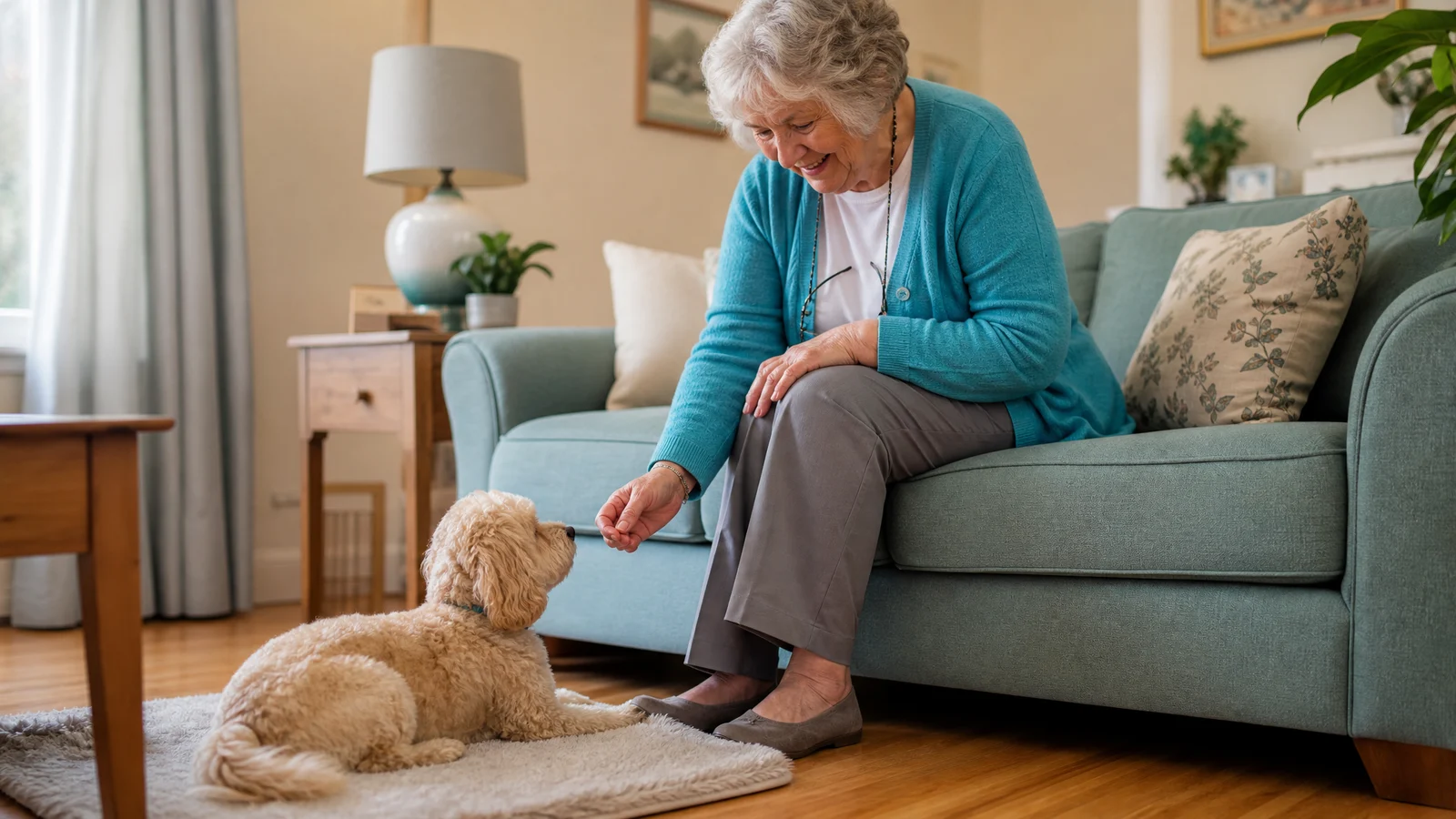
It is not too late to train an adult Maltipoo. Adult dogs can learn new patterns, although an established habit has a history that a brand-new behavior does not. Progress begins by understanding what happens before the habit, what the dog does, and what consequence keeps the pattern useful to them.
A Maltipoo may inherit eagerness, persistence, sensitivity, or playfulness associated with either parent. Those are possible influences, not fixed traits of the cross. The adult dog’s current behavior, comfort, health, reinforcement history, and home routine provide the more useful training plan.
This guide maps common adult-training symptoms to practical replacements. We cover attention, household rules, greetings, leash behavior, handling, and setbacks. The approach remains reward based. You will manage the old route, teach an easier alternative, and pay the new choice often enough to compete.
Adult Maltipoo Training Starts With a Habit Map
Describe the behavior without labels. “Stubborn” does not tell you what to change. “Walks away when called from the couch after dinner” identifies a cue, setting, time, and likely payoff. Specific observations turn frustration into a training question.
Write the sequence in three parts. Note what happened immediately before, what your Maltipoo did, and what followed. The consequence may be attention, distance, access to a doorway, continuation of play, or relief from handling. It does not need to be food to reinforce behavior.
Find the Smallest Repeatable Moment
Choose one version you can reproduce safely. If greetings are chaotic, begin with one familiar person entering quietly rather than a crowded front door. If recall fails outdoors, start across one room. Training needs a workable sample, not the hardest example first.
Measure what you can observe without inventing a score. Did the dog orient after one cue? Could they keep four paws on the floor while the person stood still? Did they accept a harness touch and return for another repetition? Those details guide the next setup.
Training the Maltipoo Who Ignores a Cue
An ignored cue often has weak meaning, poor timing, or stronger competition. It may also predict something the dog dislikes. Repeating the word louder does not repair those conditions. Rebuild the response where success is likely and change what the cue predicts.
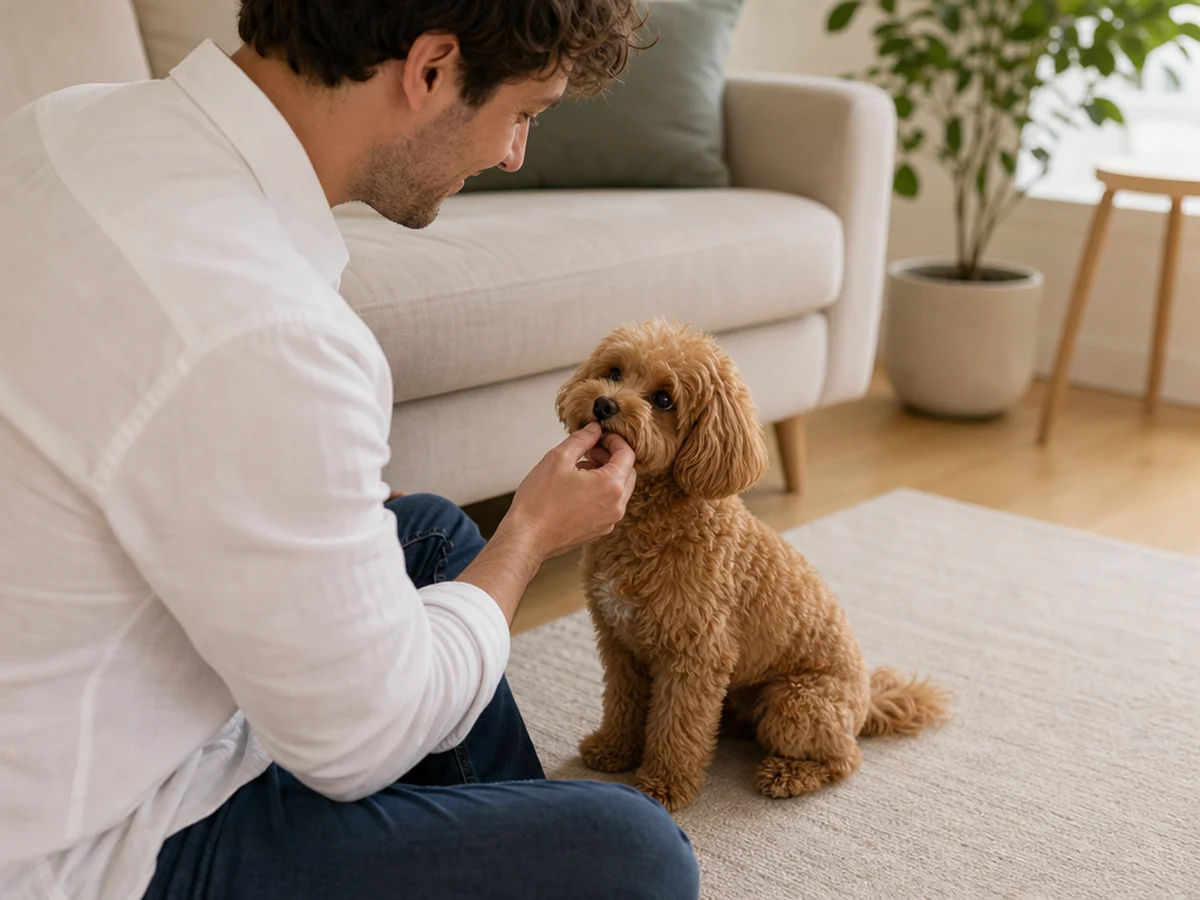
Say the cue once in a quiet room, mark the first correct movement, and reward promptly. If nothing happens, pause rather than repeating it. For the next attempt, stand closer, shift your position, or simplify what the dog sees.
Refresh the Meaning
For a damaged cue, consider a new word. Pair it only with versions the dog can complete, and reward every early response. The fresh word is not magic. Its value comes from a cleaner history and more careful use.
The Maltipoo training guide explains why fast learning includes accidental learning. An adult Maltipoo who waits through several repetitions may have learned that only the final call matters.
If “come” always ends yard time, call for a reward and release the dog back to safe play on some repetitions. If “off” always loses the couch, reward an appealing mat nearby. A cue becomes easier to follow when the consequence is not consistently disappointing.
Training the Maltipoo Who Jumps at Greetings
Jumping often gains attention quickly. The replacement must be just as clear and easier to reward. Arrange a greeting with one calm helper, keep enough distance for thinking, and pay four paws on the floor before the person moves closer.
A dog can learn to sit as part of greeting when that cue and a reward are paired with meeting a person. The plan depends on consistent practice. Sit is one option, while standing calmly may suit another dog better.
Manage the Door First
Use a barrier, leash, or greater distance so the first seconds do not become a rehearsal of jumping. The helper enters only when the setup is ready. Reward your Maltipoo for looking at the person and returning attention before a greeting is offered.
If excitement rises, the helper steps away without scolding or reaching down. Reset farther back. The goal is to make calm behavior produce access, not to wait for the dog to fail and then react.
Household members must apply a jumping plan consistently because occasional rewards keep an established pattern alive. Decide in advance what earns greeting and what everyone will do, then practice that response before a real arrival adds excitement.
Visitors who cannot follow the plan should not become practice partners. Use management and give the dog another activity. Protecting the lesson is more useful than collecting unpredictable repetitions.
Training an Adult Maltipoo Around the Home
Household rules need visible alternatives. “Do not steal laundry” leaves a blank. Teach the dog to settle on a mat while clothes are handled, trade approved objects, and access a suitable activity in the same part of the routine.
Prevent rehearsal while the replacement grows. Close the laundry-room door, move tempting items, or use a barrier. Management does not teach the final behavior, but it stops the old habit from earning another payoff between lessons.
Use Stations for Busy Moments
Place a mat away from the busiest path. Reward your Maltipoo for stepping onto it, then for remaining while you complete one easy action. Release before they leave on their own. Add household movement gradually.
A station can support meals, deliveries, cleaning, or visitor setup, but each context needs practice. A dog who understands the mat in a quiet room may need easier rewards when the doorbell or grocery bags appear.
If the dog picks up a safe object, offer a reward near you and mark the release. Return the object when appropriate or provide an approved substitute. Chasing can turn possession into a rewarding game and make approach less welcome.
For dangerous objects, prioritize safe management and professional guidance. Do not create practice with hazards. A qualified reward-based trainer can observe persistent possession concerns and design a plan that protects everyone.
Training the Maltipoo Who Pulls Outdoors
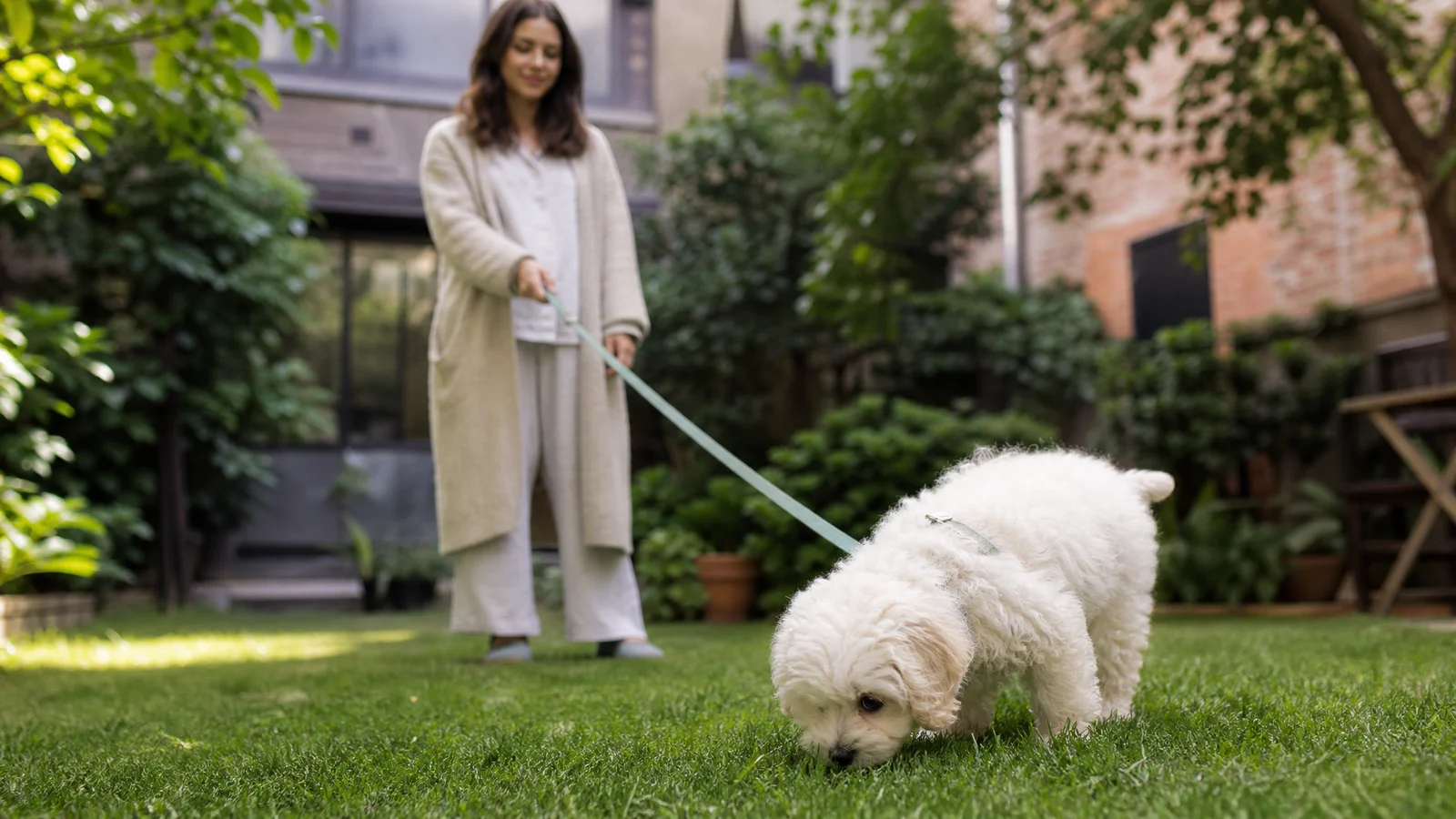
Outdoor pulling has many immediate rewards. The dog reaches smells, movement, and destinations. Begin in a quiet area where a few loose steps are possible. Mark the leash softening and move forward as part of the reward.
Do not expect a long walk to become one continuous lesson. Separate a short training stretch from a sniffing break. The dog can learn which cue predicts close movement and which release allows more exploration.
Choose a position near either side of your body and deliver food there. Take one or two steps, mark the dog for remaining in the zone, and reward without pulling them into place. Add steps only while the pattern stays easy.
If the leash tightens, stop or change direction gently before the dog reaches the goal. Resume when slack returns. Arrange enough distance from distractions that your Maltipoo can still eat and orient.
A dog bursting with unmet needs may struggle to learn close walking. Provide suitable sniffing, play, and mental activity apart from the leash lesson. Training should not depend on exhausting the dog, but it should begin with a realistic daily routine.
Adjust the plan to the individual rather than a temperament label. Parent traits may influence energy or persistence, but the adult’s observed response is the deciding evidence.
Training the Maltipoo Who Avoids Handling
Avoidance around grooming, equipment, or touch calls for consent-based steps. Present the item at a distance, mark calm orientation, reward, and remove it. Approach should predict choice and payment, not restraint that the dog must endure.
Divide the routine into pieces. Seeing a brush, touching it with the nose, accepting one brief body touch, and standing for a stroke are different skills. Move forward only when the current piece produces relaxed, willing participation.
Hold a harness opening still and reward the dog for looking or moving toward it. Later, place food so the dog chooses to put their nose through. Do not pull the equipment over a retreating head.
PDSA recommends teaching muzzle comfort through rewards rather than simply putting one on an unprepared dog. That cooperative principle illustrates why all equipment introductions should proceed at the dog’s pace.
Check for Discomfort
New handling avoidance may have a physical cause. Maintain regular veterinary visits and seek veterinary advice for sudden sensitivity, movement changes, skin problems, or pain signals. Training should not be used to make a dog comply through discomfort.
Adult Maltipoo Training Needs Humane Structure
Positive training is not an absence of boundaries. Decide where access is available, prevent unsafe choices, cue a teachable alternative, and reward it. Structure makes the right response easier to find without using fear or intimidation.
AVSAB documents welfare concerns associated with aversive approaches and recommends reward-based training. An open-access study of companion-dog schools also reported more stress-related outcomes in mostly aversive settings. The study findings do not depend on a dog being young.
Possible Maltese persistence or Poodle responsiveness should never be used as a verdict. Parent-breed descriptions can suggest questions about motivation and consistency. They cannot tell you why this adult dog avoids, jumps, pulls, or disengages.
Reset Adult Training After a Setback
Regression usually means that some part of the context changed. The setting became harder, reinforcement thinned too quickly, the old payoff returned, or the dog’s comfort changed. Go back to the most recent easy version instead of demanding proof that the behavior was learned.
Use a short reset when progress changes. This sequence restores clarity without asking the dog to push through confusion.
- Describe the exact behavior and the context where it changed.
- Restore management so the old habit stops paying during practice.
- Reduce one difficulty, such as distance, duration, or distraction.
- Increase reward frequency until the replacement becomes fluent again.
- Review health, rest, and routine when the change is sudden.
- End with one easy repetition.
Fear, reactivity, aggression, or safety risks call for support from a trainer who works through rewards. Outside help is also useful when the trigger remains unclear or progress stalls despite careful setups.
Choose one habit today and map its sequence. Then teach one replacement in the easiest possible version. An adult Maltipoo does not need a blank history to learn. They need a new pattern that is clear, rewarding, and consistently available.
 Exercise and jobsTrick Training for Maltipoo Dogs at Home
 BehaviorQuieting a Maltipoo Who Barks at Every Visitor
 Puppy trainingWhat to Expect When Potty Training a Maltipoo, Week by Week