 Maltipoo
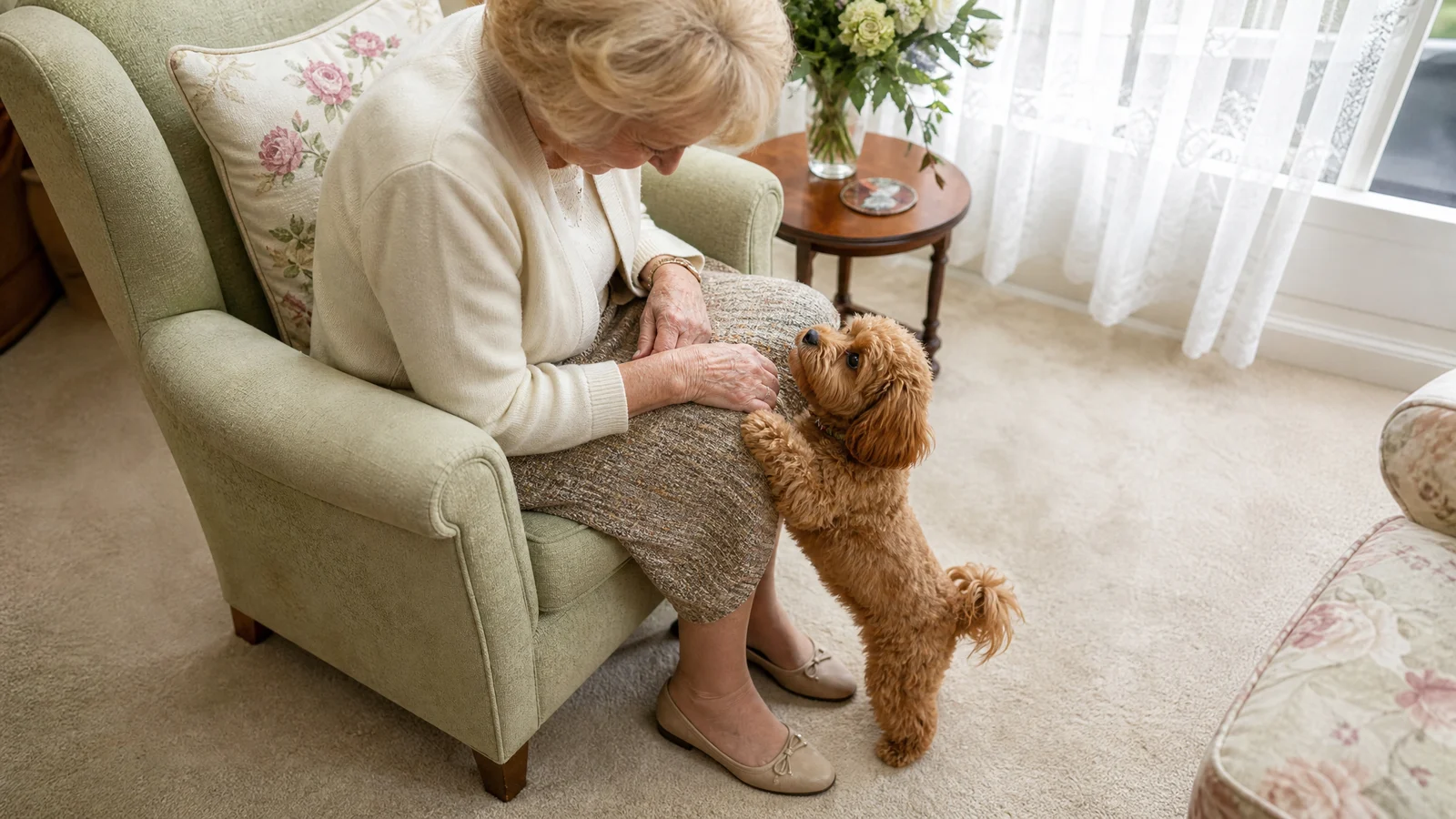
A Maltipoo who springs at knees usually gets paid quickly. A hand reaches down, a person laughs, or the dog lands in a lap.
Because the impact feels minor, people often reward the jump before they notice what their hands and body have taught. We change the pattern by moving attention to floor level, not by making the greeting unpleasant.
Below, we audit the hidden rewards, prevent rushed approaches, teach four paws down and rehearse the exact moments that usually restart bouncing. The result should be a clear way to earn contact, even when the person is moving or excited. Every section keeps affection available while changing the behavior that opens access to it.
Maltipoo Jumping at Legs Has a Payoff
Jumping works because it brings a small dog close to faces and hands. Pushing the dog away can still provide touch and eye contact, while bending to say no brings the person even closer. From the dog's view, several different human reactions may all make the approach worthwhile.
Start by watching what happens after the front paws leave the floor. Does someone scoop the dog up, pat their head, step backward and invite a chase, or continue walking while the dog clings to a leg? The consequence reveals the payoff more clearly than the person's intention.
Excitement is only one possibility. A dog may jump because access to a familiar person has become a strong habit, because hands appear at knee height or because they feel uncertain and seek contact. We use the same management at first, then adjust distance and social pressure to the dog's body language.
The RSPCA training guide shows why valuable consequences can strengthen the choice that came before them. For greeting practice, attention is part of the reward. We therefore plan where hands, voices and access will appear before the dog approaches.
Audit Rewards Behind Maltipoo Jumping at Legs
Run a brief household audit for a day. Ask everyone to notice when the Maltipoo's paws rise and what the person does next. The goal is not to blame anyone. It is to find the moments when the dog receives attention before the desired floor-level choice appears.
- Hands move down while the dog is still rising.
- The dog is lifted onto furniture after jumping.
- A leash clips on only after repeated bouncing.
- Children squeal, run or pat the dog during the jump.
- A guest greets at the threshold before the dog can settle.
Replace each leak with a planned payment. Hands arrive after four paws touch the floor, furniture access follows a cue and the leash appears while the dog stands or sits. The dog does not need one mandatory posture, but the household needs a grounded option that replaces the upward bounce.
Keep the audit separate from a punishment ledger. We are not counting mistakes to withhold affection. We are moving affection to the moment that teaches a calmer approach.
Include ordinary attention in the audit, not only formal greetings. A Maltipoo may jump while someone clips a leash, prepares dinner or sits at a desk because the upward move has opened access there too. Move each payment to a grounded pause.
Compare the pattern with the site's Maltipoo barking guide when arrivals also trigger noise. Barking and jumping may occur together, but the payments differ. A door routine can reduce the rush, while this plan decides which body position earns contact.
Management Stops Maltipoo Jumping at Legs Before Practice
Management stops the dog from rehearsing a fast launch while the new behavior is weak. Use a gate, a light leash held by an adult or greater distance before an expected greeting. The barrier creates time to reward the first grounded choice.
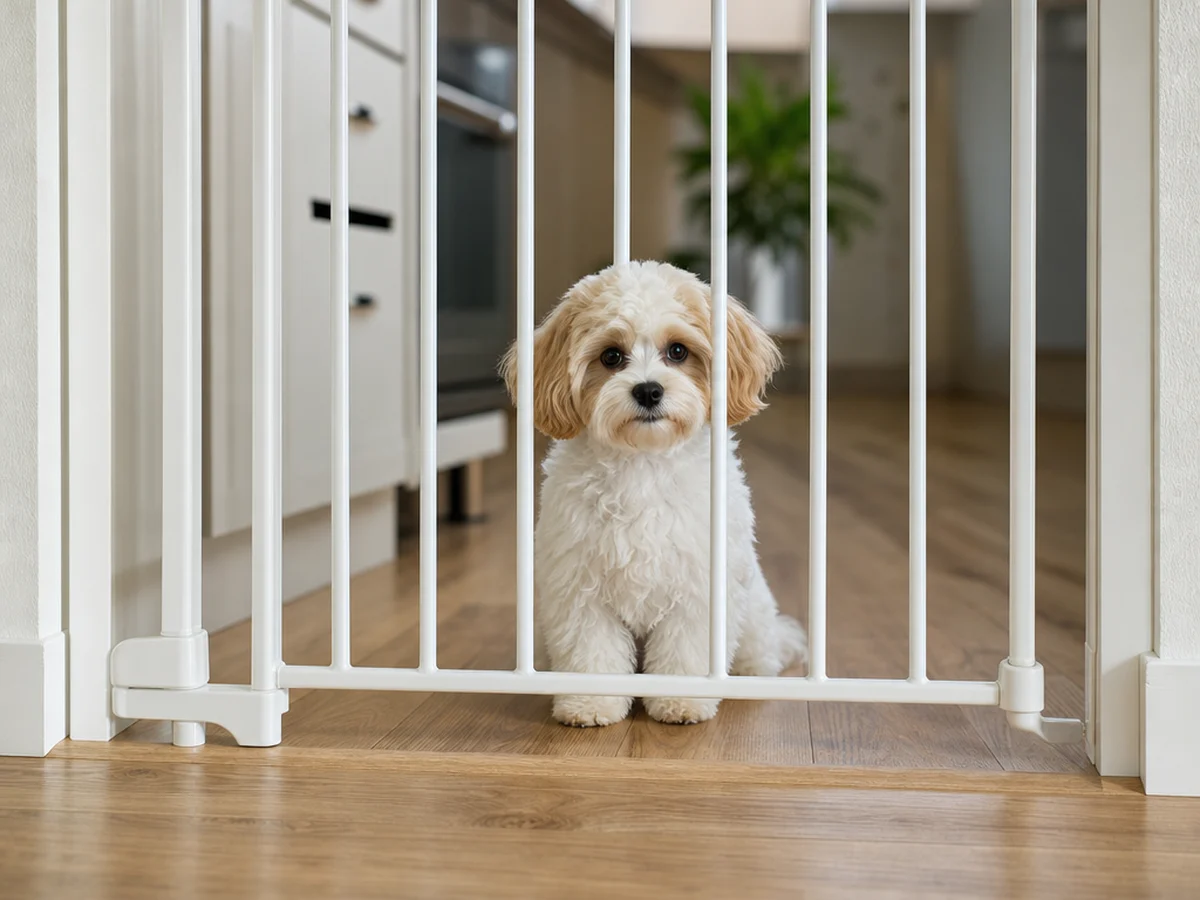
The AKC jumping advice recommends preventing people from rewarding jumping through a leash, mat or separation from the door. Choose the least intrusive setup that keeps the approach controlled and the dog comfortable.
Set a greeting lane with enough room for the dog to move without wrapping around ankles. Place rewards where they can be delivered low and away from the person's knees. A reward tossed behind the dog can reset the approach and give another chance to arrive with paws down.
Management should not trap an uncertain dog near a person. If the Maltipoo leans away, tucks the body, freezes or avoids contact, increase distance and let them opt out. Polite greeting training includes the option not to greet.
Practice the setup when nothing exciting is happening. Walk through the gate, leash position and reward delivery with a household member. Smooth human movement prevents fumbling from becoming the dog's cue to jump.
Four Paws Down Replaces Jumping at Legs
Begin with one familiar person standing still. The moment the dog approaches with four paws on the floor, mark the choice and deliver a reward low. If paws rise, the person quietly pauses and turns slightly away while the handler creates enough distance for another approach.
The Best Friends plan supports frequent food rewards while polite greetings are new. Attention can join the reward after the dog understands the pattern. Keep occasional food in the routine long enough that difficult greetings remain worth doing well.
- Choose an approach distance where walking remains easy and launching is unlikely.
- Mark the first grounded approach before hands move.
- Deliver the reward below knee level or toss it behind the dog.
- Add brief touch only while paws remain down.
- Pause touch, reset the distance and repeat once or twice.
A sit can be useful, but it is not the only answer. Some small dogs sit and immediately spring as the hand arrives. Rewarding any stable four-paws-down position lets the dog shift or turn without losing the rule.
End the session before greetings become rapid and sloppy. One or two controlled approaches followed by a sniff break can build more clarity than a long series. The replacement behavior needs a calm history, not an endurance test.
Three Scenarios for Jumping at Legs
The behavior changes when a person moves, carries something or lowers their body. Practice those pictures separately. A dog who succeeds with a still adult may need an easier distance when the same person walks through the room.
Coming Home With Full Hands
Set a gate before the person enters with bags or a coat. The handler rewards the dog on the far side while the person puts items down, then begins one planned approach. This removes dangling objects and hurried hands from the first repetition.
When the route is reliable, the arriving person can carry one light object and pause at a marked spot. Contact starts only after the dog's paws remain down. If jumping returns, restore the gate rather than trying to balance bags and training.
Sitting on a Couch or Chair
Lower furniture puts a face and lap within easy reach. Begin with the person seated behind a gate or with the dog on a handler's leash. Reward a pause beside the knees, then invite furniture access with a separate cue if that access is allowed.
Do not let jumping become the automatic request to be lifted. Ask for the floor-level behavior first, then use the household's furniture rule. This keeps affection available without making the bounce the key that opens every lap.
Greeting a Visitor
Combine this plan with the Maltipoo visitor barking routine when the door adds arousal. The dog begins at a station, then approaches only if they can move with the handler. The guest stays neutral until paws are down.
Ask the visitor to offer contact at the chest or side rather than reaching over the head. Keep the first greeting brief, then guide the dog away for a reset. A second calm approach is optional, not required.
A Clear People Script Prevents Jumping at Legs
Give people a script they can remember: stand tall, keep hands still and greet when paws are down. Long explanations fail at the doorway. The handler manages distance and rewards, so the visitor does not have to make training decisions.
Children need an adult-managed version. Use a barrier and reward the dog away from moving legs. A child should never be asked to ignore a dog who is scratching, grabbing clothing or making them uncomfortable.
Household members should agree on lifting and furniture access. If one person enjoys picking the dog up, they can still wait for four paws down and add a cue before lifting. Consistency concerns the route to the reward, not a ban on affection.
Watch the dog's response to touch. A jump followed by a stiff body, growl or snap is not a simple manners problem. The ASPCA aggression guidance warns against fear-based handling. Add distance and seek qualified reward-based help instead of testing the dog.
Regular veterinary visits matter because pain can change how a dog approaches, lands or tolerates hands. A sudden increase in frantic contact or sensitivity deserves a health discussion, especially when movement or touch has also changed.
Progress Measures for Jumping at Legs
Track the first approach, not every paw movement. Note whether the dog arrives grounded, whether one reset is enough and whether the person can move without restarting the bounce. These observations show the habit changing before perfect greetings appear everywhere.
| Progress sign | What it means | Next test |
|---|---|---|
| Paws stay down for a still person | The basic payment is clear | Add one hand movement |
| Dog resets after a tossed reward | The approach can be interrupted | Add a slow walking person |
| Guest can sit and stand | Motion is becoming part of the cue | Practice a brief departure |
Notice how quickly the dog offers the grounded choice. A shorter pause before four paws settle often appears before the total number of jumps falls. That earlier decision is progress worth reinforcing.
Raise difficulty only when the current picture is predictable. If jumping returns during a new scenario, make that scenario smaller rather than removing rewards. The dog is showing where practice has not yet generalized.
You will know the attention economy has changed when the Maltipoo begins to pause near knees and look for the floor-level payment. Keep paying that choice in daily life. Calm greetings become durable when people notice the quiet approach as readily as they once noticed the bounce.
 Training basicsMaking the Crate a Cozy Den for a Crying Maltipoo
 CareNail Trims, Paw Touches and Ear Checks for Your Maltipoo
 CareTeaching Your Maltipoo to Love Grooming at Home