 Maltipoo
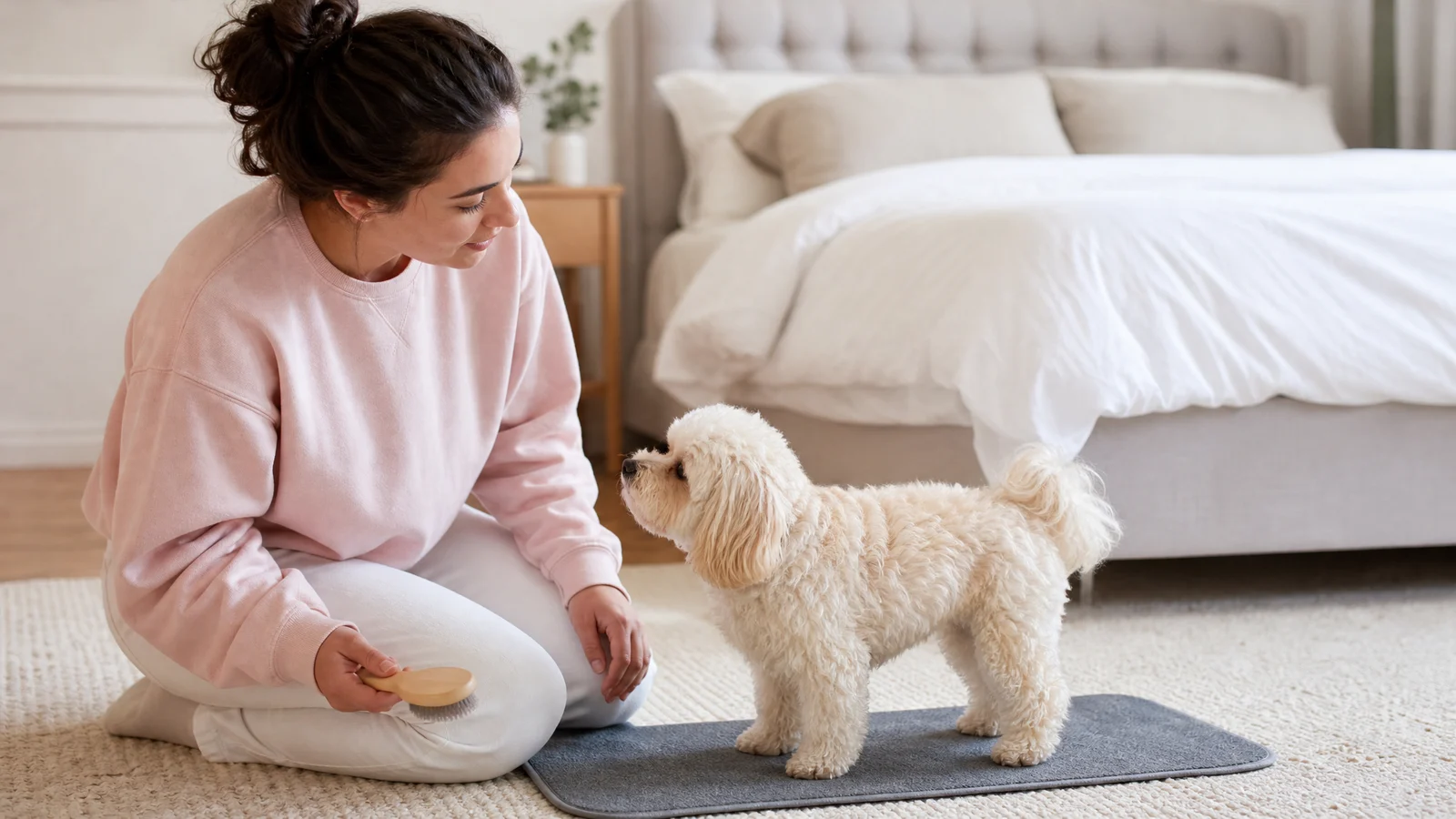
A Maltipoo can inherit a coat that feels silky, wavy, curly or somewhere between, so grooming advice must begin with the coat in front of you. A routine copied from another dog may miss friction zones, use the wrong tool movement or ask for more brushing than the dog currently understands. We train the workflow rather than a haircut.
Below, you will assess coat and comfort, prepare a stable workspace, introduce brush and comb motion, follow a body route and rehearse the handoff to a professional groomer. Nail trimming and clinical body checks stay in a separate plan so this article can focus on coat care and equipment. The route changes with coat friction, not with a fixed body-zone ladder.
Maltipoo Grooming Starts With This Coat
Look at how the coat behaves behind the ears, under the collar area, at the chest, in the armpits and where legs rub the body. These high-friction places may tangle before flatter areas. Note them gently with fingers instead of pulling a brush through resistance.
The parent breeds require regular coat attention, but a cross does not come with one guaranteed texture. The AKC Maltese profile describes frequent grooming needs for that parent breed. Use parent information as context, then let the Maltipoo's actual coat and professional advice set the schedule.
Take a quick coat note before and after the session. Record the zone, whether fingers could separate the hair and which tool motion stayed smooth. That information helps a groomer advise on frequency without asking the dog to repeat a difficult demonstration.
Separate a coat problem from a training problem. A dog may stand comfortably for light brushing on an easy area and object when a tool catches a tangle. Training cannot make pulling comfortable. Address mats and tool choice with a qualified groomer rather than repeatedly brushing the sore spot.
Regular veterinary visits matter because skin irritation, ear discomfort and pain can change grooming tolerance. A sudden reaction, odor, redness, hair loss or sensitive area deserves a health discussion. Comfort comes before cooperation.
Prepare a Maltipoo Grooming Workspace
Choose a no-slip surface with clear space around it. Floor level works for many small dogs and removes the risk of a jump from a table. If a raised surface is used, the dog needs safe support and direct adult attention throughout.
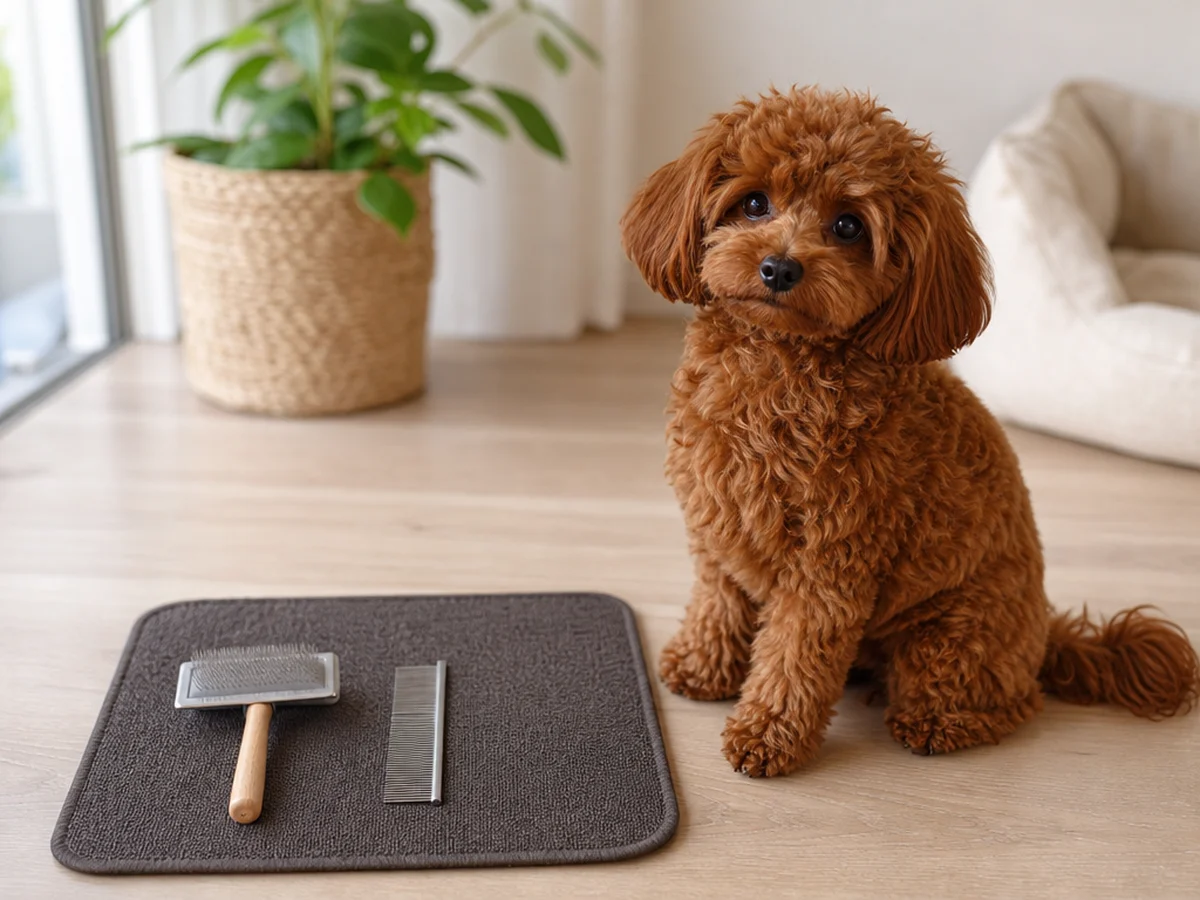
Arrange only the tools needed for that short session. A crowded row of bottles, cords and metal objects can add sound and movement before grooming begins. Keep rewards accessible on the side opposite the dog's easiest exit so reaching does not block them.
Teach the workspace without a brush. Reward the dog for stepping onto the surface, standing for a moment and leaving on a release cue. Return for another easy repetition later, so the location predicts more than restraint and coat work.
The Best Friends guide advises watching stress signals and pairing touch with food. We also watch how the dog enters the workspace. Slowing, circling away or refusing a familiar station tells us to make the session easier before contact begins.
Plan recovery as part of the workspace. After release, let the dog move, drink or settle without immediately starting another care task. A calm exit helps preserve the location as a place the dog can visit again.
Set a modest finish point before starting. One chest section or a few calm strokes can be the whole session. A defined endpoint protects the dog from a routine that expands whenever they happen to cooperate.
Introduce Maltipoo Grooming Tools Separately
Seeing, hearing and feeling a tool are different lessons. Place the brush at a distance, reward calm observation and put it away. When its appearance is ordinary, move it in the person's hand without touching the dog.
Next, touch the back of the brush or a handle to an easy body area for less than a second. Reward and release. Bristles or comb teeth arrive later, after the dog remains loose during the approach and neutral contact.
- Tool appears while the dog stays on the workspace.
- Person picks up and lowers the tool without approaching.
- Smooth side of the tool touches an easy coat area.
- One working stroke follows the coat direction.
- Tool leaves and the dog receives the release cue.
Introduce a brush and comb on different sessions if either creates concern. They feel and sound different against the coat. Combining them too soon can make it hard to identify which sensation changed the dog's response.
Keep tool skill separate from tangle removal. Work on a section that allows a smooth stroke. A knot that needs professional attention should not become the dog's first lesson about a comb.
Follow a Maltipoo Grooming Coat Route
A route makes the session predictable and prevents random hands from moving among sensitive areas. Begin with the zone the dog finds easiest, travel through one planned section and stop before reaching the first difficult area. The next session can begin at the same reliable starting point.
| Coat zone | Training focus | Reason to pause |
|---|---|---|
| Shoulder and side | One smooth stroke, then release | Skin twitches or dog shifts away |
| Chest and collar area | Short strokes with clear hand position | Tool catches or head lowers |
| Leg furnishings | Support hair without holding the paw | Dog steps away or leg stiffens |
| Behind ears | Finger check before any tool | Tangle, redness or sensitivity |
The Easy Coat Zone Sets the Rhythm
Use the shoulder or side if that area is comfortable. Make one stroke, mark and reward. Vary the number of strokes only after the dog stays relaxed and returns willingly for another session.
Do not turn the easy area into a long warmup that exhausts patience. Its job is to establish predictable movement. Leave enough tolerance for one careful step in a more sensitive zone.
Friction Zones Need a Finger Check
Check behind ears, at harness edges and under the front legs with fingertips before using a tool. If the coat separates easily, practice a short stroke. If it does not, stop and plan professional help rather than pulling through.
When a small tangle is found, mark its location and continue only on a separate easy section. Repeatedly returning to the snag turns the route into an unpredictable search for discomfort. Let the coat-care decision happen after the dog is released.
Support the coat close to the skin when a qualified groomer has shown the appropriate technique. The support hand should not pin the dog. Release immediately when posture changes.
Leg Coat Is Not Paw Handling
Brush leg furnishings while the foot remains on the surface whenever possible. This keeps the lesson about coat motion rather than a paw hold. The separate Maltipoo handling and nail plan covers paw consent and one-nail work.
Use a shorter route on the legs because the dog may need to rebalance. One section on one leg can be enough. Symmetry is a grooming outcome, not a requirement for every training session.
Maltipoo Grooming Adds Face Care and Equipment Sound
Face work begins beside the face, not directly over the eyes. Let the dog see a hand or soft cloth approaching from the side, reward a brief cheek touch and release. Build toward the muzzle only while the dog can keep or withdraw their position freely.
The ASPCA grooming advice recommends gradual, rewarded handling for sensitive areas. Separate wiping from combing. A dog comfortable with a cloth may still need a new introduction to a small comb near the face.
Clippers, dryers and other powered equipment require sound work away from the body. Begin at a distance and at the lowest practical intensity. Reward calm observation, turn the sound off and allow recovery before another repetition.
Air movement is another variable. A dog who accepts a distant dryer sound may object when air touches the coat. Ask a professional groomer to show a safe introduction rather than aiming equipment at the dog during an improvised home test.
Keep cords and warm equipment managed safely. Training does not replace product instructions or professional technique. The goal is familiarity with ordinary sensory pieces, not performing every salon task at home.
Transfer Maltipoo Grooming Skills to a Professional
A dog can know the home routine and still find a new room, person and equipment difficult. Transfer one familiar element at a time. Bring the same release word, tell the groomer which coat zone is easiest and describe the first signs that the dog needs a pause.
The RSPCA grooming guidance supports early, reward-based introductions to grooming equipment and settings. Ask whether the professional offers brief orientation visits or another low-pressure way to experience the space before a full appointment.
- Before the visit, practice the workspace and easiest coat route at home.
- At arrival, allow time for the dog to enter without being rushed.
- During handoff, share the start cue, release cue and difficult zones.
- Afterward, note recovery and reduce home demands for the rest of the day.
Ask how the groomer responds when a dog needs a pause and whether they can describe the tools and restraint used. A good handoff includes limits as well as preferences. The professional needs permission to stop before safety or comfort deteriorates.
A first visit does not need to prove the dog can complete every service. The groomer may recommend splitting work, changing the coat plan or using shorter appointments. Cooperation grows when the professional can respond before the dog becomes overwhelmed.
Home practice should support the next visit, not recreate the hardest salon moment. Return to easy tool sight, one coat zone and calm release. Let the professional handle technical work that requires expertise.
Judge Maltipoo Grooming by Cooperation
Progress appears when the dog approaches the workspace, remains loose as a tool moves and recovers normally after a short route. A perfectly finished coat is not the only measure. Earlier comfort signals tell us that the routine is becoming predictable.
Stop and seek help when tangles create pain, tool fear grows, the dog cannot remain safe or essential care is being delayed. A veterinarian can address health concerns, and a qualified groomer or reward-based behavior professional can redesign the care plan.
The rebuilt routine stays deliberately different from body-zone handling. It follows coat friction, brush and comb motion, sensory equipment and professional transfer. When the Maltipoo can enter the workspace, complete one comfortable coat route and leave on cue, the session has taught cooperation even if the haircut belongs to another day.
 Exercise and jobsHow to Teach a Maltipoo to Weave Through Your Legs
 Exercise and jobsHow to Teach a Maltipoo to Shake and High Five
 Exercise and jobsHow to Teach a Maltipoo to Spin