 Maltipoo
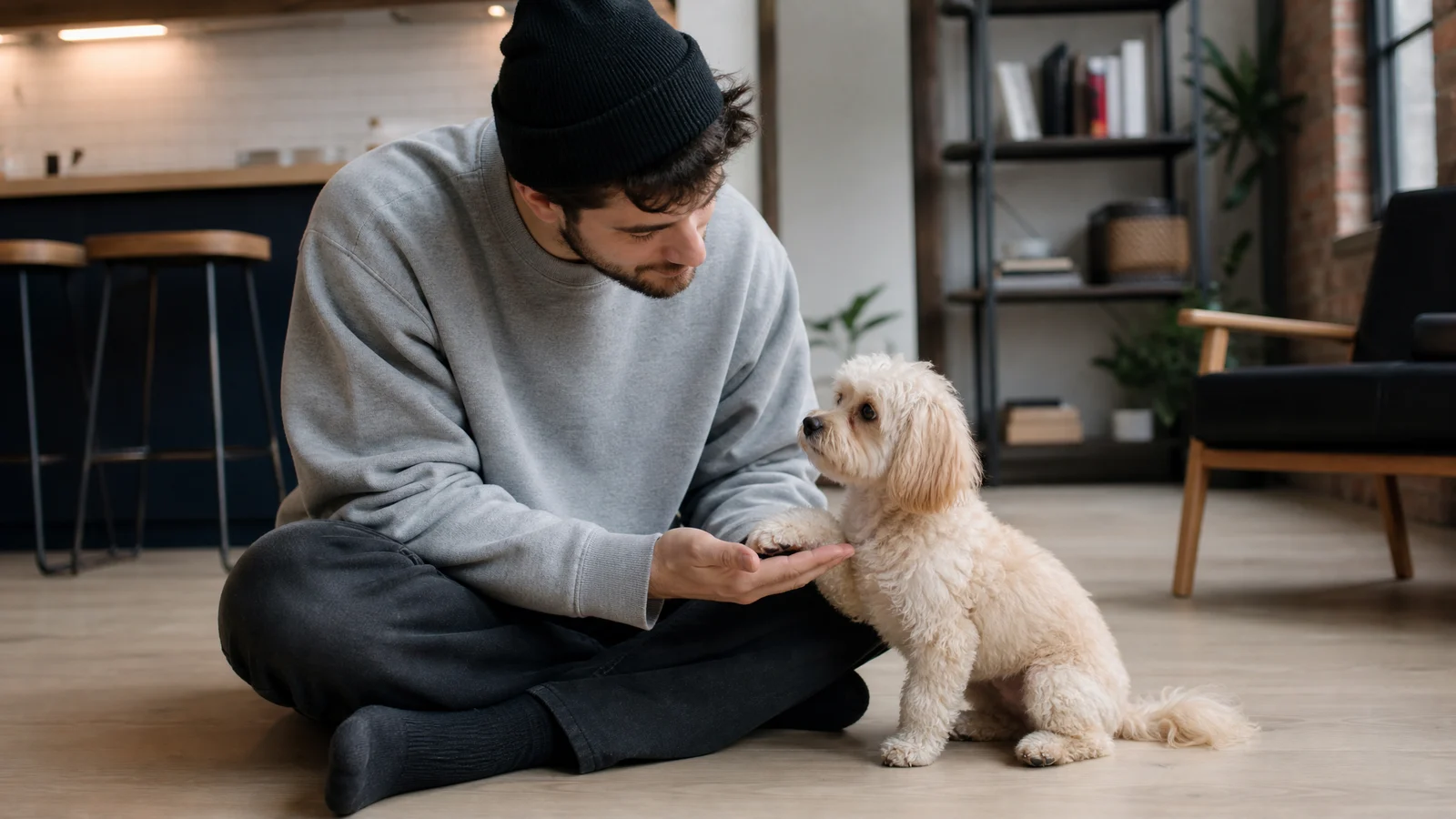
You can probably picture the finished trick already: your Maltipoo sitting in front of you, a small paw settling into your palm, and everyone in the room delighted. The way there is quieter than the picture, because most of the work is noticing the right moment and paying for it right away.
Read on for how to catch that first lift, stretch it into a held touch with a word of its own, and tip it upright into a high five, plus two snags that tend to show up once an excited dog gets the idea. A lively, people-focused dog will try plenty of other things first, and your hand has to stay quiet while they do.
Catching the First Paw in a Maltipoo Shake Hands Trick
The wait goes best in a quiet spot, with a few very small soft treats and your dog free to sit or stand however they like. A Maltipoo can inherit a Poodle side that is people-oriented and quick to please when practice is fun and positive, and a Maltese side that is playful and lively yet gentle-mannered, so cheerful tries suit them better than long serious ones.
The setup borrows from a nose-touch game the San Francisco SPCA teaches: hold an empty hand out at your pet's nose level, keep the treat in your other hand hidden behind your back, and as your pet leans in toward your open hand, say "Yes!" and offer the treat right away. We only change what we wait for, a paw instead of a nose, so the picture you build is almost the same one, and the open hand stays just as quiet.
Marking the First Paw Lift
A Maltipoo's nose and tongue may well have their turn at your hand long before a paw does. Let them have it and pay nothing for it, no yes and no treat. The moment a paw leaves the floor toward your hand, even as a small shift of weight, say your marker word and pay from the other hand right away, since a treat that arrives late pays for whatever your dog did next.
Never lift, hold or place the paw yourself: the paw travels to your hand, never the other way around. If having a paw touched worries your dog, our Maltipoo paw handling guide teaches that separately, and a trick is not the place to work on it. Regular vet visits are a good time to ask about paws, and a dog who winces or avoids lifting one at home should see the vet before the game goes on.
With the nose and tongue earning nothing, your dog learns quickly which moves are worth repeating, so be exact about the three that do deserve a marker word and a treat in these early sessions:
- A paw coming off the floor toward your hand, however small the movement looks.
- A shift of weight onto one side that hints a lift is on its way.
- A paw touching your palm for any length of time at all.
Everything else, a nudge with the nose, a lick, a hopeful lean, gets no reply. That is how the paw begins to arrive a little sooner, because it is the only thing that has ever paid.
Shaping the Touch Into a Shake and a High Five
When a paw finds your palm without much searching, the job changes from getting a paw to shaping the one you have, and the first thing to shape is how long it stays.
Holding the Touch and Adding a Word
A shake begins as a touch, so the first thing to stretch is how long it lasts, and the American Kennel Club suggests starting with your dog's paw on your hand for just a second or two, then slowly building up the amount of time as your dog gains understanding. For the word, the same page says to wait until your dog is consistently placing their paw on your hand and waiting for the reward, and only then introduce a verbal cue of your choice.
That order protects the word. Said too early, it attaches to a tap that is still wandering; said once the touch is dependable, it names something your dog already does. A short word that rarely turns up in everyday chatter keeps the cue from being said by accident.
A Maltipoo High Five Trick From the Shake
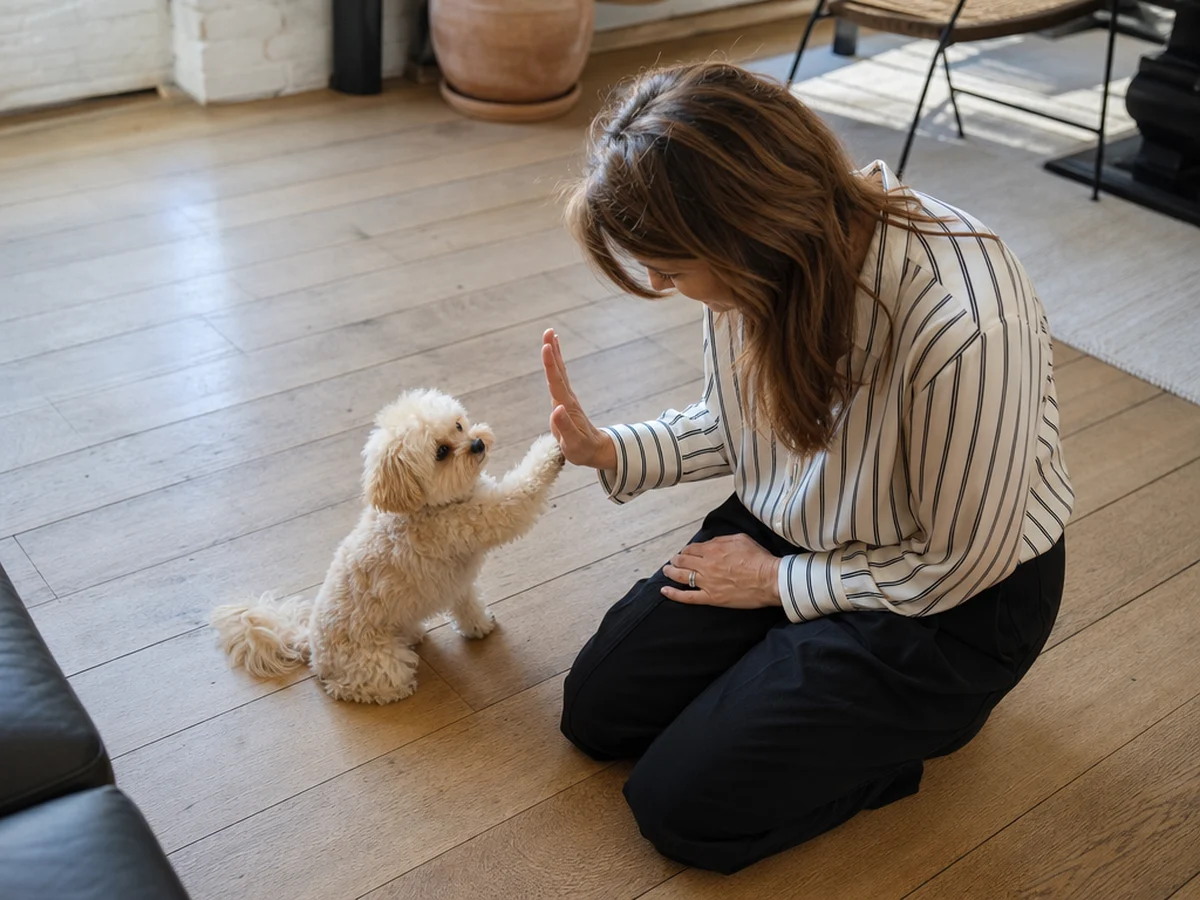
Begin the high five only when the shake is dependable. Then change your hand and leave your dog's job alone: over several tries, tip the palm from flat toward upright a little at a time, and pay only when the paw meets it. Our trainers keep the palm low for a dog this small, so the paw only has to rise a little and all four feet stay on the floor.
A high five is a quick tap rather than a held touch, so give it a word of its own to keep the two apart. If your dog already launches at hands, work through keeping a Maltipoo off your knees before you raise the palm at all.
When Shake Gets Too Exciting
Excitement is usually what wobbles the lesson after a Maltipoo has the idea, because a keen dog wants to say yes with the whole body and sometimes with the voice. Two snags deserve a plan of their own.
What if Both Paws Grab My Hand?
Pay only for a single paw that lifts, and let a clutch earn nothing. Take your hand away for a breath, then offer it again low and light so your dog has no reason to climb it. A Maltipoo who holds on with both paws may simply be keen, and one lifted paw at a time is easier for a small body to repeat.
What if My Maltipoo Whines While They Wait?
Pay for the paw, never for the noise, because a treat that arrives while the whining is going on pays for the whining. Wait for a breath of quiet or a paw lift and mark that instead. If waiting is what your dog finds hard, hold your hand low and let each try end quickly, so the next turn comes sooner.
Shake as a Game of Turns for Your Maltipoo
The grab and the whine come from the same place: your dog is taking a second turn before you have finished yours. Shake runs best as a trade, and it helps to keep that picture in mind while you practice.
The paw lift is your Maltipoo's turn. The marker word, the treat and your hand drawing back are yours. Once the treat has been eaten and your hand comes out again, a fresh round begins, and your dog knows it is their turn.
Seen this way, neither snag needs a scolding or a fix of its own. Let your turn finish, offer the hand again low, and the round goes back to its usual size.
 Exercise and jobsHow to Teach a Maltipoo to Spin
 Exercise and jobsHow to Teach a Maltipoo to Jump Over Obstacles
 Puppy trainingAre Maltipoo Puppies Easy to Train?