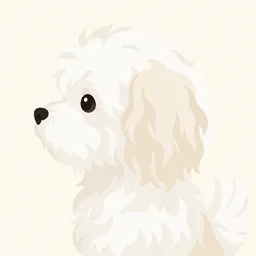
 Maltipoo
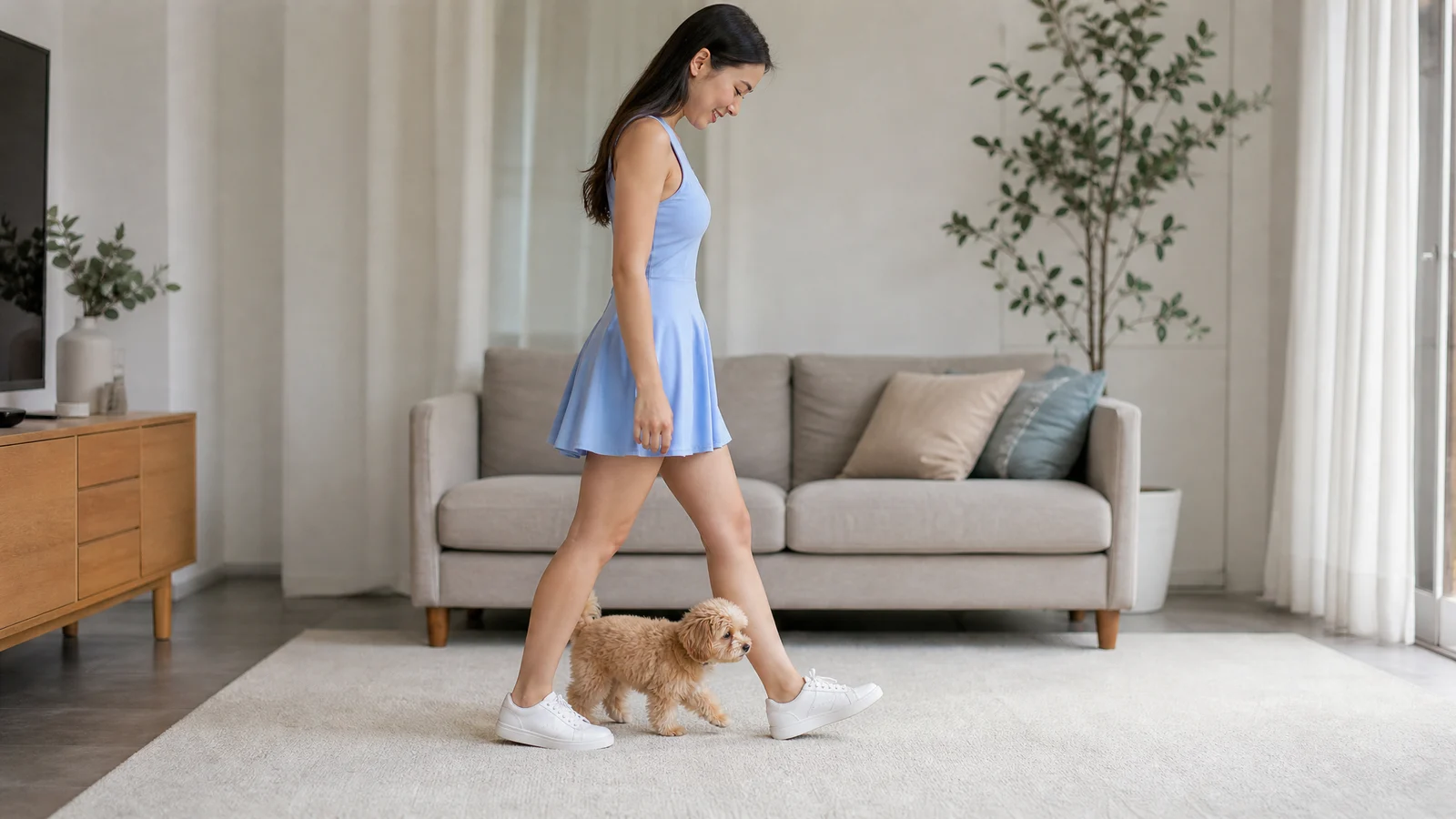
Between the first treat through the gap and the finished figure eight lie four small lessons. None of them asks more of a Maltipoo than following a snack.
That makes the leg weave one of the friendliest tricks for a small dog, as long as you are the one willing to do the bending. Your legs are the whole course, so your stance matters as much as the treat, and both sides of a Maltipoo's family may help: the Poodle has a long history as a trick dog and the Maltese is game for agility.
Below, you'll find the setup first, then each lesson with what to hold, when to pay and what to try if your dog stalls. A word to name the trick comes last, once the figure eight runs on its own.
A Maltipoo Weave Trick Needs a Wide Stance and Tiny Treats
The finished weave is a figure eight your dog draws around both of your legs, passing through the gap between them each time. Because the dog is small, the stance does the adjusting: feet wide, knees softly bent and the gap low enough to look like an invitation. We start every weave by checking that gap before we think about the dog, since a path that is easy to read is half the lesson.
One check comes before any treats. Battersea points out that joint pain or medical issues might make this kind of weaving movement uncomfortable, so a Maltipoo who moves stiffly or has been sore lately should see the vet before the first lesson. Keep regular vet visits on the calendar either way, and stop a session if your dog seems reluctant to turn.
Choose the room next. Begin in a distraction-free spot so the treat gets a fair contest, and save the yard until the trick is mastered. Before the first repeat, set up three things:
- Leash off. A trailing leash can wrap around your ankles in the middle of a figure eight, so start with your dog free of it.
- Soft treats the size of a pea keep every repeat quick and let your Maltipoo swallow and look up for the next one.
- Both Hands Ready: keep treats in a pouch or pocket so either hand can reach behind your legs, because the lure changes hands in the last lesson.
With those settled, every lesson below is about your dog and your hands instead of your gear, and a Maltipoo who can see the path and earn a quick reward is already most of the way there.
Building the Weave From Gap to Figure Eight
With the floor ready and the treats cut small, the trick comes down to four lessons, and each one makes the next easy. Move on only when your Maltipoo does the current lesson smoothly several times in a row, and drop back a lesson whenever things get messy.
Leading Your Maltipoo Through the Gap
Stand with your feet wide, knees softly bent and your dog facing you, with a treat hidden in one hand behind your leg. Keeping that hand low shows a small dog where the path is, because a gap that is hard to see is a gap that does not get used.
- Hold the treat behind your right leg, down at your dog's nose height, so the lure and the path line up.
- Bend your knees a little and draw the treat back between your feet, which makes your dog walk through the gap to follow it.
- Say your marker word the moment all four paws are through, then pay from that same hand so the reward sits right where your dog finished.
Repeat until walking through feels ordinary. If your dog stops at the gap, widen your feet or lower your hand and try again, since a path that looks too tight gets skipped. A small dog meeting two tall legs may need a moment to trust the gap, and a wider gap earns that trust faster than extra treats. If they jump at your knees instead of walking through, our guide to keeping a Maltipoo off knees covers that habit.
Following the Treat Around One Leg
Now the treat travels farther before the pay arrives. Letting your dog nibble as your hand moves keeps them with the lure, and that matters, because a dog who loses the treat in the middle of a loop may wander off the route.
- Lure through the gap as before, then keep your hand moving around the outside of your right leg instead of stopping, so your dog follows it in a loop.
- Mark and pay at first for a small turn after the gap, and ask for a little more of the circle on each repeat, because a loop built in small slices stays easy to follow.
- Mark when your dog is back in front of you and facing you, so the finish of the loop is what gets paid.
Move on when your dog circles smoothly several times in a row. If they stop halfway, you asked for too much circle at once: pay for the part they did and ask for a little less next time.
Teaching the Mirror Side
Now repeat the whole lesson on the other side, with the treat in your left hand and your left leg as the post. Start with a plain pass through the gap and build the circle slice by slice again, because your dog learned the right side with your right hand and the left will feel new until it has paid a few times.
If your Maltipoo keeps swinging back toward the side they know, pay for any step in the new direction and shorten the circle until it is easy. Move on when both sides run smoothly on their own.
A Maltipoo Figure Eight Around Your Legs
With both sides solid, the figure eight is just the two circles back to back, and the only new skill is a hand switch behind your legs. You will pay once at the very end instead of after each circle, which is a big step up in what you ask, so keep the lure low and the pace slow.
- Lure through the gap and around your right leg with your right hand, exactly as you taught it.
- As your dog returns to the front and crosses the gap again, pass the treat behind your legs so your left hand takes over the lure.
- Guide your dog around your left leg, then mark and pay only when they stand in front of you after the second circle.
If your Maltipoo drops out after the first circle, you stretched the pay too far: go back to paying after each circle for a few repeats, then ask for both again. When the eight flows without a pause at the gap, the trick is in place, and everything after this is about removing the treat.
From Treat to Empty Hand to a Weave Word
A figure eight that depends on food in your lure hand is only half a trick, so the next job is to swap the treat for a signal your Maltipoo can read without it. Keep the treat in your other hand, lure the whole eight with an empty one, and pay from the hand that was not leading.
Once your dog follows that empty hand smoothly, add a short word such as weave just before you start, so it comes to mean the whole pattern. With time you can shrink your hand movements until open legs become the signal, and the bend of your knees does the asking. If your dog stalls, show the hand again and pay the answer.
Fade the signal in small steps rather than all at once, and bring the treat hand back for a moment whenever the eight turns sloppy. A Maltipoo who answers an open stance has learned to read your body, which is a bigger skill than any single trick.
Taking the Weave Into Real Rooms With Slow Steps
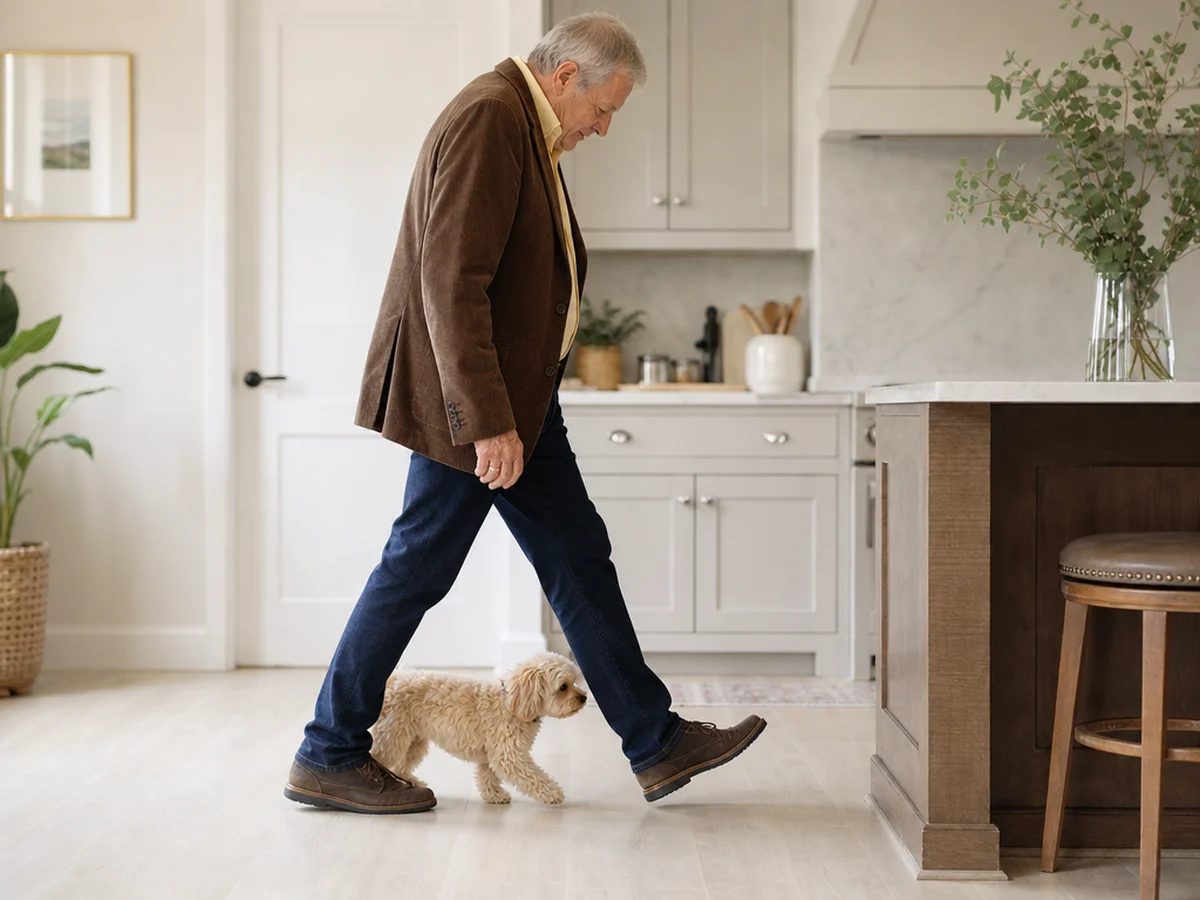
A word that works in the quiet room still has to survive the rest of the house. Change one thing at a time: move to a second room, start a pass back with a treat in your hand, and bring the empty hand back once the first few eights run smoothly.
When the standing weave is easy, try one slow step between passes, with the treat lure back in your hand to build your dog's confidence. A small dog is easy to lose underfoot, so look down, slide your feet instead of lifting them and stop at once if your dog tangles with a foot. Going back to standing passes costs nothing and keeps everyone upright.
Tricks like this one fit alongside the rest of our Maltipoo trick training, and a few minutes of weaving adds to the mix in our guide to Maltipoo exercise and brain games.
Small-Dog Doubts About the Weave
A weave asks a small dog to share a few square feet with two moving legs, so the doubts that arrive are about size, space and staying power. Here are three, with short answers.
Is a Maltipoo too small to weave?
No, because you set the size of the course. A wider stance and a lower lure suit a small dog, and nothing in these lessons asks for a jump or a sprint. If your dog ever seems sore or reluctant to turn, pause and check with your vet.
Do we need a big room?
A hallway or the space beside a sofa is enough, since your dog only travels a few feet while you stay put. A rug or yoga mat gives small paws grip on slick floors, and that is worth fixing before anything else.
What if my Maltipoo loses interest?
Pay sooner and in smaller pieces, and end the session while your dog still wants another go. A few bright passes beat a long, dull drill, and the lure works best when it leads to something your dog really likes.
Why a Maltipoo Learns Best in Pieces
The figure eight looks like one big trick, and it turned out to be four small ones that each paid for themselves. Your Maltipoo never had to solve more than one new problem at a time, which is why the whole thing can come together without frustration on either end of the leash.
That is also why a polished weave looks effortless. A Maltipoo who threads a tidy figure eight around your legs is showing off the sum of four easy lessons, not one hard one.
 Exercise and jobsHow to Teach a Maltipoo to Shake and High Five
 Exercise and jobsHow to Teach a Maltipoo to Spin
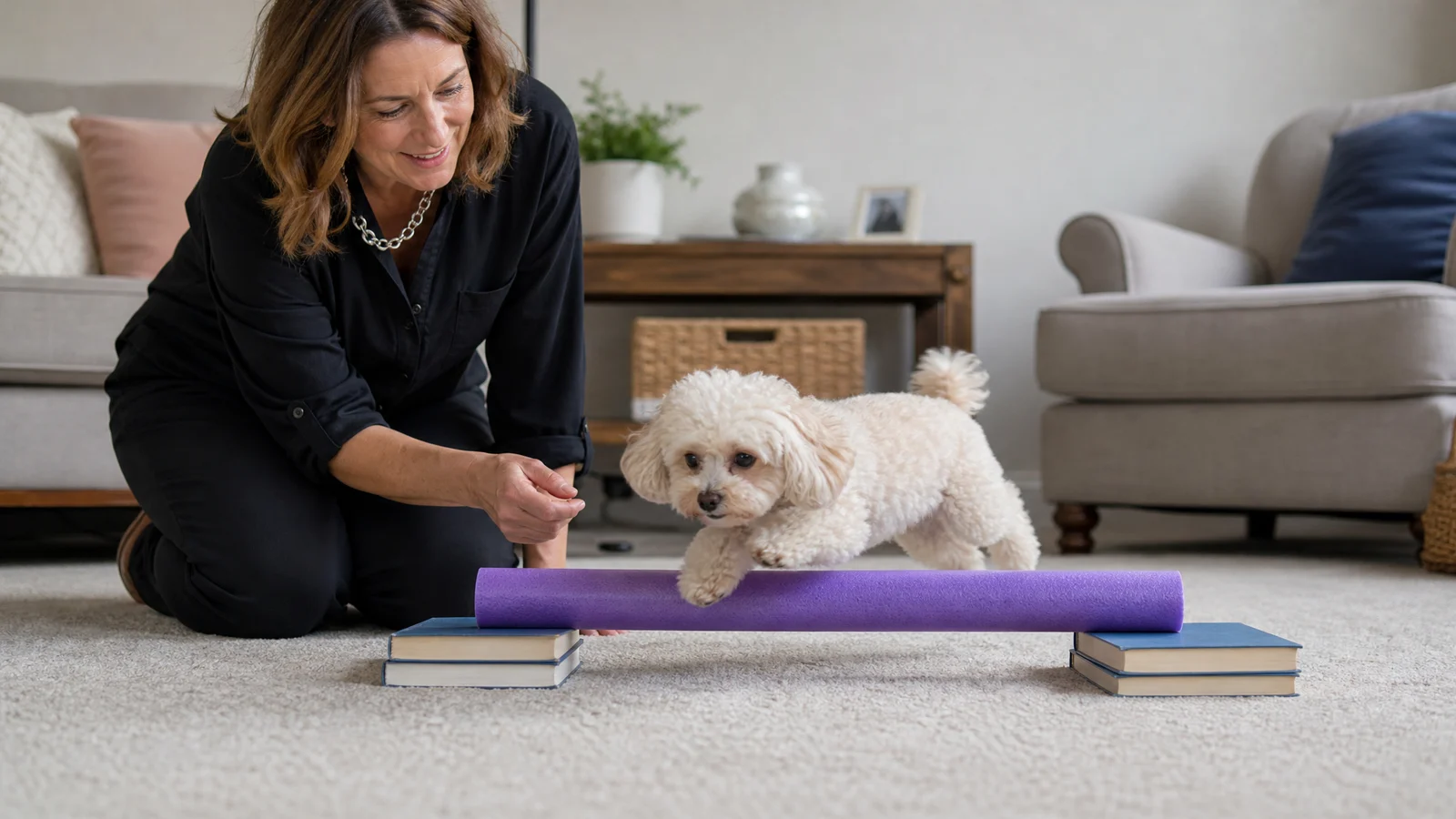 Exercise and jobsHow to Teach a Maltipoo to Jump Over Obstacles