 Maltipoo
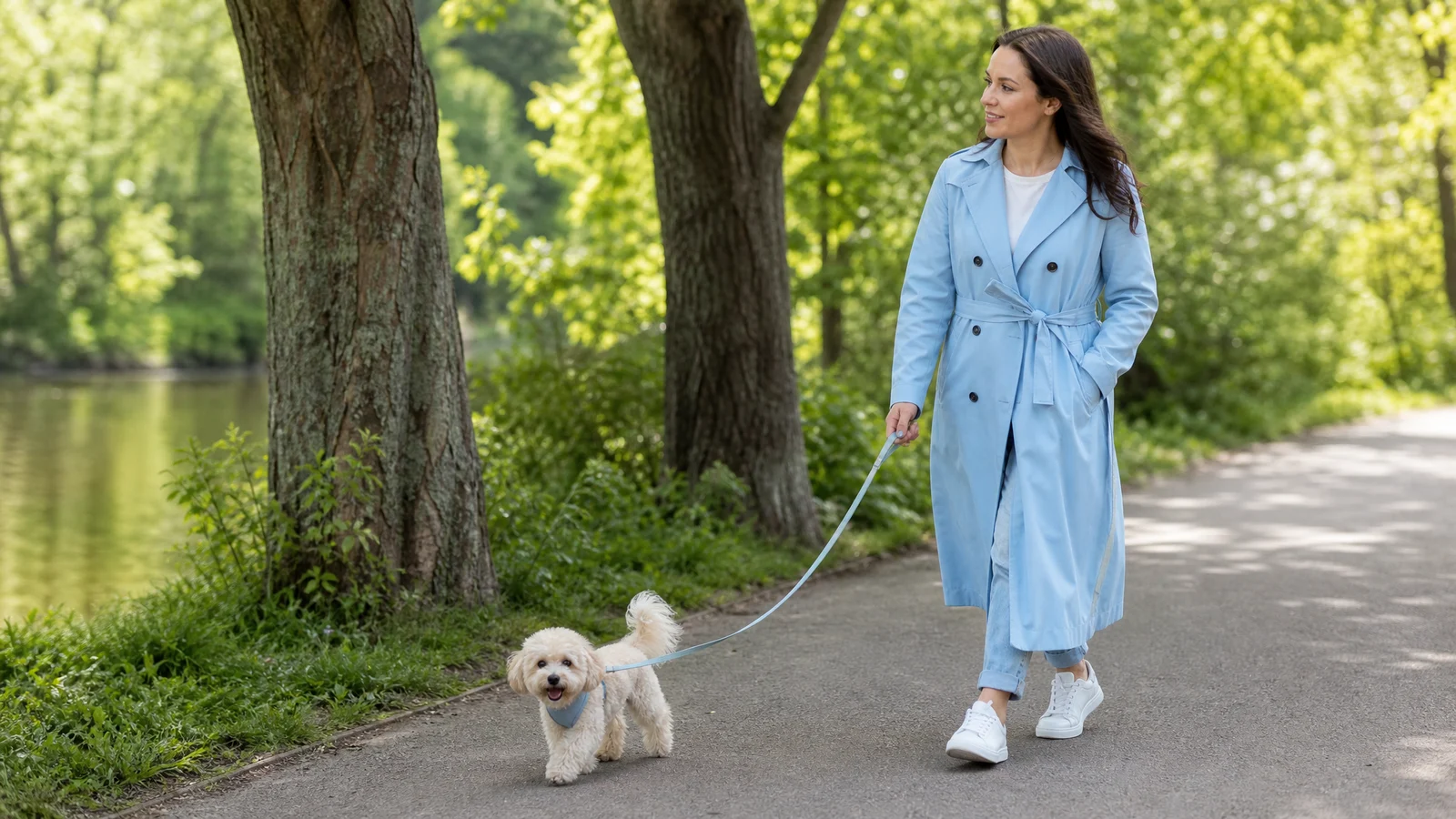
Young puppies need movement in tiny bursts between long naps. As they grow, they want real outings and plenty of brain work. Once they mature, most dogs settle into a steadier routine, though timing varies. This cross can land anywhere between the calmer Maltese and the livelier Poodle, so your dog's own pace is the one to watch.
Get the balance wrong and you meet it at home as yapping, chewed pillows and a dog who cannot switch off. Get it right and you live with a bright, cuddly companion who settles when you do. We have spent many years focused on this breed's behavior, and we'll walk you through what each age needs and where your dog sits between the two parents, then how walks compare with brain games, why mood beats the clock, and what changes between indoor and outdoor days.
Maltipoo Exercise Needs by Age
Puppies and grown dogs want different things from the same day, and the gap is wider than most owners expect. Puppies move in bursts with long sleeps between. Grown dogs handle steadier outings and a predictable rhythm. Treat every age below as a rough guide, because your dog inherits energy from two parents who sit at different points on the scale.
The Youngest Months
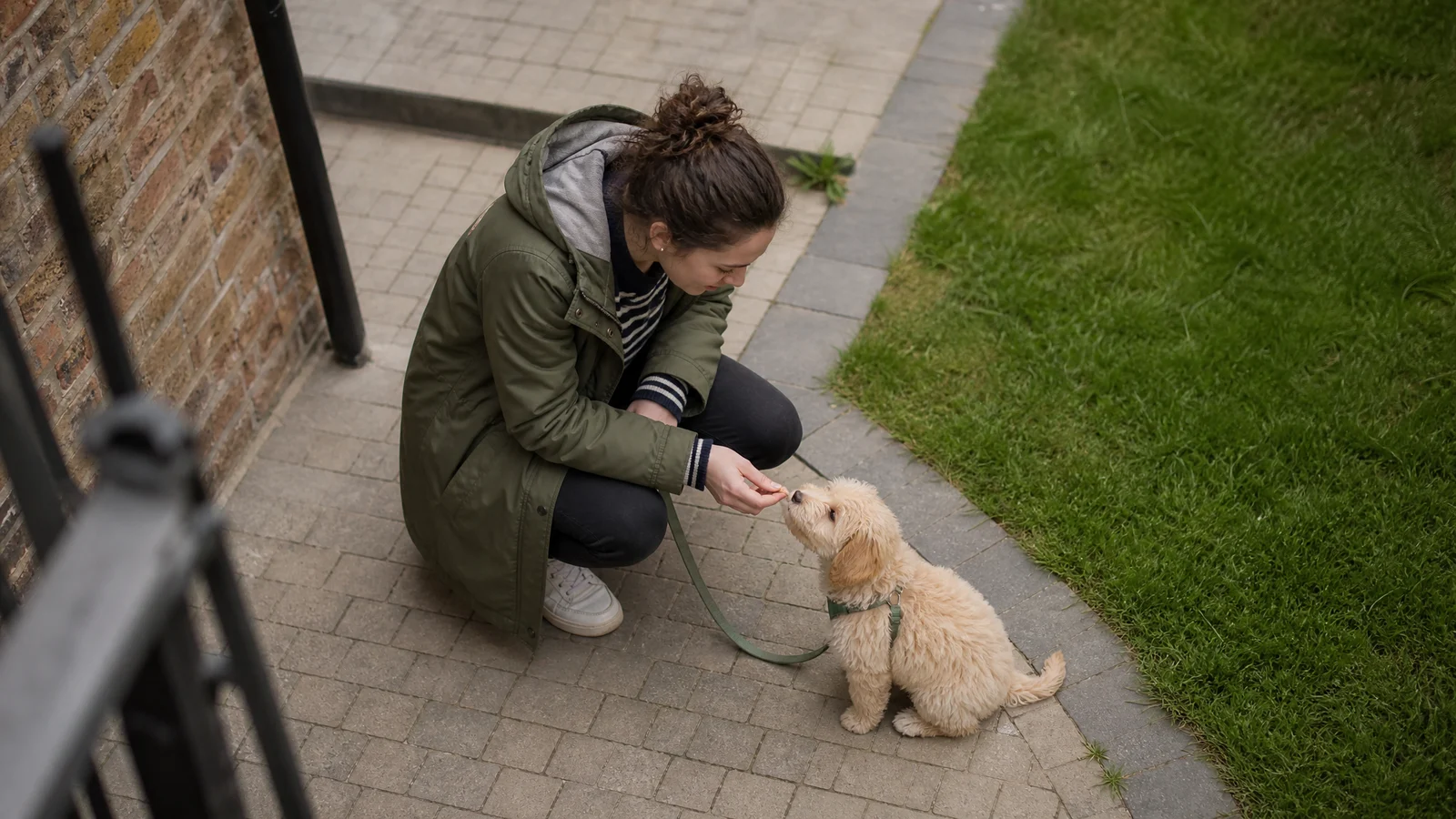
Play for a few minutes, practice a trick or two, then let your puppy sleep. Use soft footing, and carry your puppy on stairs and in and out of the car until they are steady.
Expect some crying. Many puppies whine, scream or howl when you leave the room, and plenty settle before you come back. A minority stay quiet from day one. Early crying does not predict the adult dog, so don't celebrate a silent first week or panic over a noisy one.
Close every play burst with sleep somewhere safe. Several owners credit early playpen use, while others found their puppy screamed behind a closed crate door and did better in a fenced-off area. Try both and keep whichever your puppy accepts. At night, some owners move the crate beside the bed or sleep next to it, and a puppy often settles once they can see you. A food-stuffed toy gives a puppy something to do when you step out of sight.
The Settled Adult
A grown Maltipoo needs a daily outing, a few play sessions and some brain work, and the exact amounts depend on the dog. Alone-time tolerance generally improves with age, and owners often note gains by about a year. Reported tolerances run from short stretches to a few hours.
The approach owners credit most is slow. Start with minutes, return before your dog panics, and lengthen each absence a little at a time, rewarding quiet with a treat or praise. It follows the logic of desensitization and counter-conditioning, which works at the dog's pace and is no instant fix.
Some owners rehearse departures. They step outside, listen nearby, and reward the quiet. Others find that soft music, a worn shirt, a treat given only at leaving or a steady leaving phrase takes the edge off.
Some dogs struggle far longer, with vomiting, refused meals or no tolerance for being alone at all. If that sounds like yours, read our Maltipoo separation anxiety guide and raise it at your next regular vet visit rather than adding more exercise and hoping.
Maltipoo Exercise Between Two Parents
Your Maltipoo has a Maltese on one side and a Poodle on the other, and the two rate a notch or two apart on the traits that drive exercise. This table sets the calmer parent against the livelier one.
| Trait | Maltese | Poodle |
|---|---|---|
| Energy level | 3 of 5 | 4 of 5 |
| Mental stimulation needs | 3 of 5 | 5 of 5 |
| Playfulness | 3 of 5 | 5 of 5 |
| Barking level | 3 of 5 | 4 of 5 |
Read it as a range, not a prediction. Maltese are full of energy yet need only occasional exercise to stay healthy and happy. Poodles need good exercise every day to suit their high energy. A cross may inherit either pattern or land between them, and littermates can differ.
Neither side is a couch ornament. Toy and Miniature Poodles are enthusiastic and energetic, and Maltese are game little athletes on an agility course. So we push back on the idea that a small dog is happy with a lap and a quick bathroom trip. A Poodle-leaning Maltipoo kept at that level tends to invent their own entertainment.
For scale, one to two hours a day is the figure given for demanding breeds. Treat that as a ceiling for the most driven dogs, start well below it, and let your dog show you if they want more.
Watch the dog instead of the label. These clues help you place yours:
- A dog who is content after one outing and a short play session, then naps without fuss, leans toward the Maltese side.
- A dog who keeps dropping toys at your feet and invents games after a full walk leans toward the Poodle side.
- A dog who picks up a new trick in a few repetitions and clearly wants more has mental needs near the Poodle end, even if their legs tire early.
- A dog who is lively but switches off quickly is probably in the middle, and a moderate routine fits.
Physical Exercise Versus Mental Games
Walks burn physical energy, but a Poodle-leaning brain keeps running after the legs stop. Mental stimulation complements physical exercise without replacing it, and training, puzzle games, scent work and new skills all tire a dog mentally.
Common advice says to walk your dog until they are exhausted. For this cross, adding distance is rarely the fix. Pair a shorter walk with a few minutes of brain work and see which settles your dog faster.
Puzzle Toys and Food Games
Food-stuffed toys such as a Kong or a kibble-filled bouncy ball keep many Maltipoos busy, and owners use them to occupy dogs while they are out. Stuff the first ones loosely so your dog wins fast, then make them harder. Introduce each toy while you are home, so it becomes a game your dog chases and not a signal that you are leaving.
Sniffing and Scent Games
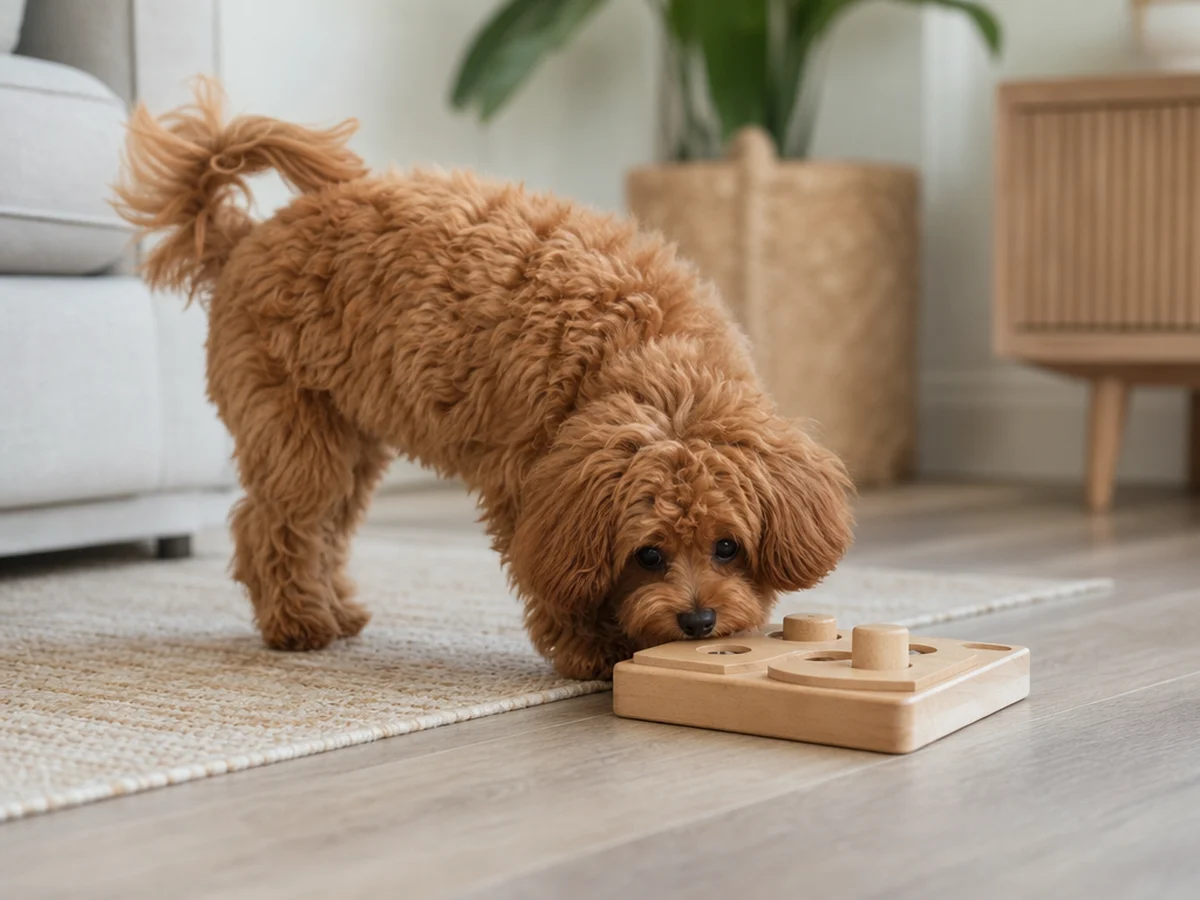
The Poodle's excellent nose once earned the breed extra work finding truffles, and many Maltipoos enjoy using theirs. Scatter a few treats across a rug, say find it, and let your dog sniff them out. Then hide treats in easy spots around a room, then harder ones.
Slow sniffing walks count too. Let your dog stop and read the scents instead of marching at your pace.
Trick Practice
Toy Poodles became known worldwide as trick dogs, and Poodles take eagerly to training that stays upbeat. Teach a spin, a bow, a shake or a nose touch with a marker word and a treat. Keep sessions short, ask for the same thing the same way each time, and quit while your dog still wants more.
Quiet and Settle Practice
Barking is part of this breed's picture, since the parents rate 3 and 4 out of 5 for it. Many owners teach a quiet cue with a sit and treats and report less barking, though some dogs still yap a few times before stopping on cue.
Practice settling at cafes or parks too, rewarding calm watching of people and dogs. Your dog learns that others won't always engage. If they bark or scratch at a door, check whether they are asking to go out before you file it under noise.
Exercise Schedule Versus Mood
A fixed timetable gives your dog something to count on, and both parents rate 4 of 5 for adaptability, so a Maltipoo usually copes when plans shift. Still, a timetable only sets the floor. Keep outings and your requests consistent, then let your dog's mood on the day decide how much extra play or rest to add.
Signs of Too Much
Overdoing it is easy with a small dog who keeps saying yes. Watch for these signs:
- Heavy panting, lagging behind, or sitting down and refusing to go on.
- Wired, frantic play that tips into nipping or zooming and doesn't wind down afterward.
- Stiffness or slowness to get up after rest.
- Crankiness or clinginess for the rest of the day.
Cut the next session back, and mention anything that lingers at your regular vet visits, including how your dog's joints are holding up.
Signs of Too Little
Bored dogs invent their own outlets, and people usually label the result as misbehavior. In a Maltipoo that often means yapping at nothing, chewing furniture, shadowing you from room to room or hauling toys over to you after the walk is done.
If the behavior fades once you give your dog a job, boredom was the cause. If panic when you leave continues, the problem is bigger than exercise. Several owners report that a second dog made alone time easier, but not for every dog, so don't get one as a cure.
When Calm Arrives
There is no fixed date. Owners report better coping with alone time around a year, but energy keeps its own schedule. Some dogs mellow early and others stay lively for years. Judge the dog in front of you, not the calendar.
Indoor Exercise Versus Outdoor Walks
On bad-weather days you can still meet your dog's needs indoors. Outdoor outings add smells, new surfaces and a change of scene that a living room cannot match. Aim for both across the week and match the setting to the day.
Bad-Weather Games
Rainy days are the time to lean on the mental games above, plus a few active ones:
- Scatter treats along a hallway or across a rug and send your dog to sniff them out.
- Run a short trick routine, rewarding each step with a treat and a marker word.
- Play gentle tug or toss a toy across a rug, and pause the game if mouths get rough so your dog learns that calm keeps it going.
- Finish with a settle on a mat and a chew or stuffed toy once the game ends.
Small-Dog Safety Outdoors
Use a well-fitted harness, offer water and shade, and let your dog cool down after warm-weather play. Hot sidewalks are hard on little paws. At home, add ramps or steps for the couch and bed, and put rugs on slippery floors so your dog isn't launching off furniture. A wet outing also means drying and brushing, since both parents rate 4 of 5 for coat care.
Supervise around other dogs. The Maltese is described as seeming without fear despite their size, and both parents rate only 3 of 5 for getting along with other dogs. Your Maltipoo may march up to a much larger dog with confidence they cannot back up. Keep greetings short and calm, and step away if your dog looks overwhelmed.
Next Questions on Maltipoo Exercise
This cross sits between a Maltese who needs only occasional exercise and a Poodle who needs daily activity and something to think about. Give a moderate daily outing, short play sessions and some brain work, then adjust to the dog you actually have. A Maltipoo whose body and mind are both satisfied settles on their own and has no reason to go looking for an outlet. A few follow-ups come up again and again:
- If your dog is tired but still panics when you leave, exercise alone rarely fixes it. Our guide to feeling safe home alone covers the small steps that help.
- If you suspect you are doing too much or too little, compare your dog's behavior with the signs above, and ask your vet at regular visits.
- If the weather turns, rely on sniffing, puzzle and trick games, followed by a short settle practice.
- If you are waiting for a puppy to calm down, many do by about a year, but individual dogs vary widely.
 Exercise and jobsHow Fast Can a Maltipoo Run? Safe Recall Games
 BehaviorMaltipoo Separation Anxiety: How to Help Your Dog Feel Safe Home Alone
 Training basicsHow to Potty Train a Maltipoo Puppy With Rewards