 Maltipoo
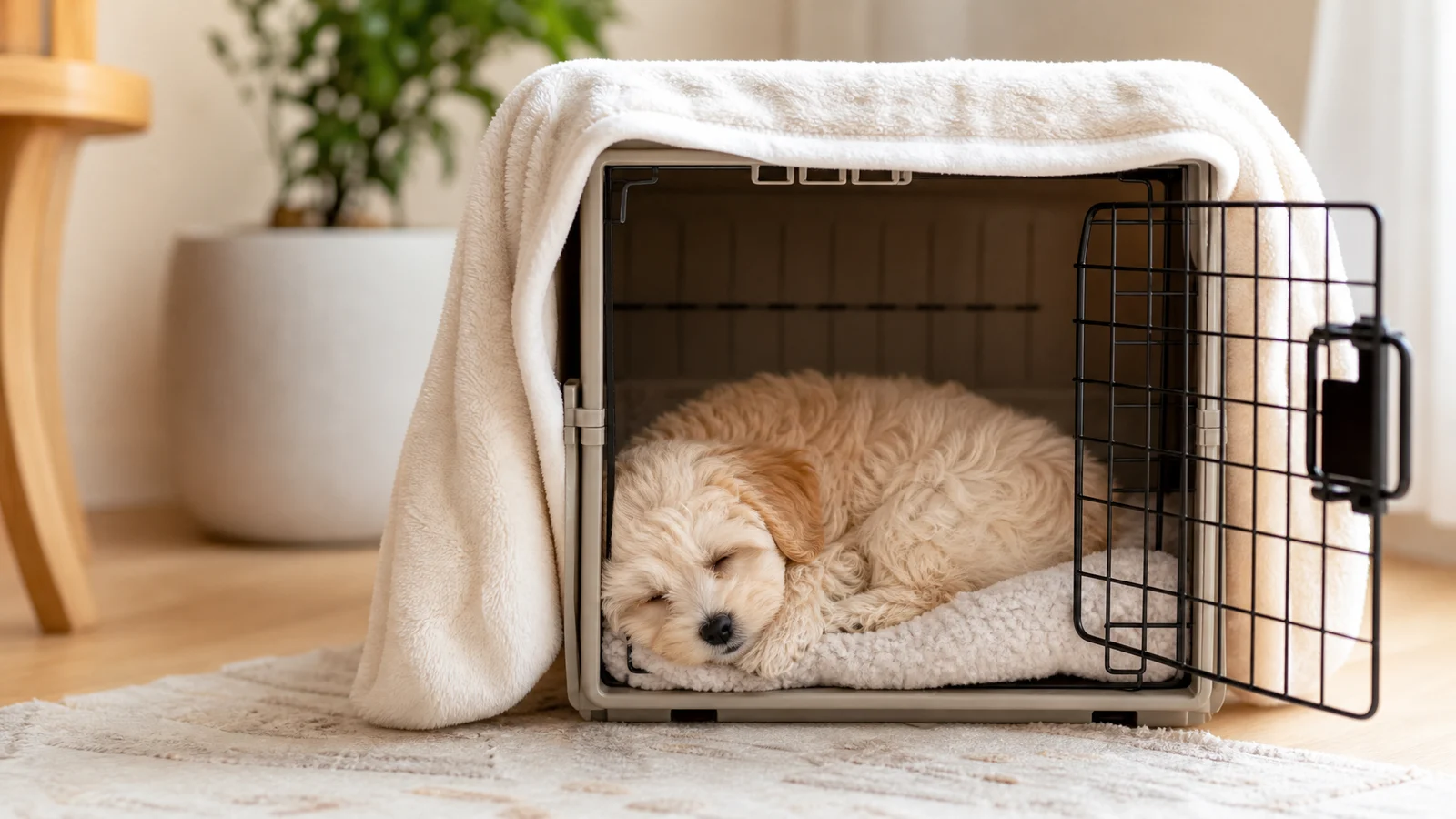
A crying Maltipoo does not need a longer timer until we know what the sound means. The dog may need to eliminate, may not understand the closed door or may be moving into distress. Waiting through every kind of cry treats three different problems as though they were one. Below, we sort the sound first and a duration ladder second.
The crate becomes valuable while open, then door motion, closed time, human distance and household sound are trained as separate variables. We also separate night needs from departure practice so one hard context does not control the whole plan. This lets the dog succeed at the exact part that is difficult instead of being asked to tolerate the whole picture at once.
Crate Crying Needs Triage Before a Timer
Begin with context. Note when the dog last eliminated, whether they entered voluntarily, how quickly crying began and what the body is doing. A few questioning sounds followed by settling differ from frantic movement, drooling, escape attempts or a dog who cannot take food.
| What you observe | First response | Training decision |
|---|---|---|
| Possible toilet need | Take a quiet, direct toilet trip | Return only if the dog is calm enough to learn |
| Brief uncertainty | Lower duration or sit nearby | Repeat an easier closed-door step |
| Escalating distress | End the setup safely | Pause confinement work and seek guidance |
| Household trigger | Reduce sound or movement | Train that trigger separately |
Do not create a pattern in which crying is deliberately provoked so the dog can be ignored. We plan repetitions that end before distress. If the dog vocalizes, use the intensity and body language to make the next repetition easier.
A sudden change in a previously comfortable dog deserves a health check. Regular veterinary visits help identify pain, digestive trouble, urinary needs or other changes that can make confinement difficult. Training cannot solve a physical need that remains unmet.
Maltipoo Crate Crying Setup Supports Rest
Place the crate in a calm social area where ordinary household life remains predictable rather than in the busiest walkway. The surface should be stable, the temperature comfortable and the space large enough for ordinary resting positions. Remove anything unsafe for that individual dog when unsupervised.
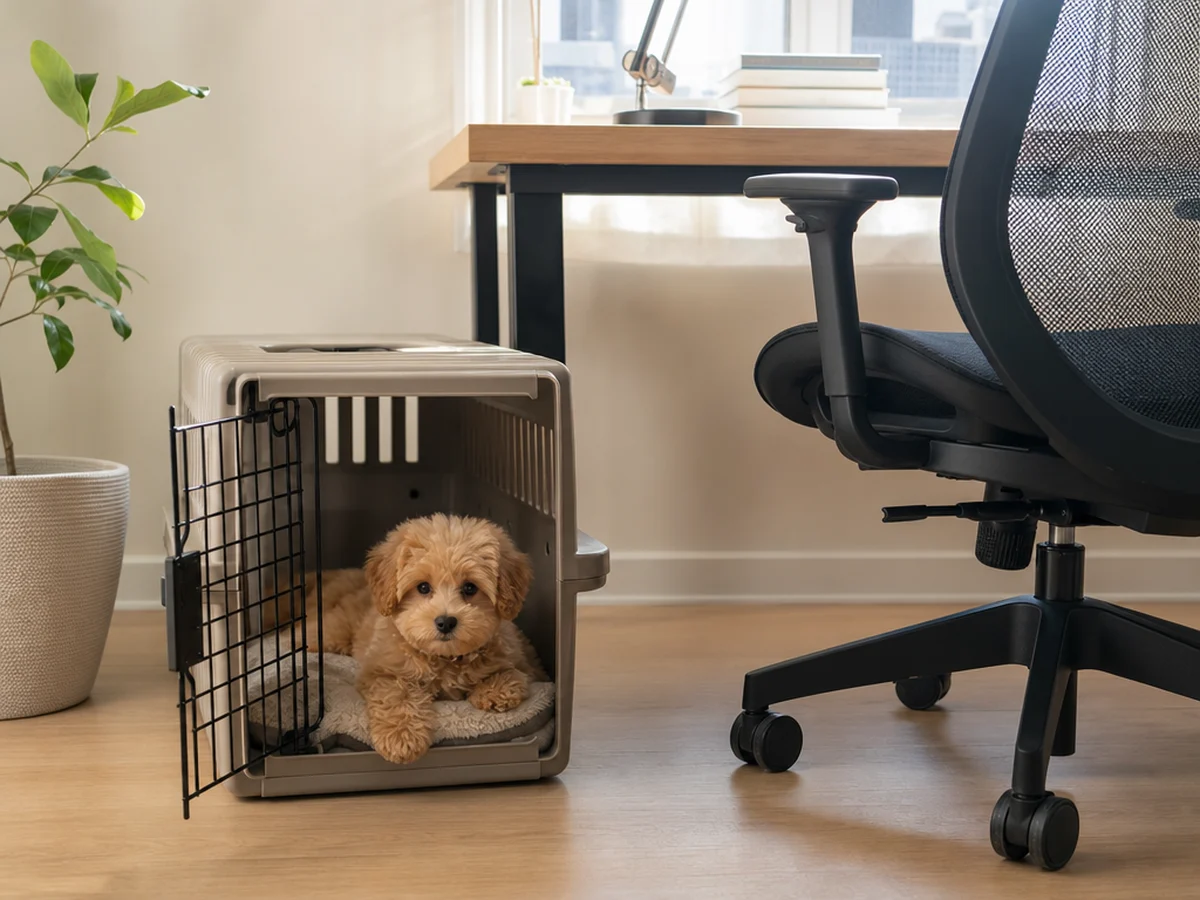
Comfort is individual. A soft bed may help one Maltipoo settle, while another may become busy pulling at fabric. Observe rather than assuming that a decorative setup feels secure. The crate should support rest, not provide a collection of objects that keep the dog aroused.
Observe the location at two different times of day. A corner that feels restful in the afternoon may receive delivery noise or family traffic in the evening. Move the setup when the environment repeatedly interrupts recovery.
Feed treats or part of a meal near the entrance while the door stays secured open. Let the dog leave. Repeated free exits show that entering does not immediately predict being trapped.
The Poodle parent breed is described as people-oriented in the AKC Poodle profile. A Maltipoo may value proximity strongly, but parent traits cannot explain an individual dog's crying. We still teach separation from the person in small, observable steps.
Choose a quiet cue only after the dog is already entering. Say the cue as the dog moves in, mark the arrival and deliver the reward inside. A cue should describe a familiar action, not push the dog into a space they are avoiding.
Voluntary Maltipoo Crate Entry Comes First
Start with a reward just inside the doorway, then place later rewards farther in as confidence grows. Keep your body beside the entrance and leave the exit visibly open. The dog learns that their own movement across the threshold reliably earns rewards and leaving remains possible.
A marker can make the exact choice clear. The Battersea clicker guide describes pairing a marker with food before using it in training. A verbal marker works too, provided it is followed reliably and does not startle the dog.
- Mark a look toward the crate and reward away from the entrance.
- Mark one paw or a step inside, then let the dog leave.
- Build to the whole body entering with the door still open.
- Deliver several calm rewards inside before giving a release cue.
- Practice resting for a moment without touching the door.
Keep a release cue as carefully as the entry cue. Open the door, say the release and toss a reward outside only after the dog notices the opening. This prevents the latch sound from becoming a signal to burst through.
Rewarding away from the crate after release matters. The dog gets another approach instead of remaining inside because food keeps appearing. This creates a genuine entry choice that can later support a closed door.
Link crate work with a suitable daily rhythm. The site's Maltipoo exercise guide can help plan activity and calm enrichment. A dog who is overstimulated or urgently active may not be ready for a resting lesson.
Door Movement Changes Maltipoo Crate Crying
The door is a separate training object. Touch it, mark the dog for remaining comfortable and move your hand away. Next, shift the door a small amount without closing it, then release the dog before concern appears.
Build a ladder from tiny motion to a brief latch. Repeat each level until the dog's body remains loose and they can eat normally. Skip a level only when the next movement does not change breathing, posture or attention.
- Hand reaches toward the door.
- Door moves a small distance and opens again.
- Door nearly meets the frame.
- Latch touches and releases.
- Door stays latched for one calm breath.
- Several rewards arrive through the closed door before release.
Release during a calm moment when possible, but do not wait through escalating panic to find silence. Safety outranks a clean training repetition. After an overwhelmed attempt, lower the next step enough that calm is likely from the start.
Vary the number of rewards delivered behind the closed door. Sometimes give one, sometimes several, then release while the dog still looks comfortable. Predictability comes from safety and the release cue, not from counting treats.
The AVSAB training statement describes shaping behavior in small steps and using rewards rather than fear or pain. Door work is a practical example. We reinforce an approximation the dog can perform comfortably, then change only a little.
Crate Duration and Human Distance Are Separate Skills
Once the door can close briefly, choose either time or human movement for the next lesson. Do not lengthen the latch while walking away in the same repetition. The dog needs a clear answer about which variable changed.
Maltipoo Crate Crying Duration Stays Close
For duration, stay beside the crate and deliver calm rewards at uneven intervals. Open the door before restlessness, give the release cue and allow a short break. Add time in small changes rather than making every repetition longer than the last.
Maltipoo Crate Crying Distance Starts Short
For distance, keep the closed time very short. Shift your weight, take half a step, return and reward. Build to one full step, then a brief movement out of the dog's direct line of sight only after closer movement is routine.
A camera can help when the person briefly moves out of sight, but use it to shorten a difficult repetition rather than to watch distress continue. Review the first body change, not only the loudest sound.
Use a simple record with door level, duration or distance and recovery. We do not need a record of every sound. We need to know which single variable was comfortable and where the next session should begin.
Ordinary household noise becomes a third variable. A cupboard, television or footsteps can change the picture. The PDSA noise guidance describes pairing very quiet sounds with food and raising intensity gradually. Apply that principle only at a level where the dog remains comfortable.
Night and Departures Change Maltipoo Crate Crying
Night and leaving the home are not interchangeable with a daytime crate game. Fatigue, toilet needs and the loss of human proximity arrive together. Build the basic crate skill during the day before expecting it to carry the whole night or departure routine.
Crate Crying at Night
Place the crate close enough to notice genuine needs without turning every movement into a social event. Use a quiet toilet trip when the pattern suggests the dog needs one, then return with low light and little activity. The purpose is care, not play.
If crying begins immediately after return, reduce the difficulty the next night. The dog may need the crate nearer to the bed or more daytime work with the door. Gradual distance can be added after resting is established.
Crate Crying During Departures
Keep departure practice separate from errands. A training exit ends on the planned easy duration, even if the household could stay away longer. Real obligations should use management the dog can already handle.
Practice departure cues without leaving for long. Pick up keys, sit down, move to the door and return while the closed-crate step remains easy. Actual alone time begins in a duration the dog has already shown they can handle.
Crying linked to absence can overlap with a broader separation problem. Read the Maltipoo alone-time guide when distress begins around departures in or out of the crate. A crate should not be used to contain panic.
Distress Signals Set the Maltipoo Crate Crying Boundary
Pause the plan when vocalization escalates, the dog cannot eat, escape attempts intensify or recovery remains poor after release. Secure the dog in a safe alternative area and seek help from a qualified reward-based professional. Repeating the same setup is not evidence that the dog will eventually accept it.
A qualified professional can help separate a training gap from a broader confinement or absence problem. Bring the context notes, video of an easy and difficult repetition and the veterinary findings. Specific evidence makes a safer plan possible.
Also reconsider the crate if the dog repeatedly rests well in a pen or protected room but not behind the crate door. The goal is safe, comfortable management, not loyalty to one piece of equipment. Some households may use different arrangements while training continues.
Progress looks like voluntary entry, soft posture during door movement and recovery that remains ordinary after release. Choose the next easiest successful repetition, not the longest time on the clock. When each variable has a calm history, the cozy den becomes a learned experience rather than a label the dog is expected to believe.
 CareNail Trims, Paw Touches and Ear Checks for Your Maltipoo
 CareTeaching Your Maltipoo to Love Grooming at Home
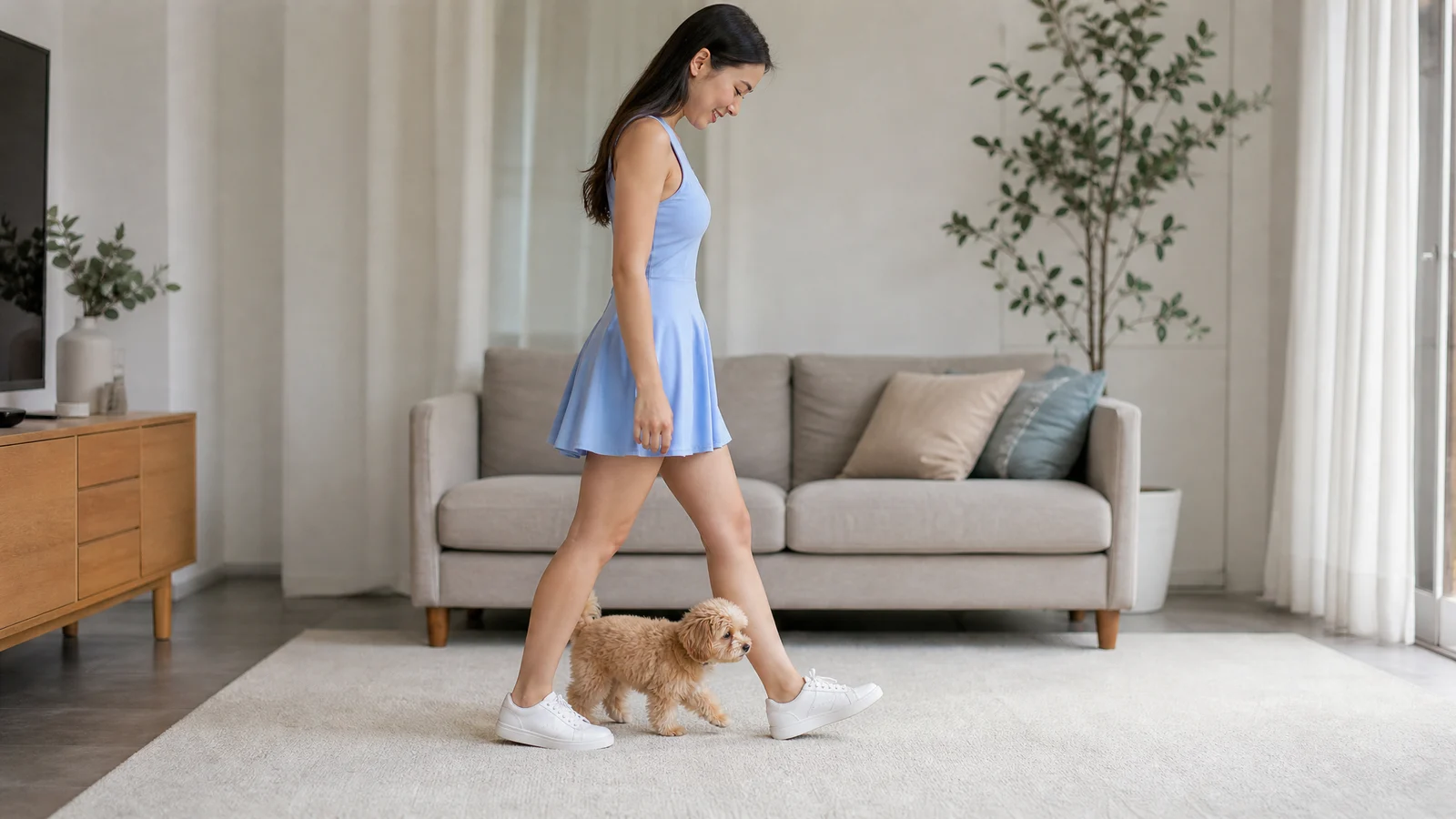 Exercise and jobsHow to Teach a Maltipoo to Weave Through Your Legs