 Maltipoo
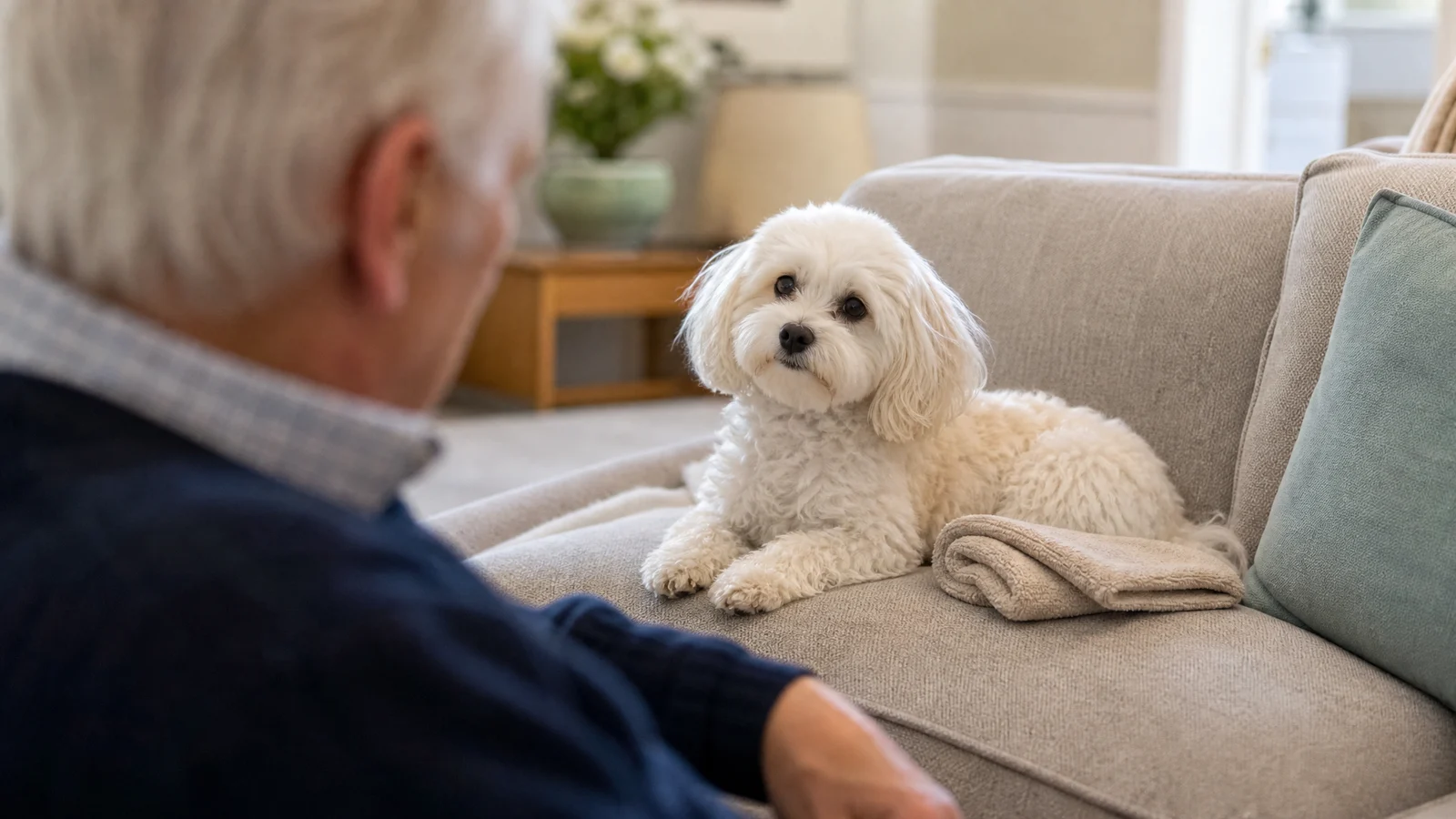
One Maltipoo may place a paw into an open hand, while another leaves when a person reaches toward the leg. The second dog is not being difficult. They are showing that touch, restraint or the next expected tool is already too much for that moment.
We teach handling as three separate body-zone loops, each with a clear start and release. Below, you will build a station, read consent, train paw, ear and face contact, then assemble one-nail practice only after the earlier pieces stay comfortable.
The goal is willing participation and useful care, not holding a small dog still until the task is finished. We also show how to keep a difficult zone from changing the dog's expectations about every other kind of touch.
Maltipoo Handling and Nail Care Starts Before Tools
Handling begins with approach and position. A hand moving over the head, a person leaning across the dog or a paw lifted without warning can make the setup difficult before clippers appear. We first arrange the person's body and the dog's exit so the earliest contact feels predictable.
The Best Friends handling guide recommends beginning on the chest or shoulder because the face and paws are often harder areas. That sequence is a starting point, not a rule to push through discomfort. The dog's response decides whether contact continues.
Use a no-slip surface at floor level or another height where the dog is already secure. Keep rewards within reach and tools out of sight for the first session. The dog should be able to step away without passing under a hand or jumping from furniture.
Regular veterinary visits support the plan because pain can change touch tolerance. Ear discomfort, a sore nail, skin irritation or joint pain may make one zone suddenly difficult. Ask the veterinarian about a new reaction before assuming more repetition will fix it.
Read Consent During Handling and Nail Care
Consent in this context means the dog can choose to begin, pause or leave the brief interaction. It does not mean essential care is optional forever. It means training sessions are arranged so the dog can communicate before fear or struggle takes over.
| Signal | What it may tell you | Next response |
|---|---|---|
| Approaches station, loose body | Ready for an easy repetition | Offer the start cue |
| Turns head, shifts weight, closes mouth | Difficulty is increasing | Pause and reduce the step |
| Leaves and returns | A break helped | Offer one easier repetition |
| Freezes, struggles or cannot eat | Setup is too difficult | End and reassess comfort |
A pause is useful only when the dog can actually change what happens next. If the person pauses but keeps holding the paw or blocking the exit, the signal has no effect. Release contact first, then decide whether an easier repetition is appropriate.
Watch the whole body rather than waiting for a pulled paw. A dog can keep the paw in place while the shoulders become stiff or the head turns away. Those earlier changes are the useful moment to release.
Food acceptance is only one clue. Some dogs keep eating while worried, and others skip food because the reward is not appealing. Combine appetite with posture, breathing, movement and the choice to return.
Use a consistent end word and move both hands away after saying it. The release must be real. A dog who learns that the word opens space can trust the shorter handling periods that come before it.
Build a Maltipoo Handling Station
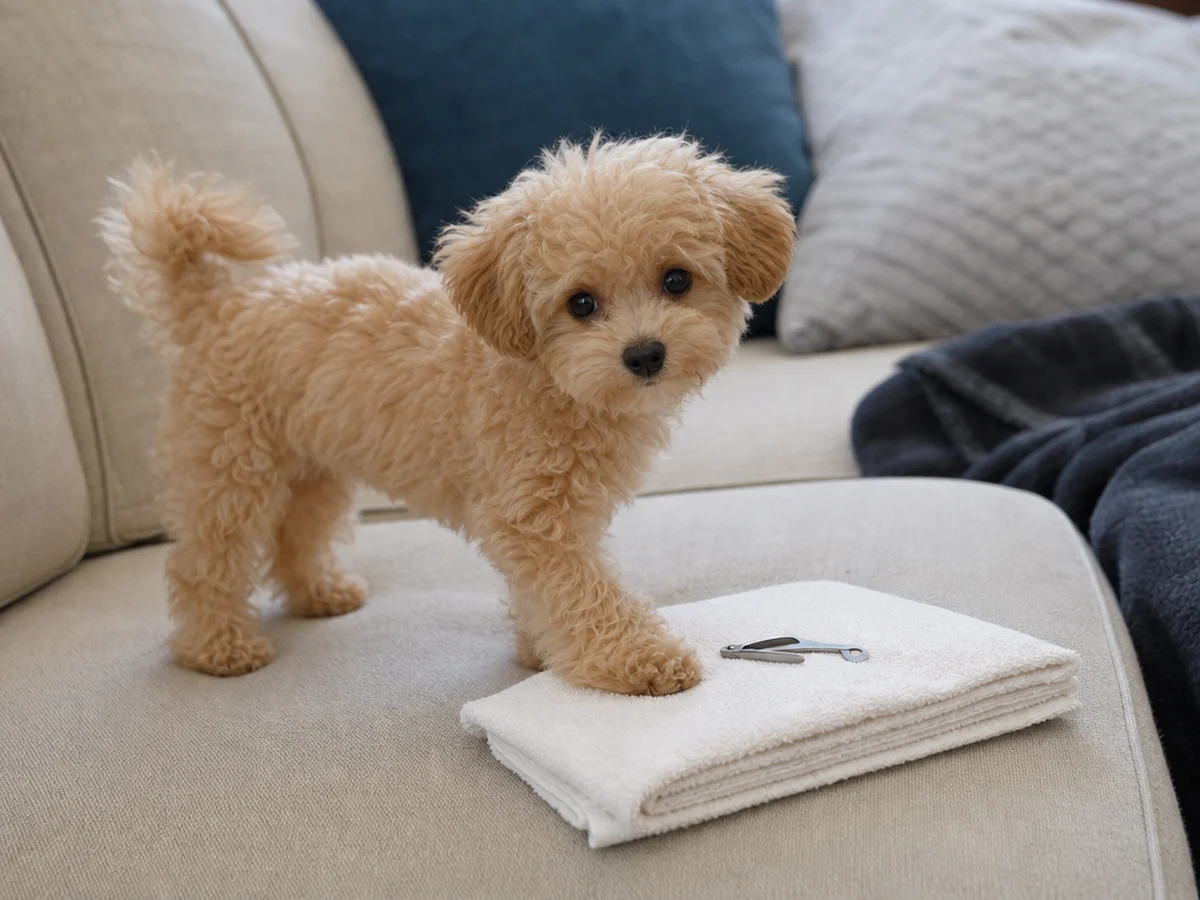
The station can be a small mat, folded towel or stable platform. Teach it without touching the dog. Mark looking at the surface, stepping onto it and staying for a brief reward, then release before asking for duration.
Next, add the person's position. Sit beside the station, move one hand toward the shoulder and reward without making contact. Repeat until that approach no longer changes the dog's posture, then add a light shoulder touch followed immediately by the release.
A start cue can be an offered chin rest, an offered paw or simply standing on the station. Choose a behavior the dog can stop easily. Avoid a position that physically locks the head or leg in place.
Keep sessions shorter than the dog's current tolerance. Several visits to the station across the day can be more useful than one long care session. The station should predict easy choices often enough that it does not become a warning that nail work is coming.
Practice empty-handed approaches from the angles care will require. Move beside one ear, sit near one front paw and briefly face the dog's side. Reward calm orientation before adding contact at each location.
Train Three Handling and Nail Care Zones
Treat each body zone as its own course. Success with a shoulder does not automatically transfer to toes, and a comfortable ear lift does not promise comfort with face wiping. Keep separate notes so one easy zone does not hide another zone's concern.
Paw Touches
Begin above the paw, where contact is often easier. Touch the shoulder, reward and release. Move down the leg over several sessions until the dog stays loose when a hand reaches the ankle.
The ASPCA grooming tips describe moving a hand along the leg and gently pressing toes with praise and treats. Break that sequence into smaller pieces for the individual dog. A brief paw lift comes after ordinary touch, not before it.
Hold for less than a second at first, then place the paw down before rewarding. This teaches that the handler controls the paw gently and returns it reliably. Increase duration only when the dog continues to offer the start behavior.
Ear Checks
Start with contact at the neck or base of the ear. Reward a light touch, then a small lift of the ear flap on a later repetition. Looking inside comes after the lift itself is routine.
Practice the visual part of an ear check with good light and empty hands. Lift briefly, let the ear return to its natural position and reward. This keeps the lesson about a predictable view rather than a long hold.
Do not clean, inspect deeply or introduce liquid during a training touch unless veterinary guidance calls for it. Ear care and ear training are different jobs. If odor, discharge, redness or pain appears, stop and contact the veterinarian.
Face Contact
Approach from the side where the dog can see the hand. Touch the cheek briefly, reward and release. Build toward a soft cloth near the face only after the hand movement is comfortable.
Face contact is useful for checking eyes, wiping the muzzle and supporting professional care, but it should not become gripping the chin. Let the dog's start behavior hold the position. If the chin lifts away, the contact ends.
A One-Nail Maltipoo Practice Path
Tool introduction begins away from the paw. Place the closed clipper or inactive grinder at a distance, reward the dog for seeing it and put it away. The tool should become ordinary before it moves near the station.
For sound, work separately from touch. A helper can create the quietest possible tool sound at a distance while the dog receives a reward. If posture changes, increase distance or use a quieter step. Do not combine first sound, paw hold and nail contact in one attempt.
- Dog offers the start behavior on the station.
- Handler touches the leg and releases.
- Handler briefly holds one paw and returns it.
- Tool appears near the hand without touching a nail.
- Tool touches one nail without cutting, then disappears.
- One prepared nail is trimmed and the session ends.
The Humane World guide suggests working with one nail at a time and using rewards as dogs get used to clippers or a grinder. We treat pretending to trim as a real training step. It separates the emotional skill from the technical cut.
Learn nail anatomy and safe tool use from a veterinarian or qualified groomer before cutting. Training comfort does not replace technical knowledge. If the dog is ready but the person is unsure, let a professional do the trim while home practice continues with easier steps.
Combine Handling and Nail Care Without Rushing
Combine only pieces that are fluent alone. A short session might include one paw hold and one ear lift, followed by release. It should not become a tour of every sensitive area just because the dog handled the first touch well.
Use different days for difficult zones. Paw work may happen in the morning, while a face touch occurs later in another setting. Spacing prevents concern in one zone from spilling into the next.
Keep the related Maltipoo grooming plan separate. That article follows coat zones, brush and comb motion and transfer to a grooming setting. This plan concerns clinical handling loops and one-nail cooperation.
Transfer one fluent step to another person only after the dog is comfortable with the original handler. The new person begins with the station and shoulder touch, even if paw work is advanced elsewhere. Familiar procedure matters more than matching the same endpoint.
Family members should use the same start and release signals. One person can deliver rewards while another practices a brief touch, but only when roles are planned. Extra hands should not surround the dog.
If required care cannot wait, tell the veterinarian or groomer what the dog can currently tolerate. A professional may recommend a safer management plan. Do not attempt to recreate a difficult procedure at home without guidance.
Progress Signals for Maltipoo Handling and Nail Care
Green signals include approaching the station, offering the start behavior, keeping muscles loose and returning after release. Progress may first appear as faster recovery or comfort with the person's hand, even before a nail is trimmed.
Red signals include earlier avoidance, stiffening, frantic food taking, repeated paw pulling or a dog who no longer approaches the station. Those changes mean the plan has moved too quickly or discomfort needs investigation. Step back rather than changing the reward alone.
Ask for professional help when fear grows, necessary care cannot be completed safely or anyone risks a bite. Bring notes about the exact body zone, tool, person and step that changes the dog's response. The most useful next session is the one the Maltipoo can choose to begin and leave feeling safer than when it started.
 CareTeaching Your Maltipoo to Love Grooming at Home
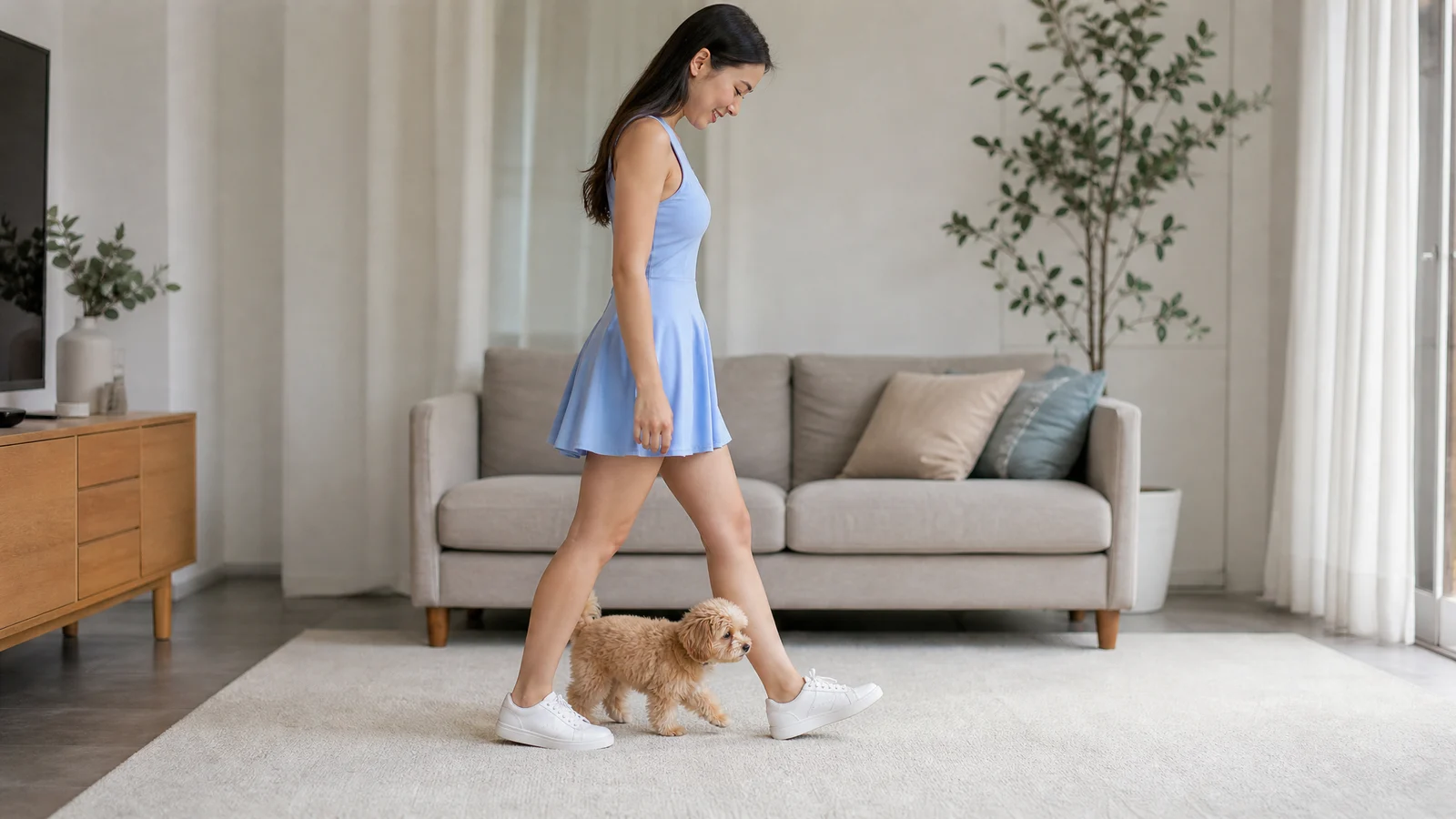 Exercise and jobsHow to Teach a Maltipoo to Weave Through Your Legs
 Exercise and jobsHow to Teach a Maltipoo to Shake and High Five