 Maltipoo
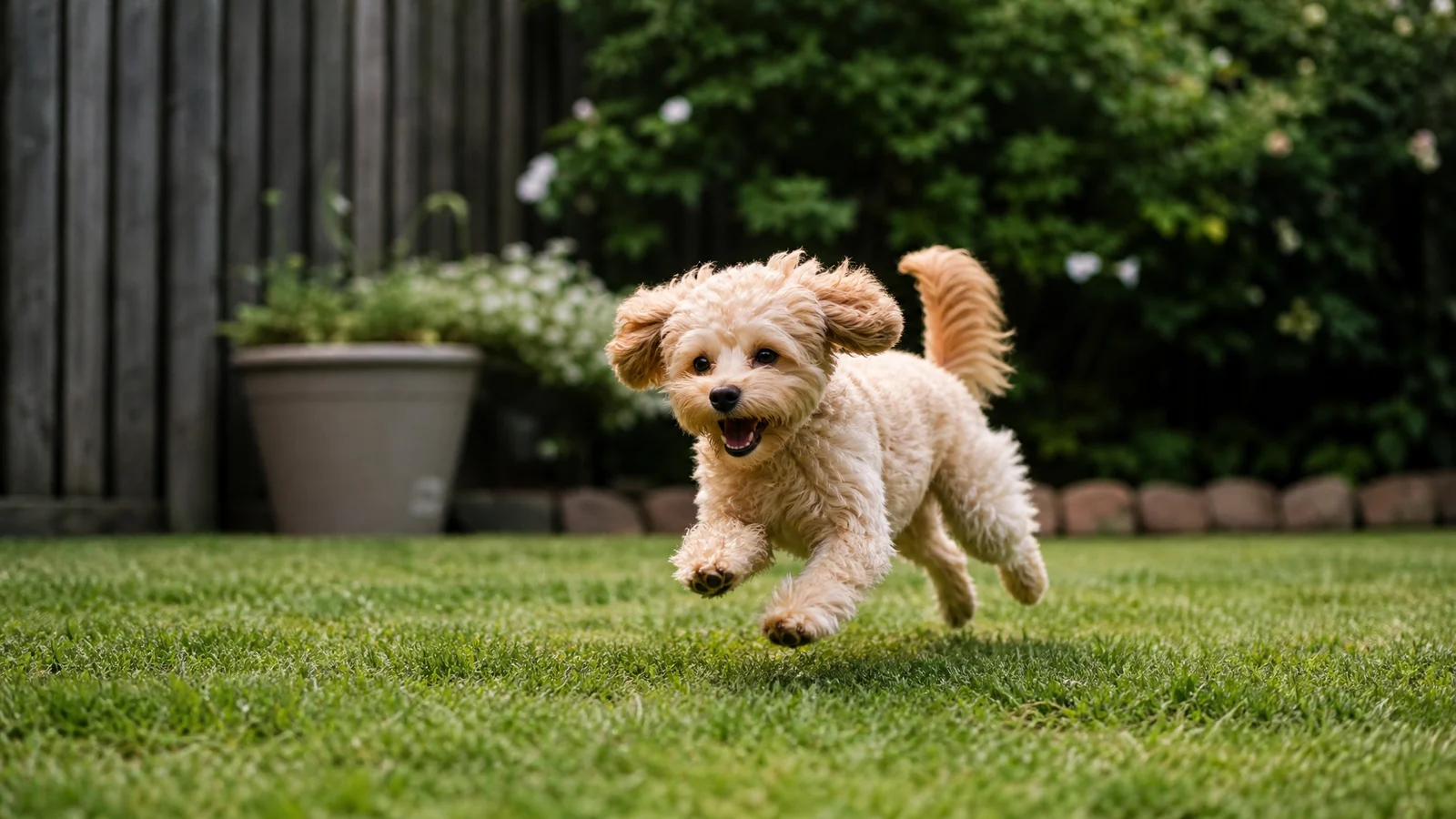
The common mistake is testing recall where a Maltipoo can already run away. A cue that works across the living room is not ready for an open field, no matter how quickly the dog crossed the rug. The safer fix is to build speed toward you in controlled places, then add distance and distractions one small piece at a time.
There is no verified top-speed figure for the Maltipoo. A Poodle or Maltese parent may influence movement, enthusiasm, or play style, but those possibilities do not establish a speed for this cross or predict one dog’s stamina. Fitness, age, health, footing, weather, and motivation all change what you see.
This guide walks through a recall course from the first indoor turn to secure running games, troubleshooting, and signs that professional help would be useful. We recommend building the voluntary return before testing distance. The goal is a Maltipoo who hears one cue, turns willingly, reaches you, and remains easy to secure.
Maltipoo Recall Begins at Arm’s Reach
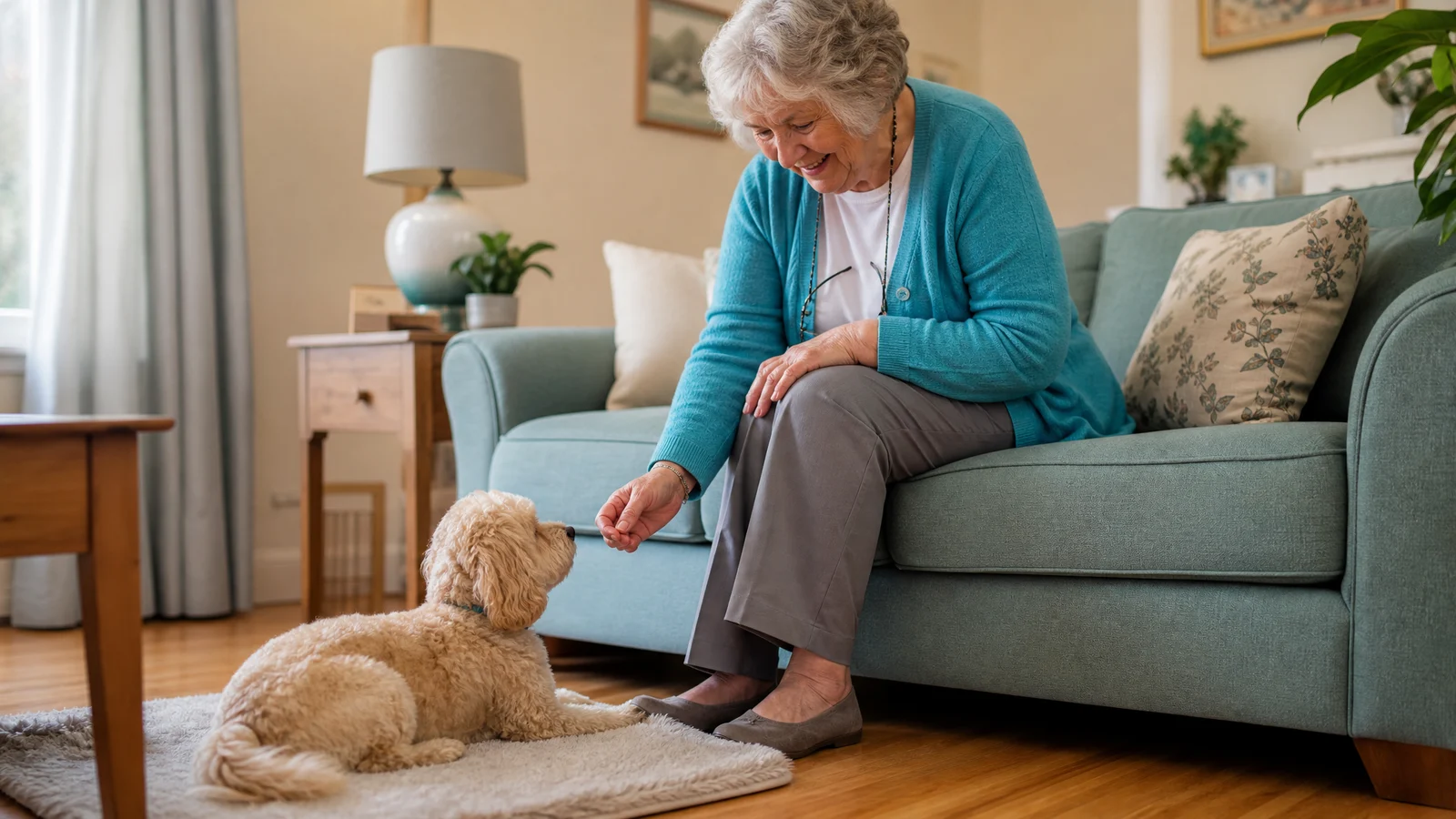
The first stage teaches that moving toward you pays. Begin in a quiet room when your Maltipoo is awake and interested, not absorbed in a chew or resting. Say their name once, make a small inviting movement away, and mark the instant they turn toward you. Deliver the reward close to your body.
Use a fresh recall word only when you can make success likely. If an old cue has been repeated while the dog ignored it, choose a different word and protect it from casual use. Everyone in the household should pronounce it consistently and reward the same finish.
Best Friends advises saying the recall cue once rather than repeating it. If the dog does not respond within a few seconds, wait for a turn or calmly make the setup easier. A stream of repeated words teaches that the first call is optional.
Make the Finish Comfortable
A recall is incomplete if the dog arrives but dodges your hand. Feed near your knees, touch the collar or harness briefly, mark calm acceptance, and release. Keep the touch light and predictable. The dog should learn that being reached does not always end every enjoyable activity.
Sometimes reward and send your Maltipoo back to an approved game. Other times attach the leash, reward again, and move on together. Mixing these outcomes prevents the cue from becoming a reliable announcement that all fun is over.
Room-to-Room Maltipoo Recall Games
Distance comes next, while the environment stays easy. Two people can stand in separate rooms and take turns calling once. The person who is not calling becomes quiet, while the caller rewards near their body. Begin close enough that the dog can see both people before using a doorway.
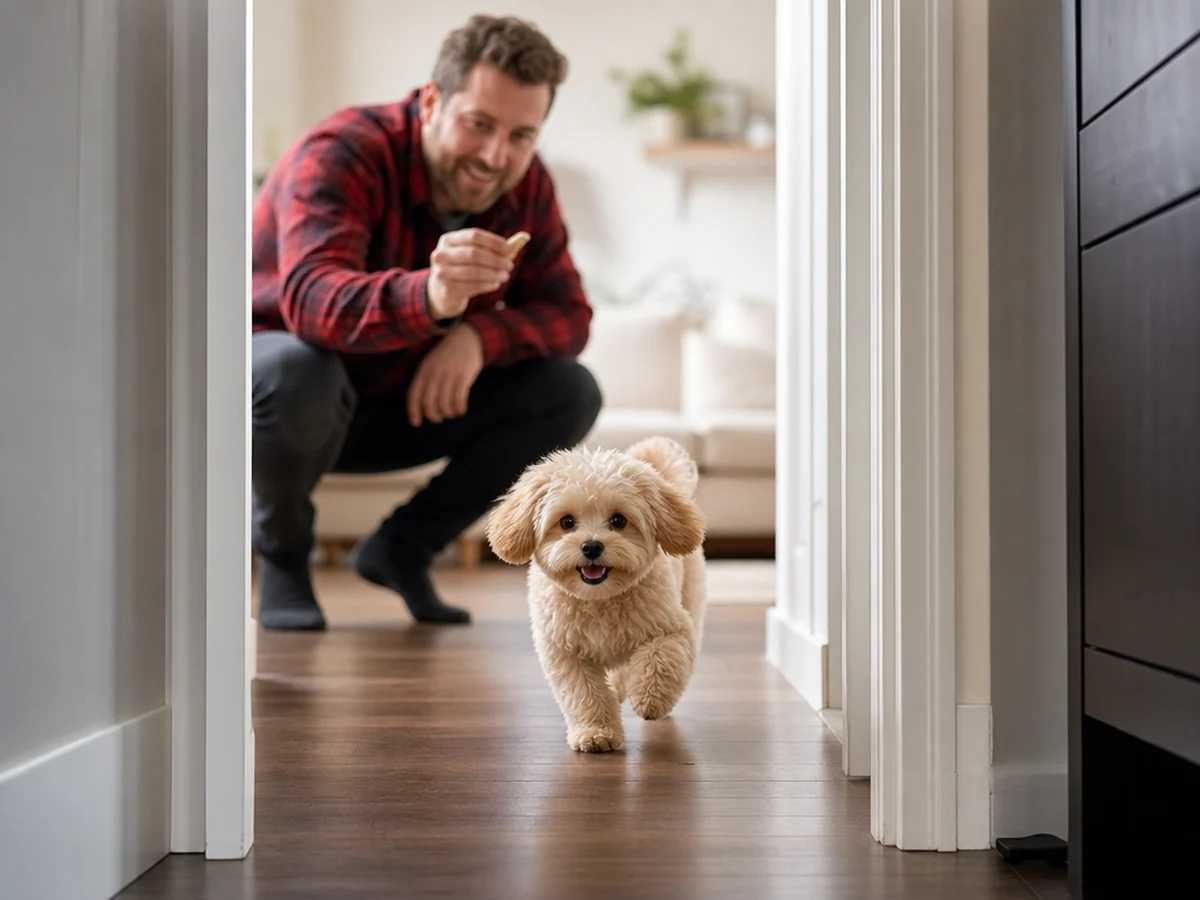
Change only one feature at a time. Add a few steps of distance before adding a hidden caller. Move to another room before introducing a toy on the floor. If your Maltipoo stalls, return to the last version they completed eagerly and make the next change smaller.
Hide Without Making It Hard
Stand partly behind a doorway and call when the dog is already oriented generally toward you. Reward the search as soon as they find you. Later, move fully out of sight for a moment. This game makes locating you valuable without turning recall into a confusing hunt through the whole house.
Keep turns uneven and brief. A few lively repetitions can build enthusiasm, while a long drill may weaken it. Stop after a good arrival, scatter a few pieces of food for a calm reset, and give the dog a genuine break.
Add a Moving Target
Call once and jog a few steps away indoors, provided the floor has safe traction. Reward when the dog catches you and settles at the finish. Your movement can invite pursuit, but it should never become a chase in which you grab at the dog or corner them.
A possible Poodle influence may contribute lively movement, and a Maltese influence may contribute playful athleticism. Those parent descriptions are context, not promises about a Maltipoo. Let the individual dog’s comfort and interest determine the pace of this game.
Yard Recall for a Maltipoo
The yard changes the problem even when it is fenced. Smells, birds, neighbors, and familiar play routes compete with you. Start close to the door or another quiet edge. Call during a natural pause instead of waiting until your Maltipoo is racing or studying something intensely.
Reward the turn, the approach, and the finished arrival as one fluent event. A high-value food reward often suits early outdoor work, though play can follow if it helps rather than sends arousal higher. The Maltipoo exercise guide can help separate ordinary activity needs from recall practice.
Use Check-Ins Before Calls
Stand quietly in the secure yard and mark any voluntary glance or return. Check-ins teach your Maltipoo to keep track of you without hearing a cue. Once those choices happen often, place a recall cue on one likely return and pay generously at your body.
This preparation reduces the need to interrupt full-speed behavior. It also reveals whether the yard is currently too difficult. A dog who cannot glance back or accept food needs more distance from the distraction, a quieter time, or an easier indoor session.
Protect the Recall Word
Do not call if you already know the dog cannot respond safely. Walk closer, collect the leash, or wait for attention in a secure space. Management is not a failure of training. It prevents another unrewarded cue and keeps the dog from rehearsing a fast departure.
Reward-based structure still includes clear limits. The American Veterinary Society of Animal Behavior recommends humane methods across learning and behavior care. Here, the boundary is physical safety while the wanted response gains a stronger history.
Practice Recall on a Long Line
A long line creates a bridge between a fenced yard and more distracting spaces. Attach it to suitable walking equipment and use an open area where it will not wrap around people, dogs, furniture, or brush. Keep hold of the line and allow slack rather than using it to pull the dog toward you.
Begin at a distance your Maltipoo already handles indoors. Call during a check-in, move away, and reward the complete arrival. If the dog stays focused elsewhere, do not reel them in as though the cue succeeded. Shorten the distance and wait for a more workable moment.
PDSA advises using the leash if you doubt the dog will return around a distraction. That safety principle matters more than proving readiness. A long line permits practice, but it does not make an unfenced place secure.
Change Distance, Then Distraction
Extend the line only after several easy sessions. When distance is comfortable, return closer before introducing a mild distraction such as a familiar toy placed well away from the route. Alternating these dimensions makes it clear which change caused difficulty.
Keep notes in plain language. Record the place, the strongest distraction, and whether your Maltipoo turned on the first cue. The notes are not a scorecard. They help you choose the next setup based on observed reliability rather than a hopeful memory.
Pay for the Hard Choice
A dog leaving a smell or moving object has made a harder choice than a dog crossing an empty room. Use a reward that matches that effort. Several small food pieces delivered one after another can extend the finish and prevent an immediate dash back toward the distraction.
Release only when you have decided the next step. You might continue the walk, offer a sniff in another direction, or end the repetition. A clear release protects both the arrival and the transition that follows it.
Turn Running Into Secure Recall Games
Running games belong in a securely enclosed area with suitable footing. They should test a level your Maltipoo has already learned, not discover whether the dog will return from complete freedom. Scan gates, surface hazards, other users, and the dog’s energy before beginning.
There is no useful reason to estimate miles per hour. Watch the dog instead. A balanced stride, willingness to pause, easy acceptance of water, and normal recovery matter more than comparison with another Maltipoo. Stop if movement changes, enthusiasm drops, or the dog struggles to settle.
Play Chase Me
With the dog already near you, give the recall cue and run a short line away. Turn to receive them, reward at your body, and pause before another turn. Never run after the dog. The game makes your retreat the invitation and your position the rewarding destination.
Use a Restrained Release
With two familiar adults in a secure area, one person can hold the dog’s harness gently while the other moves a short distance away. The caller gives the cue, then the holder releases immediately. Do not use this version if restraint creates tension or frustration.
The release adds anticipation, so keep the distance modest and the finish calm. Reward several times near the caller before resetting. If the dog races past or mouths clothing, lower excitement and return to ordinary room-to-room recalls.
Mix Recall With Fetch
Roll a toy a short distance, let your Maltipoo engage, then call only when they naturally turn back. Reward the return even if the toy stays behind. A second toy or food can support the finish without demanding a formal retrieve.
The Maltipoo training guide develops targeting and object skills separately. Keep those chains distinct at first. Recall means return to the person, while retrieving adds pickup, carry, and release.
Repair a Maltipoo Recall That Stalls
A slow response is information about the setup. Before changing the reward, ask whether the cue was repeated, the distance jumped, or the distraction arrived too soon. Also consider whether the dog is tired, worried, uncomfortable, or simply finished with the session.
Use a consistent repair order rather than adding pressure. The sequence below protects the cue while making the next success easier.
- Return to the last place where one cue produced an eager turn.
- Reduce either distance or distraction while keeping the other familiar.
- Improve the reward and deliver it at your body, not several steps away.
- Practice the collar or harness touch apart from the full recall.
- End after a clean success and provide a real break.
If your Maltipoo approaches but stops beyond reach, move the reward closer to your legs and practice hand contact separately. If they arrive and bolt away, feed several pieces before the release. If they never turn, the environment is beyond the current lesson.
Avoid using recall only for baths, departure, or the end of play. Call for easy rewards during ordinary life, then release the dog again. A cue with many pleasant outcomes is more resilient than one predicting loss every time.
Read the Signs of Safer Recall
Progress appears first in small details. Your Maltipoo checks in without prompting, turns more quickly after one cue, follows your movement through a doorway, and accepts a brief harness touch at the finish. Those changes justify a modest increase in difficulty, not immediate off-leash freedom.
Keep management in place when responses vary by setting. A dog can be reliable in the yard and unprepared near wildlife, traffic, unfamiliar dogs, or open gates. Safety depends on the hardest likely environment, not the easiest successful one.
Repeated fleeing, handling fear, or outdoor disengagement deserves help from a trainer who uses rewards. Maintain regular veterinary visits and discuss new fatigue, movement changes, or sudden loss of a learned response.
The useful answer to “How fast can a Maltipoo run?” is not a number. A Maltipoo may move surprisingly quickly, but safe freedom grows from a practiced return. Begin at arm’s reach today, reward one willing turn, and let reliability earn each next step.
 BehaviorMaltipoo Separation Anxiety: How to Help Your Dog Feel Safe Home Alone
 Training basicsHow to Potty Train a Maltipoo Puppy With Rewards
 Training basicsTraining an Adult Maltipoo With Rewards